Riyadh Camel Market: what it actually is and how to visit
Is the Riyadh Camel Market worth visiting as a tourist?
Yes, if you understand what it is: a working livestock market east of Riyadh where herders trade camels, not a staged tourist attraction. It's worth an early morning visit for observation and photos of the animals, but there are no rides, no facilities, and no fixed schedule.
A working market, not a tourist attraction
The Riyadh Camel Market is one of the largest livestock markets of its kind in the region, and it earns that reputation by being exactly what it sounds like: a place where herders and traders buy and sell camels, day in and day out. It sits roughly 30 km east of central Riyadh, out along the road toward Khurais, in an area that’s flat, dusty, and built for trucks and pens rather than visitors. There’s no ticket booth, no gift shop, and no guide waiting to greet you. That’s the honest starting point for anyone deciding whether to make the trip.
If you come expecting a curated cultural experience with information panels and a café, you’ll be disappointed. If you come expecting a genuinely working market, with hundreds of camels penned in rows, trucks loading and unloading animals, and traders negotiating in Arabic, it delivers on that completely. This page is written for the second kind of visitor: someone who wants an honest sense of what’s actually there before driving 30 minutes each way to see it.
What you’ll actually see
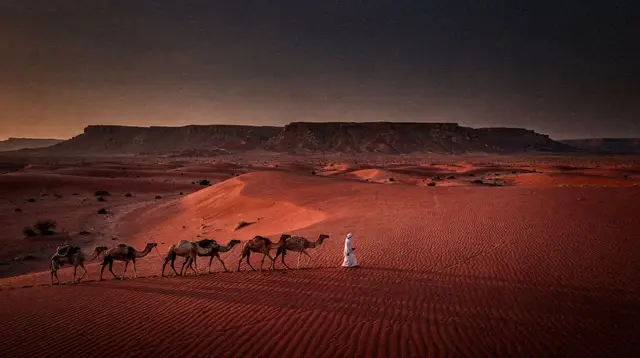
The market is organized around open-air pens holding camels of different ages, colors, and evident purposes, from working animals to prize breeding stock. Prices aren’t posted for tourists to read, and transactions happen the way any livestock trade does, in conversation between buyer and seller rather than at a fixed counter. You’ll see camels being loaded onto and off flatbed trucks, herders checking teeth and condition, and the occasional camel being walked between pens.
There’s no formal path or numbered route through the site. You walk between rows of pens at your own pace, and the layout can feel a bit sprawling and unstructured, which is part of what makes it feel real rather than staged. Expect uneven ground, dust, and the noise and smell that come with any large gathering of animals. None of that is a flaw in the experience; it’s simply what a working camel market is, and pretending otherwise would be dishonest.
Photography: what’s fine and what isn’t
Photographing the camels, the pens, and the general scene is generally not a problem, and the market is genuinely photogenic in early morning light. What matters is people. Never photograph traders, herders, or anyone else at the market without asking first, and accept a no gracefully if it comes. This rule holds everywhere in Saudi Arabia, but it’s worth repeating here specifically because a working market like this one is full of people going about their business, not posing for visitors. A quick gesture asking permission, or a simple phrase in Arabic, goes a long way and is usually met with more warmth than a camera raised without asking.
Timing your visit
No fixed opening hours are confirmed for the market, and that’s not an oversight on this page’s part; trading activity here follows the rhythm of herders and buyers rather than a posted schedule aimed at visitors. What can be said with more confidence is that mornings tend to be calmer, cooler, and better lit for photos, while the market can feel quieter later in the day once the day’s trading has slowed. If you’re planning around Riyadh’s heat, especially from May to September when daytime temperatures often climb past 40°C, an early start also means you’re not standing in open pens under the midday sun.
Because there’s no ticketing system or confirmed schedule, treat any hours you read elsewhere as an estimate rather than a promise, and build in flexibility rather than arriving at a precise time expecting things to be in full swing.
If your trip falls during Ramadan, expect the rhythm of the market to shift along with the rest of the city: trading hours move around the fasting day, and eating, drinking, or smoking in public isn’t permitted for anyone until sunset. It’s still possible to visit, but plan the timing of your morning around that rather than assuming a normal day. Visiting Riyadh during Ramadan covers what changes citywide and is worth reading before you build the market into a Ramadan itinerary.
Best time of year for the market
Riyadh’s climate drives this more than anything else. From November to March, days are mild and sunny, typically around 20-25°C in December and February, which makes for a genuinely comfortable walk between the pens even without shade. From May to September, daytime temperatures regularly climb past 40°C, and standing on open, unshaded ground among the pens in that heat is a different experience entirely; if you’re visiting in that window, treat an early-morning slot as close to mandatory rather than a nice-to-have. Best time to visit Riyadh and Riyadh weather by month go into the seasonal detail if you’re mapping the market against the rest of your trip, and Riyadh season guide is useful if your visit overlaps with the city’s seasonal events calendar.
Getting there from Riyadh
The market lies on the eastern edge of the city, distinct from the desert excursion areas to the west and northwest and from Diriyah, which sits on the opposite side of Riyadh entirely. Don’t confuse the three: this is an in-city drive, not a desert day trip, and it doesn’t require the 4x4 or multi-hour journey that a site like Edge of the World does.
Most visitors reach it by car, taxi, or ride-hailing app. Uber and Careem both operate reliably in Riyadh and can get you to the market and back without needing to arrange transport in advance, though it’s worth asking your driver to wait or arranging a return pickup, since there’s little chance of hailing a ride from the site itself once you’re out among the pens. A private driver for the morning is a comfortable option if you’re also visiting other sites on the eastern side of the city, or if you’d simply rather not manage the return trip yourself. If you’re driving, remember Saudi Arabia drives on the right, and women have been legally permitted to drive since 2018, so a self-drive rental is a genuine option here too.
If you’re coming straight from King Khalid International Airport rather than from a hotel in the city, budget for the extra distance: the airport sits around 35 km north of central Riyadh, itself around 30-45 minutes from Olaya outside peak hours, before you even factor in the drive out to the market on the eastern side. It generally makes more sense to check in first and treat the camel market as a separate outing on another day rather than trying to combine it with an arrival day. Riyadh airport arrival guide covers that first leg in detail. Riyadh’s metro network doesn’t reach out to the market, so it isn’t part of the practical route here the way it can be for stops closer to the center; Riyadh Metro guide explains where the six lines are actually useful.
What it isn’t
It’s worth being direct about what the camel market does not offer, because a fair number of visitors arrive with the wrong expectations. There are no guided camel rides here, no staged photo setups with a docile animal and a backdrop, and no equestrian-style activity of any kind. If riding a camel is what you’re after, this is the wrong page and the wrong site; look instead at a dedicated desert safari or a camel-riding excursion built around that experience.
There are also no visitor facilities to speak of: no restrooms, no shaded seating, no food stalls built for tourists. Bring water, wear closed shoes given the dust and ground conditions, and don’t expect the kind of amenities you’d find at a museum or a mall. None of this makes the market not worth visiting; it just means the appeal here is observation, not comfort.
Dress and conduct
Modest dress applies at the camel market exactly as it does everywhere else in public in Riyadh: shoulders and knees covered, nothing tight or sheer. There’s no requirement for an abaya for foreign women here or anywhere else in the city; a headscarf is only expected inside mosques, not at a livestock market. What’s different about this setting is practicality rather than rule: it’s a rural, working environment with dust, animal waste, and uneven ground, so clothes and shoes you don’t mind getting dirty make more sense than what you’d wear downtown in Olaya.
Beyond dress, the main point of etiquette is the one already covered: ask before photographing anyone, and be aware that you’re a visitor at someone else’s workplace, not a guest at an attraction designed for you.
Whether the camel market suits a family visit depends more on the kids than the site itself. Older children who are curious about animals and don’t mind dust, noise, and uneven ground tend to find it memorable precisely because it’s real rather than staged; toddlers and younger children who need shade, seating, or a predictable pace are likely to find it harder going, given the total lack of visitor facilities. Riyadh with kids has broader guidance on matching sites like this to different ages.
Combining it with other stops
The camel market works well as a half-day addition to a broader eastern Riyadh itinerary rather than as a standalone destination that fills a full day on its own. Some general city tours that cover Riyadh’s culture and heritage include a stop here alongside sites like Masmak Fortress or Diriyah, which can be a practical way to see it without organizing your own transport.
A guided visit built specifically around the camel market covers the logistics and gives useful context on what you’re seeing, which matters at a site with no signage of its own. For travelers who want camels as an experience rather than an observation, a falconry and camel experience elsewhere in the Riyadh area or a desert camel ride paired with an ATV outing are better matches than the market itself. If you’d rather see the camel market as one stop among several historic and modern sites, a full-day guided city tour with transport included is a reasonable way to fold it into a wider look at Riyadh.
If you do book a driver or a guide for the morning, a modest tip is appreciated but not obligatory, in line with the rest of Riyadh; tipping in Saudi Arabia has more detail on what’s typical for drivers and guides if you’d rather not guess on the day.
Where this fits in a Riyadh trip
The camel market is a niche stop, not a headline attraction, and it’s worth weighing against the rest of what things to do in Riyadh has to offer before committing half a morning to it. If you’re deciding how to structure your days, how many days in Riyadh and one day in Riyadh are useful starting points, and the market slots naturally into a longer stay covered by three days in Riyadh rather than a tight single day focused on the city center.
For visitors weighing camels specifically, camel vs quad vs 4x4 in the Riyadh desert lays out how the market compares to an organized desert experience, and Riyadh desert safaris or quad biking near Riyadh are the better fit if riding or off-road activity is the goal rather than observation. If you’re combining a desert excursion with your trip, Riyadh desert safari: what to expect and desert dinner and kashta near Riyadh cover the staged, visitor-oriented side of camel culture that the market deliberately doesn’t offer.
Practical planning is worth sorting out before you go: [getting to Riyadh by Uber and Careem in Riyadh covers ride-hailing specifically, while renting a car in Riyadh is worth reading if you’d rather self-drive. On dress and conduct more broadly, what to wear in Riyadh and Saudi laws and etiquette for visitors cover the rules that apply at the market and everywhere else in the city.
If your interest in camels ties into heritage rather than logistics, Diriyah tours and At-Turaif UNESCO district guide cover the historic side of the region, while Riyadh city and heritage tours gives a broader view of what else sits within the city itself, distinct from this market on its eastern edge.
Riyadh Camel Market: the honest questions
Is the Riyadh Camel Market worth visiting?
For visitors genuinely curious about a working livestock market, yes, especially in the morning when it’s calmer and cooler. If you’re expecting a polished attraction with rides and facilities, it isn’t, and you’re better served by a desert safari or camel-riding tour instead.
How far is it from central Riyadh?
It’s about 30 km east of the city center, along the road toward Khurais, which typically means a drive of well under an hour depending on traffic, though Riyadh’s peak-hour congestion can stretch that.
Is it the same as a desert camel experience?
No. The market is inside the greater Riyadh area on the city’s eastern edge, not out in the desert, and it’s a trading site rather than an organized activity. For a desert-based camel experience, look at a dedicated safari or camel-riding tour instead.
Do I need to book anything in advance?
No booking is required to visit independently, since it’s a public market rather than a ticketed attraction. Some guided tours include it as a stop, which can be worth booking if you want context and easier transport.
What’s the etiquette around photographing people there?
Never photograph traders or herders without asking first, and respect a refusal. Photographing the camels and general scene is generally fine.
Should I bring anything specific?
Water, closed shoes, and clothes you’re comfortable getting dusty are worth bringing, since there are no facilities on site and the ground is uneven and dusty.
Is it safe to visit?
It’s a normal working site with the ordinary hazards of being around large animals and vehicles, so keep a sensible distance from the camels and stay aware of trucks moving through the area. It doesn’t carry any particular safety concern beyond that.
Can I combine it with other Riyadh sights in one day?
Yes, it pairs well with other eastern Riyadh or heritage-focused stops as part of a half-day or full-day plan, rather than working as a destination that needs a dedicated day on its own.
Camel and horseback rides on GetYourGuide
Verified deep-linked GetYourGuide tours. Book through these links and we earn a small commission at no cost to you.
GetYourGuide does not provide a product photo for this activity — the image shows the meeting point, photographed by us.