Desert dinner and kashta near Riyadh
What is a kashta, and how is it different from a desert safari near Riyadh?
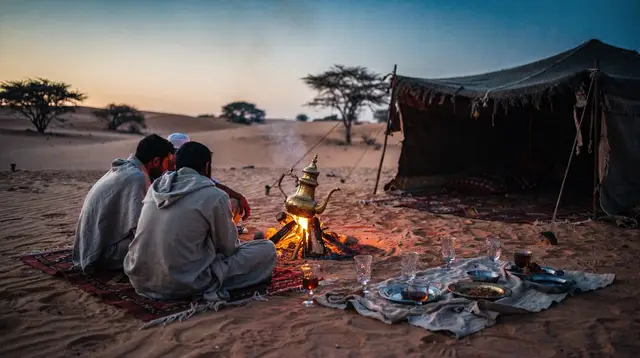
A kashta is a calm, bedouin-style desert camp for an evening meal and stargazing, sometimes with an overnight stay, usually set up around Thumamah north of Riyadh or near the Red Sand Dunes to the west. It skips the dune bashing and quad bikes of a safari tour in favour of sitting on rugs, eating, and watching the sky.
What a kashta actually is
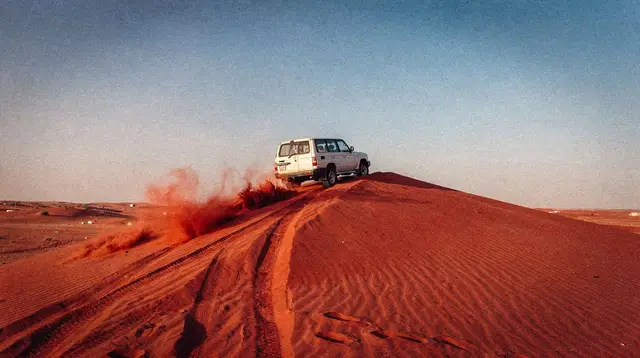
Most people who search for a desert evening near Riyadh land, sooner or later, on a photo of dune buggies kicking up orange sand at sunset. That is one real product, and it exists in plenty. A kashta is a different one, and the two get mixed up more often than they should.
A kashta is the traditional word for an evening or overnight stay out in the desert — rugs on the sand, a low table, a fire, tea, and conversation that runs late because there is nowhere else to be. As a tour product near Riyadh, it borrows that shape: a bedouin-style camp set up in the desert, usually within an hour or so of the city, where the evening centres on a sit-down meal, a slow transition from daylight to dark, and time spent simply looking at a sky with far less light pollution than Riyadh’s. Some products keep going into an overnight stay in a fixed tent; most end with a drive back to the city after dinner and a couple of quiet hours.
What it is not: a dune-bashing safari, a quad-bike circuit, or a sandboarding session. Those exist too, and they are worth booking if that is what you actually want (see our golden dunes safari that pairs dune driving with an evening meal if you want both in one trip). But if what you’re picturing is a calmer evening — sitting, eating, talking, watching stars — the kashta format is the one to search for, and it’s worth naming correctly when you’re comparing desert safaris and stargazing and camping products, because listings mix vocabulary loosely.
Where these camps actually sit
Two areas around Riyadh host most of the kashta-style camps and dinner setups.
Thumamah, north of the city, is a flatter stretch of desert and scrubland that’s become a go-to spot for evening camps and weekend outings from Riyadh itself — it’s close enough that the drive stays short, and the terrain suits a fixed camp rather than a driving circuit.
The Red Sand Dunes area, roughly an hour west of Riyadh along the Mecca road, is better known for its orange dunes and the more energetic activities — quad biking, sandboarding, dune bashing — but a number of operators run dinner-and-stargazing camps there too, timed around sunset when the dune colour is at its most striking. If a listing mentions red dunes by name, this is usually the area.
Neither location is named consistently by every operator — camp names and exact positions shift, and a fixed address rarely matters, since you’re being driven there rather than navigating yourself. What matters more is reading the listing for which of the two general areas it uses, since that affects drive time and, to some extent, scenery.
If you’d rather go further afield for a full day rather than an evening, the Edge of the World day trip from Riyadh and the Shaqra and Ushaiger day trip from Riyadh sit outside the usual kashta radius but cover similar desert-and-heritage ground on a longer itinerary.
The drive there — and why it’s not a self-drive trip
Give the return trip a realistic amount of time rather than a precise figure: expect somewhere in the range of 45 minutes to a bit over an hour each way, depending on which camp area you’re headed to and traffic leaving Riyadh at the start of the evening. That’s a workable estimate, not a promise — desert camp locations aren’t fixed the way a museum address is, and the last stretch is often an unpaved track rather than a paved road.
This is the one area where we’d push back on doing it yourself. Renting a car and driving to a kashta camp at night is a bad idea for reasons that have nothing to do with off-road difficulty: the access tracks aren’t lit, they aren’t signposted the way a highway is, and finding an unmarked camp entrance in the dark without having been there before is genuinely hard, even with a map app. Every kashta and desert dinner product we’ve seen is sold with transport included or as a private tour with a driver, and that’s the sensible way to do it. A private guide who already knows the route removes the one part of the evening that could actually go wrong — see our private desert evening that includes door-to-door transport and dinner if you’d rather not think about logistics at all.
If you’re staying somewhere central like Olaya or near KAFD, pickup is straightforward; if you’re out near Diriyah, confirm pickup timing with the operator, since it adds a little to the loop.
If you’d rather not compare individual listings at all, see hiring a private guide in Riyadh and our wider look at private tours in Riyadh — both cover how a private driver or guide changes the evening compared with a shared group tour.
What actually happens once you’re there
The shape of a kashta evening is deliberately unhurried, and that’s the whole point of choosing it over a safari.
Arrival is usually timed for late afternoon or just before sunset, so there’s a stretch of daylight to look around, take photos while there’s still colour in the sky, and settle in. Seating is typically low — cushions and rugs around a shared table, sometimes actual majlis-style seating — and the meal is the centrepiece of the evening rather than a quick refuelling stop between activities. Traditional Najdi dishes show up often: kabsa (spiced rice with meat) is close to a standard, alongside grilled meats, Arabic bread, dates, and Arabic coffee or tea — see kabsa and Najdi food to try in Riyadh for more on what’s typically on the table, and Saudi coffee and dates etiquette if you want to know what’s expected when it’s poured for you. Some camps add live entertainment — traditional music, sometimes a fire pit — but the tone stays low-key rather than performative.
As it gets properly dark, the desert sky is the actual draw: away from Riyadh’s street lighting, star visibility improves noticeably, and clear winter nights in particular can be genuinely striking — our piece on a night under the stars near Riyadh goes into what that actually looks like. There’s no formal astronomy component on most of these tours — don’t expect a telescope or a guide pointing out constellations unless the listing says so specifically — but the darkness itself is the product.
One honest note on the meal side: as with every hospitality venue in Saudi Arabia, no alcohol is served, poured, or available to bring — hotels included, and desert camps are no different. If a sundowner is part of your mental picture of a desert evening, that particular expectation doesn’t apply here; what you get instead is tea, coffee, and often fresh juice.
For a family group, this format tends to work better than a quad-heavy safari — see family desert trips from Riyadh if you’re weighing options with children in the group, and riyadh with kids for the wider picture of what else suits younger travellers.
Overnight or dinner-only — read the listing carefully
This is the detail that catches people out most often. “Desert camp” and “kashta” get used loosely across listings, and two products with near-identical names can mean very different evenings.
| What the listing says | What to expect |
|---|---|
| “Sunset dinner” / “dinner in the desert” | Evening meal and stargazing, then a drive back to Riyadh the same night — no overnight stay |
| “Desert camp overnight” / “overnight stay” | Dinner plus an actual night in the desert, in a fixed or semi-permanent tent, with breakfast the next morning |
| “Safari with dinner” | Daytime or late-afternoon dune bashing, quad biking or similar, folded into an evening that also includes a meal |
Before booking, check specifically whether an overnight stay is included, what the sleeping arrangement actually is (a proper tent with bedding is very different from a rug on open sand), and whether return transport is same-night or next-morning. None of this is standardised across operators, so the individual listing is the source of truth, not the general category name. Our evening that pairs a camel ride with tea, dinner and kabsa is a good example of a dinner-focused, same-night format if that’s what you’re after.
Timing it right across the year
The single biggest variable for a desert evening isn’t the camp — it’s the season, and specifically the after-dark temperature.
November through March is the straightforwardly comfortable window. Days sit around 20–25°C, and evenings cool further without turning genuinely cold, which makes sitting outside for a few hours pleasant rather than something to endure. This is also when Riyadh’s desert nights are clearest, since winter tends to bring less haze.
May through September is a different proposition. Daytime highs regularly clear 40°C, and a camp visit timed for late afternoon can still feel like stepping into an oven when you arrive. The upside — and it’s a real one — is that the desert cools meaningfully once the sun is down; a summer evening at a kashta after dark is noticeably more bearable than the same spot at 2pm. Operators plan around this, which is why dinner-and-stargazing formats keep running year-round rather than pausing for summer the way some daytime activities do. If you’re booking in summer, treat the drop-off time as the thing to get right — later is generally more comfortable — and check Riyadh in summer for wider heat-planning notes.
Ramadan shifts the picture again: timings often move later into the evening to fit around fasting hours, and some camps adjust their format accordingly — see visiting Riyadh during Ramadan before booking if your trip overlaps.
Sandstorms are rare but not unheard of, mostly in spring and early summer — see sandstorms in Riyadh: what to know for how operators typically handle a disrupted evening, and Riyadh weather by month if you’re mapping the whole trip around the season rather than just this one evening.
Kashta versus the other desert formats
It’s worth being explicit about how this compares to the alternatives, since the category names overlap on booking sites.
A desert safari centres on movement — dune bashing in a 4x4, sometimes quad biking or sandboarding, with a meal often bolted onto the end rather than being the point of the trip. It suits people who want the adrenaline part of the desert experience; see riyadh desert safaris for that side of things, and camel vs quad vs 4x4 in the Riyadh desert if you’re deciding between activity types.
A kashta or desert dinner centres on stillness — arriving, settling in, eating, and watching the sky, with no driving component at all. It suits couples, families with younger children, older travellers, or anyone who wants the desert atmosphere without the physical activity.
Neither is objectively better; they’re aimed at different evenings. If you’re not sure which you want, our ATV and camel-ride tour from Riyadh sits in between, giving a taste of the active side before the day winds down — a reasonable middle option if half your group wants motion and half wants to sit and watch the sunset.
Practical notes before you book
A private driver or guided transport is close to universal for this category — treat “includes pickup” as the norm rather than a premium extra, and be wary of any listing that suggests self-drive to an unlit desert location after dark.
Dress modestly and bring a layer. Shoulders and knees covered works for men and women alike, and no headscarf is required outside a mosque — but temperatures drop several degrees once the sun is gone, even in summer, and sitting outside for hours without a jacket or shawl gets uncomfortable fast in winter especially.
Card payment usually covers the tour itself, but bring a bit of cash in case a camp sells small souvenirs or extras on-site — not every stall out in the desert has a card reader. See money, cards and payments in Riyadh for the wider picture, and tipping in Saudi Arabia if you’re unsure whether a driver or camp host expects one.
No alcohol at any point in the evening also means no alcohol to plan around — see can you drink alcohol in Saudi Arabia if you want the fuller context on why, and what to pack for Riyadh for a general packing list that covers the layer you’ll want after dark.
Check the cancellation and weather policy before paying. Sandstorms, while uncommon, do happen in spring and summer, and a camp evening is one of the more weather-dependent products on this coast of activities — a clear refund or reschedule policy matters more here than for an indoor museum visit.
For current pricing, exact pickup windows, and what’s included on the day, the individual tour listing on GetYourGuide or Viator is the accurate source — general price ranges age quickly and vary by group size and season.
Frequently asked questions about desert dinners and kashta camps near Riyadh
Is alcohol served at a desert kashta near Riyadh?
No. Alcohol is prohibited everywhere in Saudi Arabia, including hotels, and desert camps are no exception. Every kashta and dinner-in-the-desert product runs alcohol-free, and no operator advertises otherwise.
How do you get to a kashta camp, and can you drive yourself?
Almost everyone books a private driver or a tour that includes transport. The camps sit on unlit desert tracks off the main roads, and finding them in the dark without local knowledge is genuinely difficult. A private driver waits for you and handles the return leg, which matters once the sun is down.
How long does a desert dinner evening actually take?
Budget roughly half a day once you count the drive out from Riyadh, the time at camp for dinner and stargazing, and the drive back. The camp portion itself is usually a few unhurried hours rather than a packed itinerary.
What should I wear to a desert dinner in Riyadh?
Modest, comfortable clothing that covers shoulders and knees works for everyone, plus a layer for after dark, since desert evenings cool down quickly even in summer. There is no dress code beyond ordinary modesty, and an abaya is not required for foreign visitors.
Is a kashta suitable for families and older travellers?
Yes, more so than a dune-bashing safari. There is no off-road driving, no quad bikes, and the pace is sitting, eating, and looking at the sky, which makes it one of the more comfortable desert formats for children, older relatives, or anyone who would rather not be thrown around in a 4x4.
What is the best time of year for an evening desert camp near Riyadh?
November to March gives mild, comfortable evenings from the start. In the hotter months, roughly May to September, daytime temperatures often pass 40°C, but the desert cools noticeably once the sun goes down, which is exactly why these evening formats keep running through summer.
Do desert dinner camps near Riyadh include an overnight stay?
Some do, most don’t. Read the product description carefully: many camps are dinner-and-stargazing only, ending with a return drive to Riyadh the same night, while a smaller number of operators offer an actual overnight stay in fixed or tented accommodation.
Desert safaris and dune bashing on GetYourGuide
Verified deep-linked GetYourGuide tours. Book through these links and we earn a small commission at no cost to you.
GetYourGuide does not provide a product photo for this activity — the image shows the meeting point, photographed by us.