Saudi coffee and dates etiquette: what to do when it's offered
The small cup that shows up everywhere
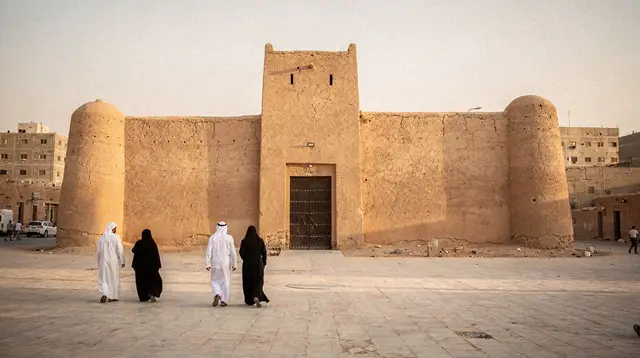
The first time someone in Riyadh pressed a tiny handle-less cup into my hand, I had no idea what I was supposed to do with it. It happened at a stall near Riyadh’s old quarter, not in anyone’s home, and the man pouring it clearly expected me to know the moves. I didn’t. I drank it too fast, held the cup wrong, and got a date pushed at me a beat too late to actually help with the bitterness. None of it mattered in the end — he refilled it anyway and laughed — but I’ve since learned the handful of signals that would have made the exchange smoother, and they’re worth knowing before your own trip.
This is specifically about the hospitality ritual: the small cup of Arabic coffee (locally called qahwa) and the dates that go with it, offered in a salon, a stall at Souq Al Zal, or a desert camp on a desert safari. It’s a different thing from the flat whites and specialty roasts you’ll find in Riyadh’s modern café scene — that’s its own subject, not this one. What follows is the etiquette around the traditional pour: how to accept it, how to ask for more, and how to say you’re done without a single word.
What’s actually in the cup
Saudi coffee isn’t trying to be espresso, and judging it against that will only leave you confused. It’s a light roast, brewed with cardamom and sometimes a thread of saffron, poured black with no sugar. The result is aromatic, slightly bitter, and quite different from anything most Western visitors expect a “coffee” to taste like. That bitterness is the whole point of pairing it with dates: a date between sips cuts the edge and turns the two into a matched set rather than two separate snacks. If you go in expecting something closer to spiced tea than to a latte, the flavor makes a lot more sense.
The cups themselves are small and handle-less, called finjan, poured from a long-spouted brass or steel pot called a dallah. You’ll see the same dallah shape used decoratively across Riyadh — it’s a recognizable symbol of hospitality, not just cookware.
Accepting it: the part that trips people up
The etiquette here is genuinely simple once you know it, but it isn’t written down anywhere obvious, which is why visitors — including me — get caught out. A few rules of thumb:
- Take at least one cup. Refusing outright, especially the first offer, can read as rejecting the welcome itself rather than just the drink. You don’t need to love the taste; a polite sip or two covers it.
- Hold your cup out for more. If you want a refill, keep the cup in your hand and extend it slightly toward whoever is pouring. Setting it down on the table is generally read as “I’m finished.”
- Wobble the cup to stop. The classic signal for “no more, thank you” is a small side-to-side shake of the cup as you hand it back. It looks fussy the first time you try it, but it’s instantly understood and saves everyone the back-and-forth of a verbal refusal.
- One cup is a complete answer. You’re not expected to keep pace with a host who refills three or four times. A single small cup, taken graciously, does the job.
None of this is about performing the gesture perfectly. Hosts I met were far more amused than offended by a visitor fumbling the cup-wobble, and a genuine “thank you, I’m full” works fine as a backup if your hands aren’t cooperating.
Where you’ll actually run into it
This isn’t a museum reenactment — it’s alive in ordinary interactions. Expect it at a heritage stop like At-Turaif or Al Bujairi Terrace in Diriyah, at a stall in the old Souq Al Zal near Masmak Fortress, or at an evening desert dinner near Riyadh where the pot gets passed around a seating circle before or after the meal. A guided visit through the old city — I took the Al Masmak Fortress, Souq Al Zal and Saudi coffee tour — builds the ritual straight into the stop, with someone on hand to explain the gestures in real time, which honestly beats learning them the hard way like I did.
A broader city tour, such as this half-day tour through Riyadh’s historic and modern districts, will often include a coffee stop as a natural pause between sites rather than a staged demonstration. And on a private city tour of Riyadh, a guide can time the coffee break around your pace instead of a group schedule, which matters if you’d rather ask questions than rush through it.
What this ritual is (and isn’t)
It’s tempting to file this under religious custom, but that’s not quite right. Coffee-and-dates hospitality is a social tradition rooted in Najdi and broader Arabian ideas of welcoming a guest — generosity as a marker of a good household or a good host, not a rule tied to worship. You’ll see the same warmth extended in ways that have nothing to do with coffee: an invitation to sit, an insistence on paying for something small, directions given with far more detail than you asked for. The cup is just the most visible, most codified version of a wider instinct.
It also sits apart from anything covered by Saudi laws and etiquette for visitors in the stricter legal sense — nobody is enforcing this, and getting it wrong carries zero real consequence beyond a slightly awkward laugh. Compare that with genuinely binding etiquette, like modest dress, and the coffee ritual is clearly the gentler end of the spectrum: a courtesy exchange, not a rule.
Tipping and thanks
If you’re offered coffee and dates at a private stall or a small family-run shop rather than as part of a paid tour, there’s no expectation of a tip for the gesture itself — it’s a welcome, not a service. Where tipping in Saudi Arabia does apply is separate: a guide, a driver, or restaurant service, which is a different situation from a stranger handing you a cup as a greeting. A simple “shukran” (thank you) is the right response to the coffee itself.
A few honest notes
I’ll say plainly: the coffee is an acquired taste for a lot of visitors, and nobody will think less of you for taking a small sip rather than draining the cup. The dates do most of the heavy lifting if the bitterness catches you off guard — pick a soft one if you’re offered a choice. And if you’re traveling through a desert camp evening or planning your first day in Riyadh around the old city, budget a slower pace than you think you need. This ritual doesn’t rush, and trying to rush through it is the one real way to get it wrong.
If you want more background on the wider customs around it, what to know before visiting Saudi Arabia and this piece cover the day-to-day side; for the food itself rather than the ritual around it, see kabsa and Najdi food to try in Riyadh.
Questions I get asked about qahwa and dates etiquette
Do I have to drink the coffee if I don’t like the taste?
You don’t have to drain the cup, but taking at least a small sip is the polite move. One cup, even half-finished, is usually enough to satisfy the gesture.
Why does Saudi coffee taste so different from espresso or filter coffee?
It’s a lighter roast, brewed with cardamom and often a pinch of saffron, with no sugar added. It reads as bitter and spiced rather than sweet, which is exactly why the dates come alongside it.
How do I signal I want more coffee?
Hold your cup out toward the person pouring instead of setting it down. An empty cup left sitting on the table is usually read as a sign you’re finished, not as a request for a refill.
How do I signal I’ve had enough?
Give the small cup a gentle side-to-side wiggle as you hand it back, or simply say you’re full. Both are understood immediately and nobody will push you to keep drinking.
Is it rude to only take one cup?
No. One cup is a complete, polite response to the offer. It’s the outright refusal, not the small serving, that can land badly.
Do I eat the date before or after the coffee?
Either order works in practice, but most people take a date first, or between sips, since it balances the bitterness. There’s no strict sequence to worry about.
Will I see this ritual as a tourist, or only in private homes?
You’ll likely meet a version of it in a souq stall at Souq Al Zal, at a desert camp, or on a guided heritage tour, not just in someone’s living room. It’s a public gesture of welcome as much as a private one.
Is this connected to a religious rule?
No. It’s a social custom rooted in Najdi and wider Arabian hospitality, not a religious obligation. Treat it as a courtesy exchange, similar in spirit to being offered tea as a guest anywhere else.
tours.Culture
Verified deep-linked GetYourGuide tours. Book through these links and we earn a small commission at no cost to you.
GetYourGuide does not provide a product photo for this activity — the image shows the meeting point, photographed by us.