Riyadh is where you sleep, not a single sight to check off
Most guides to Saudi Arabia treat Riyadh as one line on a longer list, somewhere between Edge of the World and AlUla. That gets the order backwards for anyone actually planning a trip. Riyadh is the base: it is where you land, where your hotel is, and where you come back to each evening after a day trip into the desert or out to Diriyah. The city itself deserves two or three unhurried days before you go anywhere else — modern Riyadh and old Riyadh are different enough that treating them as one stop undersells both.
This page stays inside the city limits on purpose. For the desert escarpment, the dunes and the heritage villages beyond Riyadh, see the desert excursions hub; for the walled town where the Saudi state began, see the dedicated Diriyah page. Here, the focus is Olaya, Al Malqa, KAFD, and the old quarter of Al Dirah — plus enough on transport and timing to plan the rest of the trip around them.
Where you’ll actually be staying: Olaya, Al Malqa and KAFD
Riyadh’s hotel geography is straightforward once you see the shape of it. Olaya is the closest thing the city has to a central business and hotel district — wide boulevards, malls, and the two towers most visitors photograph on arrival: Kingdom Centre, at 302 metres with the Sky Bridge near the top, and Al Faisaliah Tower, the one with the sphere. Staying in Olaya puts you within a reasonable drive of both the historic core and most desert-tour pickup points.
Al Malqa, further north, is newer and quieter, popular with longer-stay visitors and residents rather than short-trip tourists — fine if your hotel happens to be there, less convenient if you’re trying to minimise driving time to the old city.
KAFD, the King Abdullah Financial District, is Riyadh’s newest skyline, still filling in with towers and increasingly with hotels and restaurants. It’s worth a look for the architecture even if you’re not staying there.
For the winter festival season, Boulevard City and Boulevard World are the two big draws — Riyadh Season’s main entertainment districts, running roughly from October to March with concerts, rides and pop-up attractions. If your dates overlap, check what’s running before you plan an evening around them, since the programme changes year to year.
A half-day tour through Riyadh’s headline modern sights is a reasonable way to see Kingdom Centre, the Boulevard districts and KAFD from the outside without renting a car, especially on your first day when the layout of the city is still unfamiliar.
Al Dirah and Deera: where the two founding dates belong
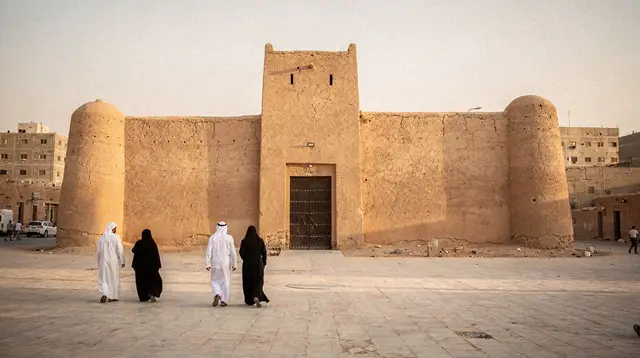
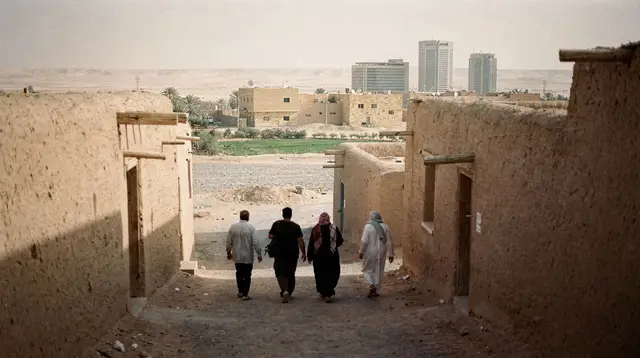
The historic centre — known as Al Dirah, sometimes written Deera — sits a short drive from Olaya and is where Riyadh’s actual history lives, as opposed to its skyline. Two dates get confused constantly here, so it’s worth separating them clearly:
- 1902: Abdulaziz Ibn Saud, then a young exile, retook Masmak Fortress from the rival Al Rashid garrison in a night raid. This is the founding legend of modern Saudi rule in Riyadh — dramatic, specific, and tied to one building.
- 1932: Thirty years later, Abdulaziz formally proclaimed the unified Kingdom of Saudi Arabia. This is a political and administrative date, not tied to a single site.
Masmak Fortress today is a small museum, easy to see in under an hour, with the door said to still carry the mark of the spear thrown in the 1902 raid. Around it, Deera Square is Riyadh’s most famous public square (and, on Fridays historically, the site of public sentencing — a fact tour guides mention rather than a current daily occurrence). Qasr Al Hukm, the Palace of Justice, faces the square, and the Souq Al Zal sits just behind — a genuinely old-fashioned market for rugs, daggers, incense and antiques, worth a slow half hour of browsing rather than a fast walk-through. Bargaining is normal here in a way it isn’t in Olaya’s malls.
A short drive from Al Dirah, the King Abdulaziz Historical Center in Al Murabba brings the two eras together properly. The National Museum of Saudi Arabia, open since 1999, walks through the country’s history from pre-Islamic times to the modern kingdom, and next to it the Murabba Palace was Abdulaziz’s own residence — a more personal, domestic counterpoint to the fortress across town. Between the two sites you get roughly two to three hours, longer if you read the exhibits properly rather than skim them.
A full-day city tour covering Masmak, Deera Square and the historical centre together saves the back-and-forth of arranging transport between three separate sites in traffic, particularly useful if this is your only day for old Riyadh.
Green Riyadh: Wadi Hanifa and Wadi Namar
Riyadh is a desert city, but it isn’t only concrete. Wadi Hanifa cuts through the western side of the city, a long, rehabilitated green valley with walking paths and parks that locals use far more than tourists do — a genuinely pleasant contrast after a day of malls and museums, especially near sunset. Further south, Wadi Namar has a small dam lake that draws weekend crowds, more of a local recreation spot than a sightseeing destination, but worth knowing exists if you want a low-key evening outside a mall or hotel.
an evening cycling route through Wadi Hanifah is one of the few tours in Riyadh that gets you moving rather than sitting in a car, and it times well with the cooler part of the day outside summer.
The camel market: a genuine working site, not a photo op built for tourists
On the eastern edge of the city, out along the Khurais road, the Riyadh Camel Market is one of the larger livestock markets in the region — trucks, pens, and genuine trading rather than a re-enactment. It’s around 30 kilometres from central Olaya, closer to an hour’s round trip with traffic than a quick detour, so it works better as a deliberate half-day plan than something squeezed between other stops. Go with realistic expectations: it’s dusty, functional and smells exactly like a livestock market, which is precisely why it’s more interesting than a staged version would be.
A guided visit to the camel market is worth the arrangement if you want context on prices, breeds and the trading rhythm rather than wandering an unfamiliar working site alone.
Getting around the city: metro, ride-hailing, and honest traffic
Riyadh built a metro — six automated lines, opened in stages between December 2024 and early 2025, with a line reaching the airport. It’s genuinely useful for fixed routes like Olaya to KAFD, but it doesn’t yet cover every hotel-to-sight journey a short-trip visitor needs, so most visitors mix metro for the easy legs with Uber, Careem or licensed taxis for the rest. Both apps work reliably and in English.
Traffic is the honest caveat for the whole city: Riyadh is built for cars, distances between districts are longer than they look on a map, and rush hour (roughly mid-morning and again in the early evening) can turn a 20-minute drive into 45. Build slack into any day that has more than two or three stops, and don’t schedule a tight connection between an afternoon sight and an evening dinner reservation across town.
Driving is on the right, and since 2018 women have been permitted to drive and can rent a car with a valid licence — a genuine, relatively recent change worth knowing if older information suggests otherwise. That said, most short-trip visitors find a driver or ride-hailing simpler than dealing with unfamiliar roads and parking.
| Route | Typical drive time (off peak) |
|---|---|
| King Khalid International Airport → Olaya | 30-45 min |
| Olaya → Al Dirah (old city) | 15-25 min |
| Olaya → King Abdulaziz Historical Center | 15-20 min |
| Olaya → Riyadh Camel Market | 40-50 min |
| Olaya → Diriyah | 30-40 min |
Add 15-20 minutes to any of these during peak traffic windows.
What a day in the city actually costs
Riyadh isn’t a budget destination, but it isn’t uniformly expensive either — the spread depends heavily on where you eat and how you get around.
| Spend level | What it looks like |
|---|---|
| Lean | Mall food courts, metro and occasional ride-hailing, free or low-cost sights (Masmak, Deera Square, Souq Al Zal) |
| Mid-range | Sit-down restaurants, regular Uber/Careem use, one or two paid tours or attractions |
| Comfortable | Hotel dining, a private driver for the day, guided tours through the historic sites |
Cards and contactless payment are accepted almost everywhere, including small shops, so there’s no real need to carry large amounts of cash — a modest amount is still useful for the souq and any smaller vendors that prefer it.
When to visit the city (separate from when to visit the desert)
The city itself is comfortable to walk around from November to March, with daytime temperatures generally in the 20-25°C range from December through February and cool evenings. Riyadh Season, running roughly October to March, overlaps with this window and adds an extra reason to time a trip for winter.
May to September gets genuinely hot, regularly above 40°C, which affects city sightseeing less than it affects desert trips — museums and malls are air-conditioned — but it does mean outdoor stretches like Souq Al Zal or Wadi Hanifa are better done early morning or after sunset. If your trip falls during Ramadan, expect shifted hours across the city, no eating or drinking in public during daylight, and a livelier atmosphere after sunset, when restaurants and markets pick back up.
Friday and Saturday are the weekend here, not Thursday and Friday, and Friday midday prayer is the quietest single hour in the city — a handful of shops pause briefly around prayer times generally, but Riyadh doesn’t shut down.
Dress and etiquette in the city, without the exaggeration
Modest dress applies to everyone in public — shoulders and knees covered is the practical rule for both men and women. The abaya is not required for foreign women, despite what older guides sometimes claim; a headscarf is only expected inside mosques, not generally around the city. Alcohol is not served or sold anywhere in Riyadh, hotels included, so don’t plan an evening around a hotel bar. Public displays of affection are best avoided, and it’s worth asking before photographing people, especially women, or any government and security buildings.
Entry requirements before you land
Saudi Arabia opened to tourism in September 2019, and most Western visitors — from the EU, UK, US, Canada, Australia and similar — need either an e-Visa, applied for online through the official portal, or a visa on arrival if their nationality qualifies. Only GCC citizens travel without any visa at all. Apply through visa.visitsaudi.com directly and check current fees and processing times there rather than relying on a fixed figure from any guide, since both can change. A passport valid for at least six months is standard practice.
Where this page ends and the rest of the trip begins
If Riyadh is your base, the natural next steps are the places built around it rather than inside it. Diriyah sits a short drive northwest and holds At-Turaif, the UNESCO-listed mud-brick citadel, and Al Bujairi Terrace across the wadi. Further out, the desert excursions region covers Edge of the World, the red sand dunes, and the heritage villages of Shaqra and Ushaiger — none of them day trips from anywhere but Riyadh, and none of them inside the city itself. Al-Qassim is the longer, less-visited option for a trip with extra days to spare.
For planning specifics, where to stay in Riyadh and how many days in Riyadh go into more depth than fits here, and the Riyadh airport arrival guide and Riyadh metro guide cover the practical first and last legs of the trip. If it’s your first time in the country rather than just the city, things to know before visiting Saudi Arabia and Riyadh for first-time visitors are worth reading before you land. A sample three-day itinerary shows how the city and one desert day trip fit together without over-scheduling either.
Riyadh city FAQ
Is Riyadh worth two or three days on its own?
Yes, if you want to see both the modern city (Olaya, KAFD, Kingdom Centre) and the historic core (Masmak Fortress, Deera Square, the King Abdulaziz Historical Center) properly rather than rushing through one. A single day covers the highlights but leaves no room for a desert day trip on top.
What’s the difference between Masmak Fortress and the 1932 founding of the kingdom?
Masmak Fortress is tied to 1902, when Abdulaziz Ibn Saud retook it in a night raid — the founding legend of Saudi rule in Riyadh specifically. The kingdom itself was formally proclaimed thirty years later, in 1932. They’re related events but different dates and different sites.
Do I need to wear an abaya as a foreign woman in Riyadh?
No. Modest dress — shoulders and knees covered — is expected of everyone in public, but the abaya is not required for foreign women. A headscarf is only needed inside mosques.
Can I get alcohol anywhere in Riyadh, including hotels?
No. Alcohol is not sold or served anywhere in Saudi Arabia, hotel bars included. This applies across the whole country, not just Riyadh.
Is the Riyadh Metro useful for a short-trip visitor?
It’s useful for specific fixed routes, including a line to the airport, but it doesn’t yet cover every hotel-to-sight connection a typical itinerary needs. Most visitors combine it with Uber, Careem or taxis rather than relying on it exclusively.
How far is the Riyadh Camel Market from central Riyadh?
About 30 kilometres east of Olaya along the Khurais road, roughly 40-50 minutes each way depending on traffic — closer to a deliberate half-day plan than a quick add-on to another stop.
What currency is used in Riyadh, and do I need cash?
The Saudi riyal (SAR), pegged to the US dollar. Cards and contactless payment are accepted almost everywhere, including small shops, though a modest amount of cash is still useful for the souq and smaller vendors.
Is Riyadh a good base for visiting Diriyah and the desert, or should I stay elsewhere?
Riyadh is the practical base for both. Diriyah is a 30-40 minute drive northwest, and the main desert sites — Edge of the World, the red sand dunes — are day trips run from Riyadh hotels rather than places with their own visitor accommodation.
A falconry and camel experience rounds out a Riyadh stay well if you have a spare afternoon and want one more hands-on activity before heading out to the desert or on to Diriyah.