The heritage trip that goes further than the desert
Most day trips out of Riyadh fall into two camps: landscape (the escarpment at Edge of the World or the Red Sand Dunes) or history close to home (Diriyah, a short drive from central Riyadh). Shaqra and Ushaiger belong to neither camp. They are a pair of najdi settlements — one a restored heritage village, the other a working old town — sitting well beyond both. There are no dunes here and no cliff edge, and this page does not cover either; if that is what you are after, the desert excursions overview sends you to the right pages.
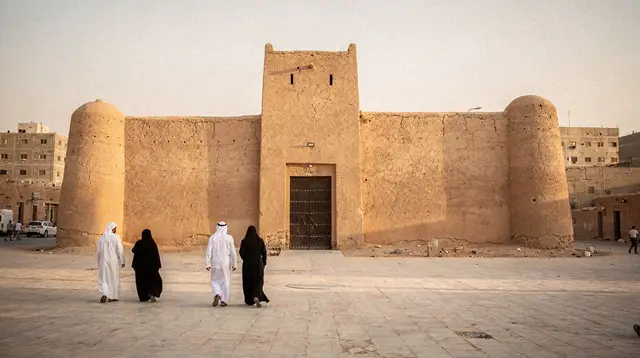
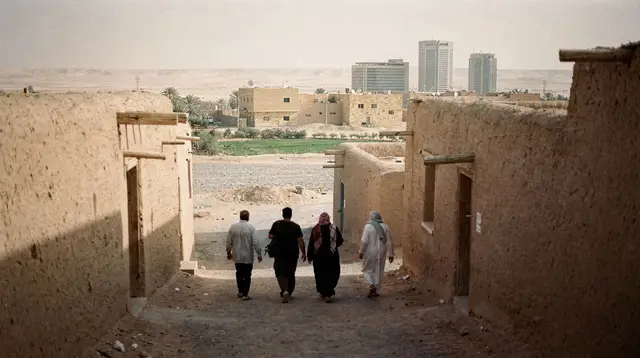
What Shaqra and Ushaiger offer instead is mud-brick architecture that predates the oil era, narrow lanes shaded by palm gardens, and a sense of what a najdi town looked like before Riyadh became a city of glass towers and ring roads. It is the most culturally dense day trip in the desert region, and also the longest one on the clock. That trade-off is the whole story of this page.
How far it actually is from Riyadh
Ushaiger sits roughly two to two and a half hours northwest of central Riyadh by road, with Shaqra a short distance further along the same route. That is a realistic driving estimate outside peak traffic, not a straight-line distance, and it assumes a private vehicle or organised tour rather than public transport, which does not reasonably serve this route. Round trip, you are looking at four to five hours of driving alone, before you add any time on the ground.
This matters more here than for the shorter trips. Edge of the World is itself a 90 to 100 km, roughly two-hour drive one way, and the Red Sand Dunes are closer still, about an hour from the city. Shaqra and Ushaiger add another hour or so of driving each way on top of that. The table below puts the three desert-region trips side by side so you can judge which one fits your schedule.
| Trip | One-way drive time | What you’re seeing |
|---|---|---|
| Red Sand Dunes | About 1 hour | Desert landscape, dune activities |
| Edge of the World | About 2 to 2.5 hours | Escarpment views, hiking |
| Shaqra and Ushaiger | About 2 to 2.5 hours | Restored najdi village, old town streets |
The honest takeaway: Shaqra and Ushaiger cost you roughly the same driving time as Edge of the World, but for architecture and village streets rather than a dramatic view. If your interest is in landscape, the shorter dune trip or the escarpment will serve you better for less time on the road. If you specifically want mud-brick heritage, this is the trip that delivers it, and the distance is the price of admission.
Ushaiger Heritage Village: what you are actually walking through
Ushaiger is a restored village built almost entirely from mud brick, with palm gardens threaded between the houses and narrow lanes that keep most of the settlement in shade for parts of the day. The restoration work has kept the scale small and walkable — this is not a sprawling site, and a couple of hours on foot covers the core of it comfortably.
What stands out is less any single building and more the coherence of the whole place: door lintels, decorative brickwork patterns, and the layout of houses around shared courtyards all point to a building tradition that has mostly disappeared from Riyadh itself. If you want the background on that architectural style before you go, the guide on najdi mud-brick architecture is a useful primer, and the dedicated Ushaiger Heritage Village guide covers the layout in more depth than fits here.
Compare this with At-Turaif in Diriyah, which is a UNESCO-listed citadel restored to museum standards with paid entry and visitor infrastructure. Ushaiger is looser and less curated — closer to walking through a real village than a heritage attraction — which is part of its appeal for travellers who found Diriyah polished but slightly sanitised.
Shaqra: the najdi town next door
Shaqra is an older najdi town rather than a single restored site, and it reads differently from Ushaiger on the ground. Expect a working town with pockets of historic mud-brick building rather than one fully preserved district, and treat it as a complement to Ushaiger rather than a separate destination worth a full trip on its own. Most tours pair the two, and that pairing makes sense: Shaqra gives context for the wider region, Ushaiger gives the concentrated heritage experience.
Neither town has meaningful hospitality infrastructure geared to tourists — no strip of restaurants or souvenir shops in the way Al Bujairi Terrace has grown up around Diriyah. Bring water, and expect a simpler, quieter visit than the more developed sites closer to Riyadh.
A guided day trip to Ushaiger that walks the heritage village’s lanes and courtyards is the most straightforward way to see the village with someone who can point out details you would otherwise miss on your own.
Heat, timing, and when to actually go
This is the point where a lot of day-trip planning goes wrong. From May to September, daytime temperatures in this part of Najd routinely run above 40°C, and walking through Ushaiger’s shadeless open areas or Shaqra’s streets in the middle of a summer day is genuinely unpleasant, not just uncomfortable. Mud-brick lanes offer some shade, but the exposed courtyards and connecting streets do not, and there is little in the way of air-conditioned refuge once you are there.
The practical fix is timing, not avoidance. Departing Riyadh early enough to arrive by mid-morning, or timing the visit for late afternoon into early evening, keeps you out of the worst of the heat even in summer. Most operators running this route already build their schedules around this, but it is worth confirming departure times if you are booking in June through August specifically.
November through March is a different experience entirely. Daytime temperatures sit in a comfortable range, walking the village at any hour is fine, and the light in the late afternoon suits the mud-brick architecture well for photography. If your travel dates are flexible and this trip is on your list, this is the window to prioritise it in. For the broader seasonal picture across the region, see when to visit Riyadh, and for the specific summer and winter breakdowns, Riyadh in summer and Riyadh in winter cover what changes month to month.
| Season | Conditions | Best time of day to visit |
|---|---|---|
| November-March | Mild, comfortable | Any time |
| April, October | Warm, transitional | Morning or late afternoon |
| May-September | Often above 40°C | Early morning or late afternoon only |
Is the full day worth it
This is the honest question this page exists to answer, and the answer depends on what you have already seen and how much time you have in Riyadh. If your trip is three days or fewer, Shaqra and Ushaiger will likely take a disproportionate share of it for what is, in the end, a village visit rather than a landmark. Travellers with tighter schedules are usually better served spending that day on Diriyah, which delivers comparable heritage interest in a fraction of the travel time, or on one of the desert landscape trips.
For longer stays — four days or more, or a second or third visit to Riyadh — Shaqra and Ushaiger earn their place. They show a side of Saudi heritage that the capital’s modern skyline and even Diriyah’s restored citadel do not, and the drive itself passes through open Najd countryside that is worth seeing on its own terms. If you have already done Edge of the World or the Red Sand Dunes and want something that is not another desert landscape, this is the natural next stop. The four-day itinerary covering Ushaiger and Qassim is built around exactly this kind of longer stay.
A combined day tour covering both Shagra and Ushaiger from Riyadh is the version to book if you want to see both towns in one outing rather than choosing between them.
Booking a tour versus driving yourself
Self-driving is possible if you are comfortable with several hours of desert highway and don’t need narration or context along the way — Saudi Arabia drives on the right, and rental cars are widely available in Riyadh, with more detail in the renting a car in Riyadh guide. But there is no meaningful public transport option, and self-driving means you will miss the background on what you are looking at unless you arrive with your own research done.
A private guide or organised tour solves both problems at once: someone else handles the driving on tired legs during the return trip, and a good guide adds context to details in Ushaiger’s architecture that are easy to walk past otherwise. a tour that extends the Ushaiger visit to include the nearby salt lake and Burudan oasis is worth considering if you want to fill the long travel day with more than the village alone — it stretches the itinerary without adding a second full drive.
If you are pairing this with other Riyadh activities on the same trip rather than as a dedicated day, checking a broader city tour of Riyadh for the days either side helps balance a demanding day out with lighter sightseeing closer to your hotel.
Combining Shaqra and Ushaiger with Al-Qassim
For travellers going further still, the road toward Shaqra and Ushaiger continues on toward Al-Qassim province, of which Buraydah is the main town. This is a genuinely long excursion from Riyadh — treat it as a separate, longer day or an overnight rather than something to bolt onto the Ushaiger visit — and the site does not push it as a headline trip for that reason. If it interests you regardless, the Qassim day trip guide has the detail, and pairing the two regions across a longer stay is covered in the Ushaiger and Qassim four-day itinerary mentioned above.
Practical notes before you go
Bring more water than you think you need, particularly outside the winter months — there is little for sale once you are in the villages themselves. Modest dress applies here as it does everywhere in the region: shoulders and knees covered for everyone, no headscarf requirement outside mosques. Comfortable, closed shoes matter more here than on the dune trips, since you will be walking on uneven brick and packed earth rather than sand or paved paths.
Prices for organised tours vary by operator and by whether the trip includes Shaqra, the salt lake extension, or Ushaiger alone — check the current rate on the booking page for the tour you choose rather than relying on any figure quoted here, since these change over time.
FAQ about visiting Shaqra and Ushaiger from Riyadh
How far is Ushaiger from Riyadh?
Ushaiger is roughly two to two and a half hours from central Riyadh by road, with Shaqra a short distance further along the same route. This is a driving-time estimate outside peak traffic hours, and it is longer than the drive to either the Red Sand Dunes or Edge of the World.
Is Shaqra and Ushaiger worth a full day trip from Riyadh?
It depends on your itinerary length. On a short trip of three days or fewer, the travel time makes it a heavy use of a day compared to closer options like Diriyah. On a longer stay, or as a second visit to Riyadh, it offers heritage architecture that Diriyah and the desert trips don’t, and is worth the drive.
Can you visit Ushaiger without a tour?
Self-driving is possible with a rental car, since Saudi Arabia drives on the right and the route follows a main highway. There is no practical public transport option, so most visitors either drive themselves or book an organised tour with a driver and guide included.
What is the best time of year to visit Ushaiger and Shaqra?
November through March, when daytime temperatures are comfortable for walking at any hour. From May to September, temperatures often exceed 40°C, and visits should be timed for early morning or late afternoon to avoid the worst heat.
Is Ushaiger the same as Diriyah?
No. Diriyah is close to central Riyadh and centred on the UNESCO-listed At-Turaif citadel with restaurants and visitor facilities at Al Bujairi Terrace nearby. Ushaiger is a separate, more distant village further northwest, with a looser, less curated restoration and no comparable visitor infrastructure.
Do I need a 4x4 to reach Shaqra and Ushaiger?
No. The route follows paved main roads suitable for a standard rental car, unlike the final unpaved stretch toward Edge of the World, which does require a 4x4.
Is there anywhere to eat in Ushaiger or Shaqra?
Options are limited compared to Riyadh or Diriyah. Bring water and, if needed, food for the day, and don’t expect a developed restaurant strip in either town.
Can Shaqra and Ushaiger be combined with a trip to Al-Qassim?
Yes, but treat Qassim as a separate, longer excursion rather than an add-on to the same day — the extra distance makes it more realistic as its own day or an overnight for travellers with a longer stay in the region.