Why the distance gets misrepresented
Edge of the World shows up in a lot of Riyadh content as an easy afternoon detour, sometimes with a claim that it is thirty minutes from the city or that you can see the Red Sea from the rim. Neither is true, and getting the distance wrong is the single most common way visitors end up disappointed or, worse, caught out after dark on a desert track.
The formation is a section of the Tuwaiq escarpment, a limestone cliff line that runs for hundreds of kilometres across central Saudi Arabia. The stretch known as Edge of the World, or Jebel Fihrayn, lies 90 to 100 km northwest of Riyadh. In road terms that is about two to two and a half hours each way, not counting stops, and the last part of the route is not a paved road at all — it is a desert track that a 4x4 needs to cross. There is no sea view from up there. What you get instead is a flat plateau that ends abruptly in a drop of well over 100 metres, with the desert floor stretching out below to the horizon.
If a tour or article promises Edge of the World in half an hour from your hotel in Olaya, or frames it as something to squeeze in before lunch, treat that as a sign the operator hasn’t driven the route themselves.
How the drive actually breaks down
| Segment | Approximate time | Road type |
|---|---|---|
| Riyadh (Olaya/Al Malqa) to the highway turn-off | 45–60 min | Paved highway |
| Turn-off to the last village or checkpoint | 30–45 min | Paved secondary road |
| Final approach to the rim | 20–40 min | Unpaved desert track, 4x4 required |
| Total, one way | ~2–2.5 hours | Mixed |
That final unpaved stretch is the part that changes the calculation. A two-wheel-drive rental car can get badly stuck in soft sand, and there’s no reliable phone signal to call for help once you’re off the highway. This is the main reason most visitors book a tour with a driver who knows the current track rather than renting a car in Riyadh and navigating it themselves. If you’d rather have a private driver for the day without joining a group, see our guide to hiring a private guide in Riyadh.
Most organised trips run as a Half-day or evening excursion out to the escarpment, with pickup from a central Riyadh hotel and a 4x4 handling the final approach.
What there is to actually do
Edge of the World is not a site with facilities, signage, or a visitor centre. What you’re paying for is access and, usually, a guide who knows where the track is currently passable. Once you’re up on the plateau, there are a few ways to spend the time:
- Walk the rim. A short, flat walk along the top gives you a series of viewpoints over the drop. Full route notes are in our Edge of the World hiking trail guide.
- Sit and watch the light change. This is what most people actually come for. Sunset visits are covered in detail in sunrise versus sunset at Edge of the World.
- Add a desert dinner. Some tours pair the viewpoint with a Bedouin-style keshta camp and evening meal nearby, which stretches the trip into a full evening rather than a there-and-back drive.
- Combine it with a short hike and photo stop, which is how the sunset hiking tour along the escarpment is usually structured.
What you shouldn’t expect: shade, toilets, or a marked path in most sections. Bring water, sun protection for a daytime visit, and a layer for the wind at the top, which picks up noticeably once you’re above the desert floor.
What to wear and pack
Standard modest dress applies out here just as it does anywhere else in Riyadh — shoulders and knees covered for everyone, and comfortable closed shoes rather than sandals, since the ground near the rim is loose gravel and soft sand rather than a paved viewpoint. The abaya isn’t a requirement for foreign women, but light, breathable layers work better than anything tight or dark for a desert afternoon that turns cold once the sun drops. A scarf or light jacket is worth having for the wind at the top, especially for a sunset or sunrise visit when temperatures swing fastest. Our general packing notes are in what to pack for Riyadh, and the dress-code specifics — what’s actually required versus what’s just tourist folklore — are covered in what to wear in Riyadh.
Sun protection matters more than most first-time visitors expect: there’s no shade structure anywhere on the plateau, so a hat and sunscreen are worth packing even for a trip timed around sunset, since you’ll usually arrive with an hour or more of daylight still overhead. A basic first-aid kit and a fully charged phone are sensible too, given the patchy signal once you’re off the highway.
Heat, seasons, and when this trip stops making sense
The Tuwaiq escarpment has no shade and no water source, which makes the seasonal swing in this region sharper than it is in central Riyadh. From roughly May to September, daytime temperatures out here regularly clear 40°C with nothing to break the sun, which is why guided operators shift almost entirely to late-afternoon and evening departures during those months rather than running midday trips. If you’re travelling in the hot half of the year, it’s worth reading Riyadh in summer and the month-by-month detail in Riyadh weather by month before you commit to a departure time, since a tour that looks identical on paper can mean a very different experience depending on when it actually leaves the hotel.
Safety at the edge — the part worth taking seriously
The drop from the rim is a genuine cliff edge, and there are no barriers, fences, or warning signs at most viewpoints. People have been seriously hurt getting close to the edge for photos, particularly in low light or windy conditions. A few practical points:
- Stay well back from the actual lip, especially near sunset when the light makes the edge harder to judge and everyone wants the same shot.
- Keep children within arm’s reach at all times; there is no fencing to rely on.
- Loose gravel near the rim can shift underfoot — test your footing before leaning out.
- If you’re visiting independently rather than with a guide, don’t rely on phone GPS alone for the final approach; tracks shift with the sand and a guide who drives the route regularly will know the current line.
None of this should put you off going. It just means the visit rewards ordinary caution rather than the casual approach that a flat viewpoint might invite.
Access rules and closures change — check before you go
Unlike a museum or a fixed attraction, Edge of the World doesn’t have a permanent set of opening hours. Access has been restricted or closed outright during the hottest months in past years, and the condition of the desert track itself can vary with recent weather. Don’t plan around a schedule you found online months ago. The practical approach is to book through a tour operator who is actively running trips that week — if the site is closed or the track is impassable, they’ll know before you set off, and you won’t have wasted half a day driving out only to be turned back. Current conditions and typical seasonal closures are tracked in our Edge of the World seasons and closures guide.
When to go
| Period | Conditions | Verdict |
|---|---|---|
| November–March | Mild days, cold evenings, clear skies | Best window, especially for sunset |
| April–May | Warming up, occasional sandstorms | Still workable, go earlier in the day |
| June–September | Often above 40°C by midday | Avoid daytime visits; some periods see access closed |
| October | Cooling down, good visibility | Good, book ahead as demand rises with Riyadh Season |
Whatever the season, sunset is the recommended time. The light is softer, the heat has usually dropped, and the colour on the escarpment walls is at its best in the last hour before the sun goes down. A sunrise visit is possible too and avoids crowds, but means leaving Riyadh well before dawn.
Group tour or private trip
A shared group tour is the cheaper way to see Edge of the World and works fine if you’re flexible on timing and don’t mind a fixed itinerary. A private trip costs more but lets you set your own departure time — useful if you specifically want to arrive 45 minutes before sunset rather than whenever the group bus leaves — and usually means more flexibility on how long you stay at the rim. The trade-offs are laid out in private versus shared Edge of the World tours.
How it compares to the other desert stops near Riyadh
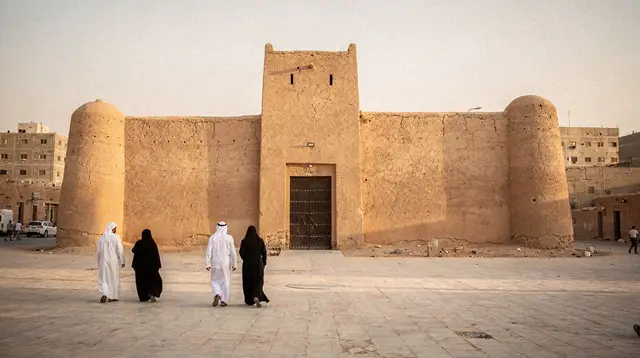
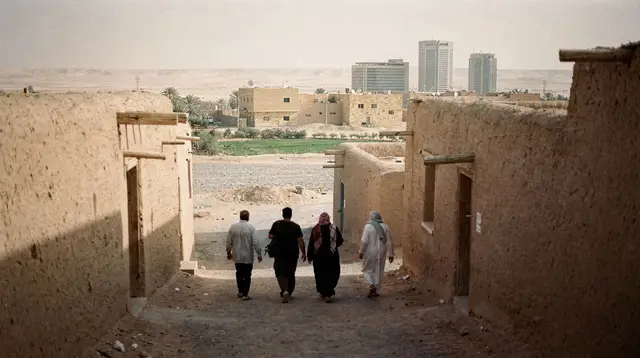
Edge of the World, the Red Sand Dunes, and the heritage villages of Shaqra and Ushaiger all sit in the same general direction from Riyadh but serve different purposes. The dunes are about the activity — quad biking, sandboarding, dune bashing — with the desert landscape as the backdrop rather than the point. Shaqra and Ushaiger are about mud-brick architecture and a slower, walkable village visit. Edge of the World is neither: there’s no activity built around it and no buildings to see. The reason to go is the emptiness and the drop itself. If you’re weighing which one fits your day, the direct comparison is in Red Sand Dunes versus Edge of the World, and the wider set of options is in Riyadh’s desert safaris.
If you only have one desert excursion in your Riyadh trip, Edge of the World is the one to prioritise for the view; pick the dunes instead if you want an active few hours, or Shaqra/Ushaiger if heritage architecture matters more to you than a dramatic viewpoint.
Vehicle choice varies by operator too — some trips run in a standard 4x4 SUV built for the track rather than for dune driving, while dune-focused excursions nearby often use quad bikes instead. If you’re deciding between the two styles of desert transport before you book, camel versus quad versus 4x4 in the Riyadh desert breaks down what each one actually feels like and who each suits. Families weighing whether this trip works with children in tow should also check family desert trips from Riyadh, since the lack of barriers at the rim is a bigger factor for a family itinerary than it is for a couple or solo traveller.
Combining it with the rest of your trip
Because a return trip to Edge of the World takes up most of an afternoon or evening, most visitors treat it as one dedicated slot in a multi-day Riyadh itinerary rather than something bolted onto a city sightseeing day. If you’re planning several days that mix the city with desert excursions, see Riyadh and the desert in four days for a full-trip structure that leaves room for it without rushing.
A desert dinner afterwards is a natural way to extend the evening once you’re already out that direction — see desert dinner and kashta near Riyadh, or the Sunset desert dinner option that some operators run as a standalone evening.
Edge of the World: questions worth asking before you book
Is Edge of the World really 90 to 100 km from Riyadh?
Yes. Jebel Fihrayn, the section of the Tuwaiq escarpment known as Edge of the World, sits roughly 90 to 100 km northwest of central Riyadh. With highway driving plus the final unpaved stretch, that translates to about two to two and a half hours of travel time each way, not the thirty minutes sometimes claimed online.
Can you see the Red Sea from Edge of the World?
No. Edge of the World is nowhere near the Red Sea coast — Riyadh sits deep in the interior of Saudi Arabia. What you see from the rim is the desert floor of the Tuwaiq escarpment stretching to the horizon, not open water.
Do you need a 4x4 to visit?
For the final stretch, yes. The approach road turns into an unpaved desert track before reaching the rim, and a standard two-wheel-drive rental car can get stuck in the sand. This is the main reason most visitors book a guided tour with a 4x4 vehicle rather than driving themselves.
Is Edge of the World ever closed?
Access rules and opening periods have changed in past years, including closures during the hottest summer months. There’s no fixed year-round schedule, so it’s worth confirming current access with a tour operator shortly before your visit rather than relying on older information.
Is it safe to walk near the edge?
The viewpoints have no barriers or fencing, and the drop is significant. It’s safe with ordinary caution — stay back from the actual lip, be especially careful near sunset when light and footing are trickier, and keep children close at all times.
What’s the best time of day to visit?
Sunset, by a clear margin. The heat has usually eased, the light is softer for photos, and the escarpment takes on warmer colours in the final hour before the sun sets. A pre-dawn sunrise visit is also possible for those who prefer fewer other visitors.
Should I book a private or a group tour?
A group tour is more affordable and simplest to book. A private tour costs more but lets you choose your own departure time, which matters if you want to arrive at a specific point before sunset rather than on a fixed group schedule.
Can I combine Edge of the World with other desert stops in one day?
It’s possible but tight, since the round trip alone takes four to five hours. Most itineraries treat Edge of the World as its own half-day or evening slot, and save the Red Sand Dunes or Shaqra/Ushaiger for a separate day.
What should I wear for the visit?
The same modest baseline as anywhere else in Riyadh — shoulders and knees covered, nothing required beyond that for foreign visitors. Closed, comfortable shoes matter more here than the dress code itself, since the ground near the rim is loose gravel and sand rather than a paved path, and a light layer helps for the wind and the temperature drop after sunset.
Is this trip suitable for a photo of the sunset that’s become popular online?
Yes — the image of a lone figure or vehicle silhouetted at the cliff edge with the desert stretching out below is exactly what draws most sunset visitors here, and it’s covered in more detail in sunset at the Edge of the World. Just keep the safety points above in mind: the same low light that makes the shot work also makes the actual edge harder to judge underfoot.