Riyadh and the desert in four days
Why four days instead of three
A three-day version of this trip exists, and it covers the same four stops: Riyadh city, Diriyah, Edge of the World, and the red sand dunes. The difference here is pacing, not content. Three days works if you’re willing to pair a desert excursion with a city stop on the same day, or to leave straight from the dunes to the airport with no slack. Four days removes that pairing entirely.
The extra day is not a luxury add-on. Riyadh is a car city, distances between neighbourhoods are long, and peak-hour traffic in Olaya and along the ring roads can add 30 to 45 minutes to a trip that should take 15. A desert excursion that starts or ends with a slow crawl through the city eats into the day and into how you feel by evening. Spreading four stops over four days means each one gets a clear morning or afternoon, with no drive-then-drive-again squeeze.
Base yourself in central Riyadh — Olaya is the most convenient, with Al Malqa and KAFD as alternatives closer to the newer business district. You’ll return to the same hotel each night; nothing on this itinerary requires a change of base, including the desert days.
Day 1: Arrival and central Riyadh
Land at King Khalid International Airport, about 35 km north of the centre. Outside peak hours the drive to Olaya takes 30 to 45 minutes by taxi, Uber, Careem, or the Riyadh Metro, whose airport line is now running. Check in and treat the rest of the day as a settling-in day rather than a full sightseeing day — this is the first place where four days buys you slack that three days doesn’t.
In the afternoon, walk or take a short ride into Olaya to see the modern skyline: the Kingdom Centre at 302 metres, with the Sky Bridge near the top, and the Al Faisaliah Tower nearby. If you want context on the wider city rather than a single viewpoint, a city tour is a reasonable way to get oriented on day one without committing to a packed schedule.
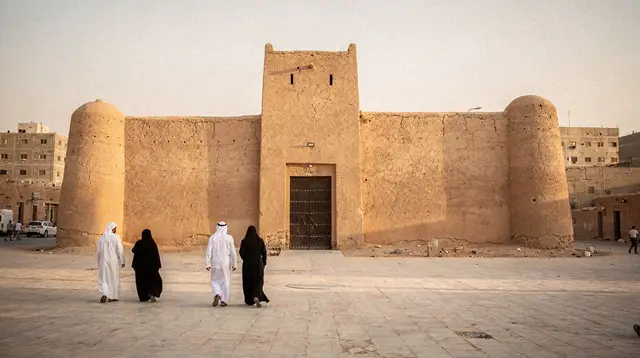
In the evening, head to the historic centre (Al Dirah/Deera) for Masmak Fortress, the mud-brick fort taken in 1902 by Abdulaziz Ibn Saud — the event that led to the founding of the modern kingdom in 1932, two different dates that are easy to blur together. Deera Square and the nearby Qasr Al Hukm sit right next to it, and Souq Al Zal is worth a slow browse for rugs, daggers, and incense rather than a rushed one.
A half-day orientation tour through Riyadh’s old and new districts is a practical way to cover Olaya and the historic centre on the same first day without driving yourself.
Day 2: Diriyah, on its own
Diriyah is not a Riyadh neighbourhood — it’s a separate town on the Wadi Hanifa, northwest of the city, and it earns a full day here rather than a rushed afternoon tacked onto something else. This is the birthplace of the first Saudi state, founded in the 18th century, and its centrepiece is the At-Turaif District, a mud-brick citadel that UNESCO listed in 2010.
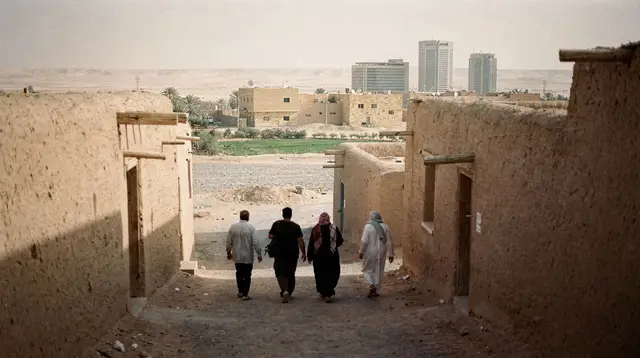
Spend the morning walking At-Turaif at an unhurried pace — the restored alleys and courtyards reward slow walking more than a fast circuit does. Cross the wadi to Al Bujairi Terrace for lunch; it’s the restaurant and café district facing At-Turaif and a natural place to sit for an hour rather than eat standing up.
A guided walk through At-Turaif and Bujairi Terrace covers the history that’s easy to miss walking through on your own, particularly the distinction between Diriyah’s founding-era buildings and the newer restoration work around them.
Return to your Riyadh hotel by early evening. Because this day has no desert excursion attached to it, there’s no early alarm and no long drive back against traffic — just a normal end to the day.
Day 3: Edge of the World, and nothing else
This is the day the extra time is really for. Edge of the World (Jebel Fihrayn) sits on the Tuwaiq escarpment roughly 90 to 100 km northwest of Riyadh — about two to two and a half hours’ drive each way, with the final stretch on unpaved desert track that requires a 4x4 and, in practice, a private driver rather than a self-drive rental. That’s four to five hours of driving alone, before you’ve walked the escarpment itself.
Pairing this with a city visit on the same day, as a three-day itinerary sometimes has to, means arriving back late and tired with no time to enjoy the evening. Here it stands alone. Leave in the morning, walk the clifftop trails, and time the visit toward late afternoon if you can — sunset over the escarpment is the best light, though there are no barriers at the edge, so keep well back regardless of the view. Access rules and opening periods here do shift, including closures in the hottest months, so book with a licensed operator and confirm before you go.
A full-day trip to Edge of the World with private 4x4 transport is the standard way to do this leg, and it removes the need to arrange your own driver for the unpaved final stretch.
Come back to Riyadh in the evening and do nothing else. This is deliberately the least-planned day on the itinerary.
Day 4: A slow morning, then the red sand dunes
After a full day of driving and walking on day three, this is where the fourth day earns its place: a genuinely free morning, with no excursion booked before midday. Sleep in, have a slow breakfast, or use the time to revisit something from day one at a relaxed pace — Wadi Hanifa’s green trails or the National Museum of Saudi Arabia both work well as low-effort morning options.
The red sand dunes are the shortest excursion on this trip — about an hour west of Riyadh along the Mecca road — which is exactly why they fit into an afternoon rather than needing a full day of their own. Head out after lunch for quad biking, sandboarding, and dune bashing, and stay through a camp dinner as the light drops; this is a shorter, closer trip than Edge of the World, and treating it that way (afternoon and evening rather than sunrise-to-sunset) is part of why the pacing here works.
An afternoon and evening at a red dunes desert camp with quad biking and dinner is the easiest way to close out the trip without arranging separate transport back after dark.
Fly out the next day, or extend if you have more time — Al-Qassim is the next logical stop for travellers with a fifth day, though it isn’t part of this itinerary.
Getting around on these four days
| Day | Main activity | Typical time on the road |
|---|---|---|
| 1 | Airport to Olaya, city sights | 30–45 min transfer, short city hops |
| 2 | Diriyah (At-Turaif, Bujairi Terrace) | Under an hour each way from central Riyadh |
| 3 | Edge of the World | Roughly 2–2.5 hours each way, plus unpaved track |
| 4 | Free morning, then red sand dunes | About an hour each way in the afternoon |
None of this requires renting a car. Uber and Careem cover city transfers well, and both desert excursions are normally booked with a private driver or guide rather than self-driven, given the unpaved sections and the general preference for a fixed pickup time from your hotel.
Money, dress, and timing on this trip
You’ll need a Saudi e-Visa for most Western nationalities (EU, UK, US, Canada, Australia and similar), arranged online before you travel through the official visa.visitsaudi.com portal — only GCC citizens travel without one, and there’s no fixed fee to quote here, so check the portal for the current figure. Tourism only opened to international visitors in September 2019, which is worth keeping in mind if you’re comparing notes with an older guidebook.
The currency is the Saudi riyal (SAR), pegged to the US dollar; cards and contactless are accepted almost everywhere, including small shops, though it’s worth carrying some cash for the souq and for isolated desert stops. Alcohol is not served or sold anywhere in Saudi Arabia, including in hotels. Dress modestly — shoulders and knees covered — but the abaya is not required for foreign women; a headscarf is only needed inside mosques, not generally in public. The weekend runs Friday–Saturday, and Friday midday prayer is the quietest stretch of the week.
If your trip falls during Ramadan, expect shifted hours at sights and restaurants, and no eating, drinking, or smoking in public during daylight. November to March is the most comfortable season for the desert days on this itinerary, with daytime temperatures around 20–25°C in December–February; May to September regularly passes 40°C, and desert excursions in that window are better done at first light or late afternoon rather than midday.
Frequently asked questions about this four-day Riyadh and desert itinerary
Is four days enough to see Riyadh and the desert around it properly?
Yes — four days covers the same stops as a three-day itinerary (Riyadh city, Diriyah, Edge of the World, and the red sand dunes) but gives each one its own day, plus a buffer morning after the longest excursion.
Why not combine Diriyah with a desert day to save time?
You can, but it tends to make for a long, tiring day given the driving distances involved, and it leaves no slack if Riyadh’s peak-hour traffic runs longer than expected. Keeping Diriyah on its own day is what makes this itinerary the slower version.
Do I need a 4x4 or a private driver for Edge of the World?
Yes. The final stretch to the escarpment is unpaved desert track, and this leg is normally done with a licensed tour or private driver rather than a self-drive rental car.
Can I do the red sand dunes and Edge of the World on the same day?
It’s possible but not recommended on this itinerary — the dunes are about an hour away and the escarpment is two to two and a half hours away, and combining them makes for a very long day with little time to actually enjoy either site.
Do I need to rent a car for this itinerary?
No. Uber and Careem cover city transfers, and both desert excursions are typically booked with a private driver or guide, given the unpaved sections involved.
Is the abaya required for female visitors on this trip?
No. Modest dress (shoulders and knees covered) is expected for everyone in public, but the abaya is not mandatory for foreign women. A headscarf is only required inside mosques.
What’s the best time of year to do this specific four-day route?
November to March, when daytime temperatures sit around 20–25°C. From May to September, temperatures regularly pass 40°C, and both desert days are better scheduled for early morning or late afternoon.
Do I need a visa to do this itinerary?
Most Western visitors need an e-Visa, arranged online in advance through the official visa.visitsaudi.com portal, or a visa on arrival for eligible nationalities. Only GCC citizens travel without one.
tours.4 days
Verified deep-linked GetYourGuide tours. Book through these links and we earn a small commission at no cost to you.
GetYourGuide does not provide a product photo for this activity — the image shows the meeting point, photographed by us.