Arriving at Riyadh airport: RUH to the city
How do I get from Riyadh airport to the city centre?
King Khalid International Airport (RUH) sits about 35 km north of central Riyadh. The Riyadh Metro now reaches the airport, and Uber, Careem and licensed taxis run the same route, usually 30 to 45 minutes to Olaya outside peak traffic. Most Western visitors need an e-Visa or a visa on arrival before they land.
Landing at King Khalid International Airport
King Khalid International Airport, usually written as RUH, sits about 35 km north of central Riyadh. It’s the main gateway for a stay based in the capital, and for most visitors it’s also the first real test of how the country actually works day to day, before the sightseeing starts. This page covers exactly that: clearing entry formalities and getting from the terminal to your hotel in Olaya, Al Malqa or wherever you’re staying, for a full trip rather than a short layover. If you’re only in Riyadh for a few hours between flights, our layover guide is the more useful read. If you want the metro network itself explained line by line, see the Riyadh Metro guide.
The airport has multiple terminals serving international and domestic flights, plus a dedicated royal terminal you won’t be using. Signage is in Arabic and English throughout, immigration counters are staffed, and English is widely understood at passport control, so the process is more straightforward than first-time visitors sometimes expect. It’s also worth checking what to pack for Riyadh before you fly, since a few basics make the arrival smoother.
With RUH about 35 km north of the city, the ride to Olaya, Al Malqa or wherever you’re staying is a real leg of the trip, so arrange it ahead of landing. Keep your hotel address and flight number to hand, and check that the drop-off matches your accommodation. You can look at airport transfer options on Kiwitaxi for the ride into Riyadh.
Before you fly: entry formalities
Saudi Arabia opened to international tourism in September 2019, and the entry process for leisure visitors is now routine. Most Western nationalities — including the EU, UK, US, Canada, Australia, Japan and South Korea — need either an e-Visa arranged online in advance, or a visa on arrival if their nationality is on the eligible list. GCC citizens are the exception: they travel with no visa requirement at all.
The official channel for the e-Visa is the government portal, visa.visitsaudi.com. Apply there directly rather than through a third-party site, and allow a few working days before your trip in case of delays. We won’t quote a fixed fee here, because visa costs and processing times change and the only reliable source is the portal itself at the time you apply. The same applies to any visa-on-arrival charge: check the current figure before you travel rather than relying on a number from an old blog post.
Two practical points matter more than the fee:
- Passport validity. Your passport needs at least six months of validity remaining from your date of entry. Airlines usually check this at check-in, and it’s an easy thing to overlook if you renewed a passport mid-cycle.
- What you’ll be asked at the counter. Immigration officers may ask about your accommodation and onward travel. Having your hotel confirmation and return flight details accessible on your phone speeds things up.
For a longer look at the visa process itself, including who’s eligible for a visa on arrival versus who needs to apply ahead, see Saudi Arabia e-Visa and entry rules. If you’re arriving during Ramadan, note that the visa process itself doesn’t change, but daily life around you does — worth reading visiting Riyadh during Ramadan if your dates overlap.
Clearing arrivals and finding your way out
Once through passport control, baggage claim and customs follow the layout you’d expect at any major international airport. There’s nothing unusual to declare beyond the standard restrictions on alcohol, which is banned throughout the country including in hotels — worth knowing before you pack, not after you land. ATMs, SIM card counters and currency exchange desks are available in the arrivals hall if you didn’t sort a SIM or cash beforehand; see staying connected in Saudi Arabia and money, cards and payments in Riyadh for what to expect on both fronts.
If you have a long layover before a connecting flight, or arrive with a few hours to spare before check-in, a lounge with a shower and a quiet seat is a reasonable way to reset. If that’s your situation, an airport lounge pass at RUH or the separate Hayyak lounge access option both work on a walk-in basis and don’t require you to be flying a particular airline or class.
Getting from RUH to central Riyadh
This is the part most first-time visitors want sorted before they land. Riyadh is a car-dependent city with long distances and traffic that gets genuinely dense at peak hours, so it pays to know your options rather than deciding in the arrivals hall.
| Option | Approx. time to Olaya | Notes |
|---|---|---|
| Riyadh Metro | 45–60 minutes | Automated six-line network, connects to the airport; fixed fare, no traffic delays, but requires a station near your hotel and manageable luggage |
| Uber / Careem | 30–45 minutes off-peak | Fare shown upfront, driver tracked on the app; the most common choice for visitors |
| Licensed airport taxi | 30–45 minutes off-peak | Readily available outside arrivals; confirm the meter is running or agree a fare before departing |
| Private driver / transfer | 30–45 minutes off-peak | Booked in advance, meets you at arrivals with a name board; the standard choice for anyone also planning a desert excursion later in the trip |
None of these figures hold during rush hour. Riyadh’s traffic can double a journey time in the late afternoon and early evening, so if you’re arriving then, build in extra time rather than assuming the off-peak estimate.
Riyadh Metro
The Riyadh Metro is an automated six-line network that opened in stages between December 2024 and early 2025, and it now connects directly to the airport. It’s worth being clear about this because older guides written before the network opened sometimes claim Riyadh has no metro at all — that’s simply out of date. For a visitor with light luggage and a hotel near a station, the metro is a genuinely useful, traffic-free option and noticeably cheaper than a car. For anyone with a lot of luggage, an odd-hours arrival, or a hotel that isn’t within easy walking distance of a station, a car remains the more practical choice. The full breakdown of lines, stations and how to pay is in our Riyadh Metro guide; the comparison of metro versus Uber in Riyadh is worth a look if you’re weighing the two for your whole stay, not just the airport run.
Uber and Careem
Both apps operate throughout Riyadh and both are heavily used by residents and visitors alike. The advantage over a taxi is straightforward: you see the estimated fare before you commit, you can track the driver’s approach, and you have a trip record if anything needs following up. Pickup points at RUH are clearly signed outside each terminal. For more detail on setting up either app before you land, including payment methods that work reliably for foreign cards, see Uber and Careem in Riyadh.
Licensed taxis
Airport taxis are available directly outside arrivals and don’t need to be booked ahead. They’re a reasonable fallback if your phone has no signal yet or you’d rather not fuss with an app on arrival. The one thing worth doing is confirming the fare or the meter before the car pulls away — this is standard practice everywhere, not a Riyadh-specific concern, but worth a mention since it’s the one moment where a first-time visitor can overpay without realising it.
Private driver or transfer
If you’re planning to head out to the desert during your stay — Edge of the World, the Red Sand Dunes, or Diriyah — a private driver is the norm for those trips anyway, and some visitors choose to arrange the airport pickup with the same driver or company to start the trip smoothly. It costs more than a ride-hailing app but removes any uncertainty about where to meet your driver, which matters more after a long-haul flight than it might sound. A full guided introduction to the city on your first day, with transport included, is also a way to combine the transfer with orientation — see the full-day guided city tour with transport or the more compact half-day city tour if you’d rather ease in gently before tackling logistics yourself.
Renting a car instead
Self-driving from the airport is possible — major rental desks operate at RUH, and women have been able to drive in Saudi Arabia since 2018, so this isn’t a gendered restriction the way it might have been assumed a decade ago. That said, Riyadh’s road layout, signage conventions and driving style take some adjusting to for a first-time visitor, and long-distance desert routes are usually better handled by a driver who knows the terrain and current road conditions. If you do want your own car for flexibility around the city, our renting a car in Riyadh guide covers what to expect at the rental counter and on the road.
What to have ready before you land
A short checklist makes the arrival less stressful:
- E-Visa approval or visa-on-arrival documentation, printed or saved offline in case Wi-Fi is patchy in the arrivals hall.
- Passport with at least six months’ validity.
- Hotel confirmation and address, ideally in Arabic script as well as English — useful for a driver even if you’re using an app.
- A payment method that works. Cards and contactless payment are accepted almost everywhere, including small shops, but it’s worth carrying a little cash for a taxi driver without a card reader or a stop in a souq later in the trip. See money, cards and payments in Riyadh.
- A local SIM or eSIM sorted, so your ride-hailing app works the moment you land. Details in staying connected in Saudi Arabia.
If this is your first visit to the city more broadly, Riyadh for first-time visitors and is Riyadh safe for tourists are useful companion reads, and where to stay in Riyadh helps you pick a base that keeps this airport transfer as short as possible. For planning the days that follow, one day in Riyadh and the broader things to do in Riyadh hub are good next stops, and the government’s own visa tool is linked from our visa planning page if you want the official source in one click.
Timing your arrival around traffic and prayer
Riyadh’s rush hours build in the morning and again in the late afternoon into evening, and a 30-minute drive can stretch noticeably longer in that window. There’s also a short, predictable lull around Friday midday prayer, when traffic and many shops quiet down for a while — not something that affects an airport transfer much, but useful context if your arrival lands on a Friday. The weekend across the country runs Friday to Saturday, not Thursday to Friday, which occasionally trips up visitors used to a different regional pattern.
FAQ: Riyadh airport arrival
How far is King Khalid International Airport from central Riyadh?
About 35 km north of the city centre. The drive to Olaya takes roughly 30 to 45 minutes outside peak traffic, longer during the morning and evening rush.
Can I take the metro from Riyadh airport into the city?
Yes. The Riyadh Metro is an automated six-line network that opened in stages between December 2024 and early 2025, and it connects to the airport. It’s a fixed-price, traffic-free way into the city if your hotel is near a station.
Is Uber or Careem better than a taxi at RUH?
Both work well. Uber and Careem let you see the fare and driver details in advance, which most visitors find more reassuring than flagging a taxi. Licensed airport taxis are readily available and metered, but confirm the meter is running or agree a fare before you set off.
Do I need a visa to visit Riyadh?
Most Western visitors do. Citizens of the EU, UK, US, Canada, Australia and several other countries can apply for an e-Visa online through the official portal, visa.visitsaudi.com, or get a visa on arrival if their nationality is eligible. Only GCC citizens travel without any visa.
How much does the Saudi e-Visa cost?
Fees change, so this page won’t quote a fixed figure. Check the current amount and processing time on the official portal, visa.visitsaudi.com, before you book flights.
What passport validity do I need to enter Saudi Arabia?
Your passport should be valid for at least six months from your date of entry. Airlines typically check this at boarding, so confirm it well before travel.
Is it faster to arrange a private driver than to use the metro?
A private driver or ride-hailing car is usually faster door-to-door, especially with luggage, and it’s the practical choice if your hotel isn’t near a metro station. The metro is worth it mainly if you’re travelling light and your route lines up with a station.
Getting around Riyadh on GetYourGuide
Verified deep-linked GetYourGuide tours. Book through these links and we earn a small commission at no cost to you.
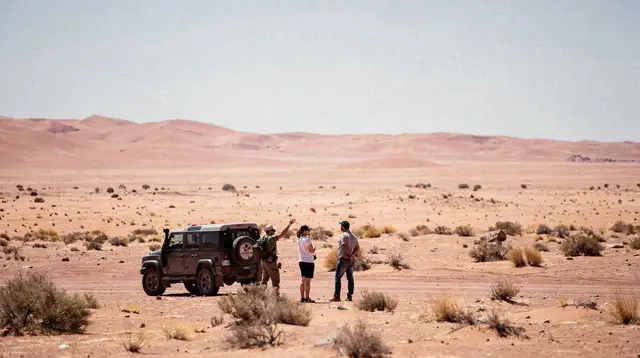
GetYourGuide does not provide a product photo for this activity — the image shows the meeting point, photographed by us.