Renting a car in Riyadh
Should I rent a car to get around Riyadh?
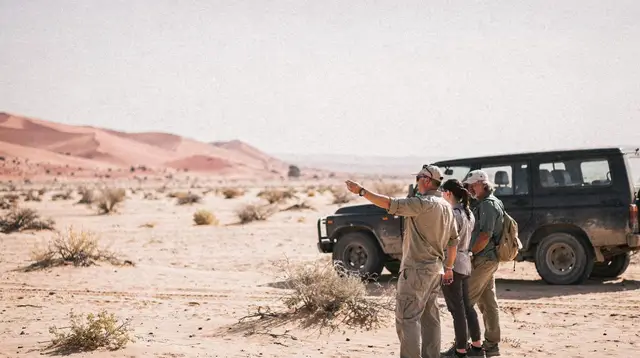
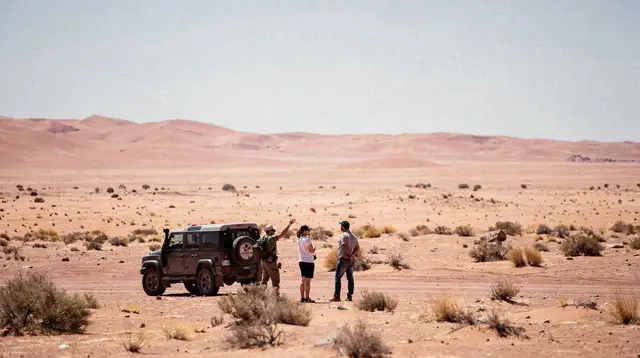
A rental car works well for the city itself, where you drive on the right and distances between Olaya, Al Malqa and Diriyah are long but paved. It is a poor choice for desert excursions like Edge of the World or the Red Sand Dunes, where the final stretch is unpaved track and a 4x4 with an experienced driver is the practical option.
What driving yourself in Riyadh actually involves
Riyadh is built for cars. The city sprawls across wide grid roads and multi-lane highways, distances between neighbourhoods like Olaya, Al Malqa and the King Abdullah Financial District are genuinely long, and public transport, while improving, does not yet reach every hotel or office park. For a visitor who is comfortable driving in an unfamiliar city, a rental car buys flexibility that ride-hailing and the Riyadh Metro cannot always match, especially if you are staying more than a few days or moving between several parts of town in one day.
Traffic drives on the right, with the steering wheel on the left side of the vehicle, so the layout will feel familiar to visitors from continental Europe, North America or most of Asia. Road signage in Riyadh is bilingual, in Arabic and English, on the main routes, and lane discipline on the big arterial roads is generally orderly, if fast. Where it gets harder is at rush hour: the morning and evening commute pushes journey times up noticeably, particularly around Olaya, King Fahd Road and the approaches to KAFD, so a drive that takes twenty minutes at midday can take three times as long at 5pm. If you are renting a car specifically to reach things to do in Riyadh on a schedule, build in that buffer rather than assuming Google Maps’ quiet-hours estimate.
Women driving in Riyadh: the confusion that needs correcting
This point is worth stating plainly, because the outdated version of it still circulates: women have had the legal right to drive in Saudi Arabia since 2018, full stop. There is no separate process, no male guardian sign-off, and no restriction written into a rental agreement or a driving licence that treats a woman’s application any differently from a man’s. A woman travelling alone can walk into a rental counter at King Khalid International Airport or in the city, present the required documents, and drive away exactly as a man would.
That said, general first-time-visitor caution still applies regardless of gender: unfamiliar signage, a right-hand traffic pattern you may not be used to, and Riyadh’s fast-moving highways are worth taking seriously on your first day behind the wheel, whoever is driving. Readers planning a trip on their own may also find Riyadh for solo female travellers useful for the wider picture beyond driving specifically.
What you need to rent and drive
Rental counters in Riyadh, including the ones at the airport, typically ask for a valid driving licence from your home country, often alongside an international driving permit, plus a passport and a credit card in the driver’s name. Exact document requirements can vary by nationality and by rental company, and this guide will not quote a fixed list of accepted licences or a deposit amount, because both change and vary between operators. Confirming directly with the specific rental company before you travel, ideally by email, avoids a surprise at the counter.
Fuel is inexpensive by international standards and stations are frequent along main roads, though this guide will not quote a per-litre price, since it moves. Payment by card or contactless is accepted almost everywhere in Riyadh, including at petrol stations, but it is sensible to carry a little cash for smaller stops.
The local currency is the Saudi riyal (SAR), pegged to the US dollar, and rental deposits, tolls where they apply, and any post-trip fines are settled in riyals through the card on file rather than in cash. For a broader look at how money and cards work across the trip beyond the rental counter, money, cards and payments in Riyadh covers ATMs, contactless limits and where you’ll still want cash on hand, including at the souqs and at isolated desert stops where card readers are less reliable.
Time zone is worth noting if you’re coordinating a pickup or drop-off with a flight: Riyadh runs on Arabia Standard Time, UTC+3 year-round, with no daylight saving adjustment, so a rental counter’s stated hours don’t shift twice a year the way they might at home.
Where a rental car works well, and where it does not
The honest answer is that a rental car suits Riyadh the city far better than it suits the desert around it. Inside the urban area, roads are paved, well maintained and clearly signed, and a standard sedan or SUV handles everything from Olaya’s business towers to the historic core at Deera Square and Masmak Fortress without difficulty. Reaching Diriyah and At-Turaif is also a straightforward paved drive from most parts of the city; see how to get to Diriyah for the route.
The picture changes once you leave the paved network for the desert excursions the region is known for. Edge of the World, the escarpment at Jebel Fihrayn on the edge of the Tuwaiq plateau, sits roughly 90 to 100 kilometres northwest of Riyadh, and the drive out runs two to two and a half hours each way once you account for the final unpaved stretch. That last section is genuine desert track, not a rough road, and it requires a 4x4 and the kind of local knowledge that comes from doing the drive regularly. A standard rental sedan is not the right tool here, and most visitors sensibly leave this leg to an organised trip; see Edge of the World day trip from Riyadh for what that looks like in practice.
The same logic applies to the Red Sand Dunes west of the city along the Mecca road, and to the heritage villages of Shaqra and Ushaiger further out: paved roads get you most of the way, but the final approach and the terrain itself reward a 4x4 and a driver who knows the ground, not a self-drive rental. For a clearer sense of which desert trip is worth your time and which vehicle it actually calls for, camel, quad or 4x4 in the Riyadh desert lays out the practical differences.
| Where you’re going | Rental car (self-drive) | Better option |
|---|---|---|
| Central Riyadh, Olaya, KAFD | Works well, paved roads | — |
| Diriyah and At-Turaif | Works well, paved roads | — |
| Edge of the World | Not suitable for the final stretch | 4x4 tour with driver |
| Red Sand Dunes | Not suitable for the final stretch | 4x4 tour with driver |
| Shaqra and Ushaiger | Long paved drive, doable but tiring | Private driver or organised tour |
For visitors who want the flexibility of their own vehicle in the city but a proper 4x4 and guide for the desert, one practical middle ground is to combine the two: keep the rental for Riyadh and Diriyah, then book a dedicated desert trip for the rest. A guided full day out with a driver, such as an private full-day tour covering the city’s key sites, removes the parking and navigation questions entirely for the day you’d rather not drive yourself. For the desert stretch specifically, an organised day trip into the desert with 4x4 transport included covers the terrain a rental car cannot. Visitors who want a different pace than a straight 4x4 run out and back sometimes add a desert horse ride with transport arranged, which sidesteps the self-drive question for that outing entirely.
Driving further afield: Shaqra, Ushaiger and Qassim
Beyond the desert excursions closest to Riyadh, some visitors extend their trip toward the heritage villages of Shaqra and Ushaiger or, further still, into the Al-Qassim province around Buraydah. Both are long day trips by road, and Qassim in particular is a genuinely extended drive rather than a quick out-and-back, which is why most visitors treat it as either an organised excursion or a trip with a private driver rather than a self-drive outing squeezed into a single day. If you’re weighing whether the distance is worth it, is Qassim worth the drive from Riyadh and the Qassim day trip guide both cover what the trip actually involves, and Ushaiger and Qassim in four days sketches how it fits into a longer itinerary rather than a single long day behind the wheel.
Driving in different seasons
When you rent matters almost as much as whether you rent at all. Between November and March, daytime temperatures are mild enough that a self-drive trip around the city, or even the paved stretch toward Diriyah, is comfortable at almost any hour. From May through September, temperatures regularly climb past 40°C, and a car that has sat in direct sun for even twenty minutes will need real time to cool down before it’s pleasant to drive; desert excursions in that stretch are typically timed around sunrise or late afternoon rather than midday for exactly this reason. best time to visit Riyadh and Riyadh in summer both go into more detail on what each season means for a driving trip specifically, and Riyadh weather by month breaks it down further if you’re planning around a fixed travel date.
Parking, navigation and everyday driving
Parking in Riyadh’s malls, hotels and modern business districts is generally plentiful and often free or low-cost, with valet options at most upscale hotels and restaurants. In the older commercial core around Deera and Souq Al Zal, street parking is tighter and it is worth allowing extra time to find a spot. Navigation apps work reliably across the city, and both Arabic and English addresses are recognised, though building numbers can be inconsistent in older districts, so landmarks are often more useful than street addresses when giving directions to a driver or when you’re the one behind the wheel.
Speed limits are enforced with fixed and mobile cameras on the main highways, and fines are issued by post or through the rental company after the fact rather than by an officer pulling you over, so it is worth sticking to posted limits even when traffic seems to be moving faster. Seatbelts are required for all occupants, and using a phone while driving is against the law, as it is almost everywhere.
Comparing the alternatives
If the idea of driving yourself in an unfamiliar city, at rush hour, on roads you don’t know, doesn’t appeal, Riyadh has genuinely good alternatives, and this guide is not the one to read if that’s the trip you want. Uber and Careem operate widely across the city and both apps work in English, covering everything from the airport to the desert camp pickup points many tour operators use; Uber and Careem in Riyadh covers how that works in practice. The Riyadh Metro, an automated six-line network that opened in stages between December 2024 and early 2025, now links the airport to several central districts and is worth considering for point-to-point trips along its lines, though it won’t get you to Diriyah or the desert. For a direct side-by-side, Riyadh Metro vs Uber and Careem weighs the two against each other.
For visitors arriving straight from the airport who want to skip both the rental counter and the ride-hailing queue on day one, the Riyadh airport arrival guide covers the arrival options from King Khalid International Airport in more detail, including the roughly 30 to 45-minute drive to Olaya outside peak hours. A private driver is another route worth weighing against a rental, particularly for visitors who would rather not navigate an unfamiliar city at all: hiring a private guide in Riyadh covers what that arrangement typically looks like, and it removes the parking, fuel and navigation questions for the whole trip rather than just the desert leg.
Renting during Ramadan
If your visit falls during Ramadan, renting and driving still work the same way mechanically, but the rhythm of the day changes: eating, drinking or smoking in public during fasting hours is not permitted, opening hours at malls and some rental counters shift later in the day, and traffic patterns move around the pre-dawn and post-sunset meals rather than the usual rush hours. Visiting Riyadh during Ramadan goes through what changes in more detail, which is worth reading before you plan a self-drive itinerary around it.
The honest verdict
Rent a car in Riyadh if you’re staying several days, want to move between neighbourhoods on your own schedule, and are comfortable with fast highway driving in a city you don’t know yet. Don’t rent one expecting it to get you to Edge of the World or the Red Sand Dunes; the final approach to both is desert track that calls for a 4x4 and a driver who knows it, not a sedan from an airport counter. For the desert side of a Riyadh trip, desert safaris from Riyadh and private tours in Riyadh both cover the organised alternative in more depth, and an evening out like a sunset dinner in the desert with camp transport included is a straightforward way to see the dunes without needing your own 4x4 at all.
Before you commit to renting at all, it’s worth reading Is Riyadh safe for tourists? and Saudi Arabia e-Visa and entry rules if you haven’t already sorted your entry paperwork, since neither driving nor renting a car changes what’s required to enter the country. And if modest dress and general etiquette questions are still on your mind before you land, what to wear in Riyadh and things to know before visiting Saudi Arabia both cover ground that has nothing to do with the road but everything to do with a smoother first day.
Frequently asked questions about renting a car in Riyadh
Can women rent and drive a car in Riyadh?
Yes. Women have had the legal right to drive in Saudi Arabia since 2018, and nothing in the rental or licensing process treats a woman’s application differently from a man’s.
Do I need an international driving licence to drive in Riyadh?
Rental companies typically ask for your home licence alongside an international driving permit, and requirements can vary by nationality and rental company, so it is worth confirming directly with the counter you plan to use before you fly.
Which side of the road do people drive on in Riyadh?
Traffic drives on the right, as in continental Europe or the United States, with steering wheels on the left side of the car.
Can I drive myself to Edge of the World?
You can drive as far as the paved approach roads take you, but the last stretch to the escarpment at Jebel Fihrayn is unpaved desert track that requires a 4x4 and local knowledge. Most visitors book an organised tour rather than attempt it in a standard rental sedan.
Is traffic bad in Riyadh?
Riyadh is a car-first city with wide, fast roads, and traffic gets genuinely heavy during morning and evening rush hours. Journeys that look short on a map can take considerably longer at those times, so it pays to build in buffer time.
Is it cheaper to rent a car or use Uber and Careem in Riyadh?
It depends on how many days you are staying and how much ground you plan to cover; this guide does not quote rental or ride-hailing rates, since they change often, but Uber and Careem in Riyadh covers the no-car alternative in more depth.
Do I need a car to visit Diriyah?
A car helps, but it is not the only option: how to get to Diriyah covers taxis, ride-hailing and driving yourself to At-Turaif and Al Bujairi Terrace.
Is it worth driving myself to Al-Qassim?
Al-Qassim is a genuinely long drive from Riyadh, well beyond a quick afternoon out, and most visitors who make the trip either book an organised excursion or use a private driver rather than self-driving the whole route in a rental car.
Can I rent a car during Ramadan in Riyadh?
Yes, rental counters operate as normal during Ramadan, though opening hours shift and eating, drinking or smoking in public during daylight fasting hours is not permitted, which is worth keeping in mind if you plan to stop along the way.
Getting around Riyadh on GetYourGuide
Verified deep-linked GetYourGuide tours. Book through these links and we earn a small commission at no cost to you.
GetYourGuide does not provide a product photo for this activity — the image shows the meeting point, photographed by us.