Riyadh weather by month
What is the weather like in Riyadh throughout the year?
Riyadh has a hot desert climate. November to March is the mild season, with daytime temperatures around 20-25°C from December to February and cool desert nights. May to September is very hot, often above 40°C, which pushes desert excursions to early morning or late afternoon. Rain is rare year-round, and sandstorms are possible in spring and summer.
How the seasons actually break down
Riyadh sits deep in a hot desert climate, and the year splits into two seasons that matter far more than the calendar months themselves: a long mild stretch and a long hot stretch, with short transitions between them. There’s no rainy season to speak of, no monsoon, and no autumn colour — just heat that rises through spring, holds through summer, and eases back down through autumn into winter. If you’re deciding when to visit Riyadh, the month-by-month pattern below is the backbone of that decision, and it applies whether you’re planning things to do in Riyadh itself or a desert safari further out.
Two other pages on this site go deeper into the two extremes: Riyadh in summer covers the practical side of the hot months, and Riyadh in winter covers the mild season in more detail. This page is the overview that ties the whole year together, month by month, without repeating what those two already cover in depth.
November to March: the mild season
This five-month stretch is when Riyadh is easiest to enjoy outdoors. Daytime highs in December, January and February typically sit around 20-25°C, with plenty of sun and low humidity. It’s the kind of weather where walking through At-Turaif in Diriyah or sitting outside at Bujairi Terrace in the evening is genuinely pleasant rather than something you endure between air-conditioned stops.
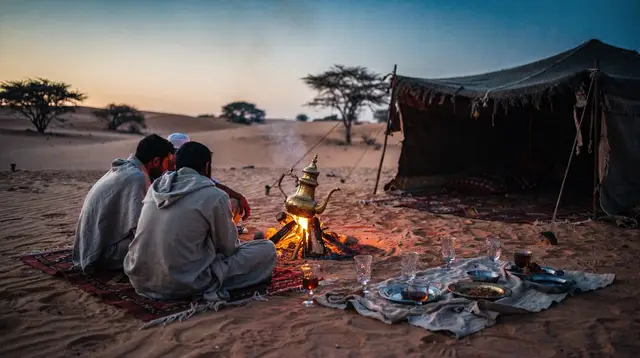
Nights are a different story. Desert climates lose heat fast after sunset, and Riyadh’s winter nights can feel properly cold, especially away from the city and out toward Edge of the World or the Red Sand Dunes, where a clear sky and open desert air strip away any residual warmth quickly. A jacket for the evening is worth packing even in what is, on paper, the “warm” season.
November and March act as shoulder months: still comfortable, generally a touch warmer than the December-to-February core, and a reasonable compromise if your travel dates don’t line up with peak winter. This is also the window when Riyadh Season runs, though that’s a separate topic covered on its own page — this one sticks to the climate, not the festival programming.
The mild season is also the easiest stretch of the year to get around above ground rather than ducking between air-conditioned interiors. Riyadh’s metro network opened in stages between December 2024 and early 2025, and walking to a station or waiting on a platform is a non-issue when the air outside is comfortable rather than something to escape. If you’re weighing the new lines against ride-hailing, the Riyadh Metro guide and the Uber and Careem in Riyadh comparison both cover how each option holds up once the temperature climbs later in the year, which is worth reading even if you’re travelling in winter and only plan to lean on one option for now.
April: the turn toward heat
April is a transition month, and a slightly unpredictable one. Temperatures climb noticeably from where they sat in March, mornings are still pleasant, but afternoons start to lose their mildness. It’s also one of the months where a spring sandstorm is more likely than at any other point in the year — not a certainty, but enough of a possibility that it’s worth checking conditions before committing to a full day out at somewhere like Shaqra and Ushaiger, which involves several hours on the road each way. For more on how to read the warning signs and what to do if one rolls through while you’re out in the desert, see sandstorms in Riyadh: what to know.
What to pack, month by month
What belongs in your bag changes more than most first-time visitors expect. For the mild months, a light jacket or fleece for the evening matters more than anything else, since daytime layers can stay minimal. For the hot months, breathable fabric, sun protection and a refillable water bottle do more work than any single piece of clothing. Dress codes stay modest for everyone year-round regardless of temperature — shoulders and knees covered in public is the baseline whatever the forecast says — so packing for Riyadh is really about layering within that modest range rather than choosing between “modest” and “comfortable” outfits. The what to pack for Riyadh guide breaks this down by season in more detail, and what to wear in Riyadh covers the dress-code side separately from the climate side.
May to September: the hot season
From May onward, Riyadh moves into its hottest stretch, and it holds there for five months. Afternoon temperatures regularly climb above 40°C, and in the peak of July and August that heat can linger well into the evening rather than dropping off cleanly after sunset. This isn’t a brief heatwave — it’s the baseline for the whole summer.
The practical effect on how you spend a day here is significant, particularly for anything outdoors. Desert excursions — dune days, a trip to Edge of the World, camel and horse rides — shift toward the edges of the day: an early-morning departure before the heat builds, or a late-afternoon start timed to arrive as temperatures ease and the light turns golden for sunset. A midday excursion in July is not a mistake most operators will make, and it’s not one you should make either.
Inside the city, this is when Riyadh leans hardest on its indoor and evening life: malls, museums like the National Museum of Saudi Arabia, and a food and cafe culture that genuinely starts after dark. None of this means summer is a bad time to visit — flights and hotel rates often reflect the lower demand — but it does mean the day gets rearranged around the heat rather than the other way around. The full breakdown of how to handle that is on the Riyadh in summer page, and the Riyadh heat survival tips post covers the smaller, practical habits — hydration, timing, what to avoid — that make the difference between a rough afternoon and a manageable one.
Travelling with children in the hot season deserves its own note, since a toddler or young child overheats faster than an adult and has less patience for waiting out the worst hours indoors. It’s not a reason to avoid Riyadh in summer, but it does mean building the day differently — see Riyadh with kids for how families handle the heat in practice.
October: cooling back down
October is the mirror of April — heat easing off through the month rather than building. Early October can still run hot, closer to summer than to the mild season, while later in the month temperatures start dropping toward something more comfortable. By the time November arrives, the mild season is properly underway again. If you’re choosing between the two shoulder months for a trip, late October tends to be a safer bet than April for avoiding the tail end of real heat.
Rain and sandstorms
Riyadh’s desert climate means rain is genuinely rare across every month of the year. There’s no dedicated wet season, and most visitors will see no rain at all during a typical trip, whatever month they come. When rain does fall, it’s usually brief and can be locally heavy rather than a sustained downpour — occasionally enough, after winter rains, for desert grasslands like Rawdat Nourah to green up briefly, which is more of a curiosity than something to plan a trip around.
Sandstorms are a separate matter from rain, tied more to wind patterns than to a specific week, and they’re possible in both spring and summer. They don’t happen constantly, but when one does roll through, visibility drops and outdoor plans — especially a desert day trip — are worth checking or rescheduling around rather than pushing through regardless. This is one of the few weather-related reasons an otherwise-booked desert excursion might shift timing at short notice.
Ramadan and the calendar, not the climate
Ramadan is worth mentioning here because visitors sometimes assume it’s a seasonal thing tied to weather. It isn’t. Ramadan follows the lunar calendar, so its dates move roughly 11 days earlier each year, meaning it can land in the mild season one year and the peak of summer a few years later. What it changes is daytime routine, not temperature: eating, drinking and smoking in public aren’t permitted during daylight hours, and many restaurants and shops shift their hours toward the evening and night. If your travel dates happen to fall during Ramadan, that’s a scheduling detail worth planning around separately from the weather — covered in more detail on visiting Riyadh during Ramadan — and it’s independent of whether the month itself is mild or hot.
What this means for booking a desert day
Because the climate swings so clearly between “comfortable all day” and “plan around the heat,” the time of year shapes which desert experiences make sense and when. In the mild season, a full day out — driving to Edge of the World, walking the escarpment trail, staying for sunset — works at almost any hour. In the hot season, the same trip is better built around dawn or late afternoon, with the middle of the day spent somewhere shaded or air-conditioned.
A sunset desert dinner is one of the more forgiving options across most of the year, since it’s timed to start as the day cools regardless of season. If you want a first taste of that rhythm, a desert sunset dinner outside Riyadh lands after the day’s heat has broken, whatever month you’re travelling in. For a broader introduction to the city itself before you factor in the desert, a guided city tour of Riyadh is easiest scheduled for a morning in the mild season, or split around the hottest hours in summer. If your dates fall in the cooler months and you want to cover more ground, a full-day trip out toward al-Dahna makes the most of long, comfortable daylight hours. And for travellers who’d rather have a private driver and a flexible schedule built around whatever the day’s heat allows, a full-day VIP tour of Riyadh gives that kind of control.
The same logic applies further afield. A Qassim day trip from Riyadh is a long day on the road either way, so the mild season is the more comfortable window to attempt it — in the hot months, the extra hours in the car add up fast on top of the heat at the destination itself. If you’re building a full trip around the calendar rather than a single day, the Riyadh season itinerary lays out how to sequence city time, Diriyah and the desert across a mild-season visit.
None of this replaces checking the forecast close to your trip — a hot season can run a few degrees hotter or cooler than average, and a mild season can have the occasional unusually warm week — but the pattern above holds reliably enough to plan flights, packing, and the shape of your days around.
Weather-related questions about visiting Riyadh
What’s the coldest it gets in Riyadh?
Riyadh doesn’t get cold by most standards, but winter nights, particularly out in the desert, can feel sharply cool after a warm day, enough to want a jacket or fleece for the evening.
Is there a rainy season in Riyadh?
Not really. Rain is uncommon in every month, with no concentrated wet season, and any rainfall tends to be brief rather than prolonged.
When are sandstorms most likely?
Spring and summer are the seasons where sandstorms are more likely to occur, though they don’t happen on a predictable schedule and aren’t a feature of every trip.
Does Riyadh have daylight saving time?
No. Riyadh stays on Arabia Standard Time, UTC+3, throughout the year, with no seasonal clock change to account for.
Is it too hot to visit Riyadh in summer?
It’s genuinely hot, often above 40°C in the afternoon, but the city adapts around it with indoor attractions and evening life, and desert trips simply shift to early morning or late afternoon rather than being ruled out.
Which months have the most comfortable weather for walking around outdoors?
December, January and February are the most reliably comfortable months for spending time outdoors during the day, with November and March close behind as slightly warmer shoulder months.
Does the weather affect Ramadan dates?
No, Ramadan’s dates are set by the lunar calendar and shift earlier each year, independent of the seasonal weather pattern described above.
Does the heat affect arriving at the airport?
Not much inside the terminal, but stepping outside at King Khalid International Airport in July or August is a reminder of how hot the season is, even for the short walk to a taxi or car pickup. The drive into the city takes roughly 30-45 minutes outside peak traffic regardless of season, so the bigger seasonal difference is comfort at the curb rather than travel time — see the Riyadh airport arrival guide for what to expect on both ends of that trip.
Seasonal guides for visiting Riyadh on GetYourGuide
Verified deep-linked GetYourGuide tours. Book through these links and we earn a small commission at no cost to you.
GetYourGuide does not provide a product photo for this activity — the image shows the meeting point, photographed by us.