Riyadh in winter: what the November–March season actually feels like
Is winter a good time to visit Riyadh?
Yes. November to March brings daytime temperatures around 20-25°C in December and January, with cold desert nights. Desert day trips work at any hour, not just sunrise or sunset, which makes this the most flexible season for excursions around Riyadh.
Why November to March is the easy season here
Riyadh sits in the middle of a desert, and its climate follows a simple pattern: one long hot season and one shorter mild one. Winter, running roughly from November through March, is the mild one, and it changes how a trip to Riyadh actually works rather than just how it feels to walk around the city.
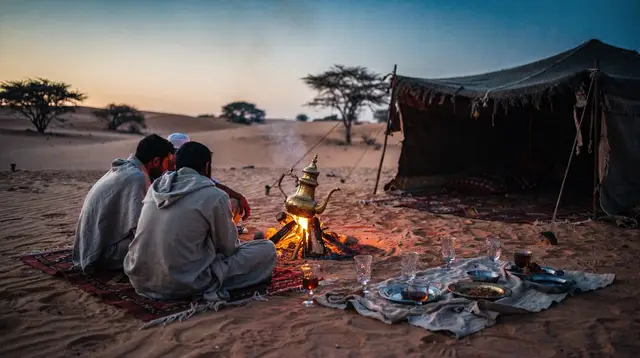
In December, January and February, daytime temperatures typically sit around 20-25°C, with plenty of sun and low humidity. Evenings cool off quickly once the sun drops, and the desert nights around the city get genuinely cold — cold enough that a light jacket or fleece is not optional if you are staying out for a sunset dinner or camping under the stars. November and March sit on either side of that core window, a touch warmer but still comfortable for most of the day.
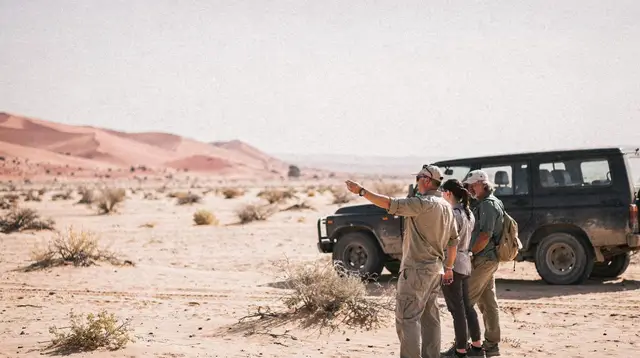
The practical upside is about timing, not just comfort. In summer, a trip to Edge of the World or the Red Sand Dunes has to be built around the cooler hours — early morning or the last part of the afternoon — because the desert becomes genuinely punishing by midday. In winter that constraint mostly disappears. A day trip can start mid-morning, run through lunch, and continue into the afternoon without anyone needing to hide from the heat. That flexibility is the single biggest reason winter is considered the best season to visit Riyadh, more than the sightseeing itself changing.
For a month-by-month breakdown of temperatures across the whole year rather than just the winter window, see our Riyadh weather by month guide. If you are still deciding whether winter beats the alternatives for your dates specifically, best time to visit Riyadh compares all four seasons side by side, and Riyadh in summer covers the opposite extreme in more detail than a single comparison paragraph can.
Arriving and getting around in winter
None of the logistics of reaching Riyadh or moving around it change with the season, but winter is when the milder weather makes the transit side of a trip easier to enjoy rather than just endure. Flights land at King Khalid International Airport (RUH), about 35 km north of the city centre, with a drive of roughly 30-45 minutes into Olaya outside peak traffic — our Riyadh airport arrival guide covers the walk from the gate to the taxi rank in more detail.
Once in the city, the choice between the Riyadh Metro and ride-hailing apps is the same question year-round: our Riyadh Metro guide and Uber and Careem in Riyadh page both walk through the practical differences, and metro vs Uber in Riyadh puts the two head to head if you only want one answer. For anyone weighing a self-drive option instead, renting a car in Riyadh explains what that actually involves, including the fact that women have been able to drive here since 2018 and that traffic on the right-hand side of the road follows the same rules as anywhere else that drives on the right. Whichever way you get into the city, desert excursions themselves are still almost always run with a private driver rather than a self-drive rental, winter included.
What actually changes with the seasons
A sunset dinner out in the desert works in any season, but winter is when it is most comfortable to sit outside for the whole evening rather than retreating indoors once the sun is down. The same applies to stargazing and overnight camps: winter nights are clear and cold, summer nights are clear and hot, and cold with a blanket is easier to plan around than heat with nowhere to cool off.
Rain is rare in Riyadh in any month, but winter is when what little rain the region gets is most likely to fall. It is still an occasional shower rather than a wet season — plan around dry weather as the default, not the exception. When rain does fall in the weeks before or during winter, it can trigger a short-lived but genuine change in the desert: low-lying areas such as Rawdat Nourah can carpet themselves in wildflowers for a few weeks. It is not guaranteed and it is not on a fixed calendar, so treat it as a possible bonus rather than something to plan a trip around.
One thing winter in Riyadh does not bring is sandstorms. Those are a spring and early-summer phenomenon here, tied to stronger winds picking up loose sand across the open desert. Winter skies tend to be clear, which is part of why photography, hiking, and general visibility at desert sites like Edge of the World are usually at their best in these months.
None of this touches Riyadh’s time zone. The city runs on Arabia Standard Time, UTC+3, all year, with no daylight saving adjustment in winter or any other season. Sunset simply comes earlier in winter months, the way it does everywhere at this latitude — the clock itself never moves.
Riyadh Season overlaps, but it is a separate topic
Winter in Riyadh roughly coincides with Riyadh Season, the city’s large annual entertainment festival centered on Boulevard City and Boulevard World, which typically runs from around October through March. The overlap is real and worth knowing about if you are choosing when to visit, because it means winter is also when the city is at its most animated with concerts, fairs and events.
That said, this page is about weather and how it affects day trips, not about festival programming, ticketing or which zones are open when. If Riyadh Season itself is what you are planning around, that deserves its own look rather than a few lines here — the details change year to year in ways a weather guide should not try to track; our Riyadh Season guide and what to expect at Riyadh Season go into the festival itself.
Diriyah and the city sights in mild weather
Winter is also simply a more comfortable time to spend a few unhurried hours walking Diriyah rather than treating it as a quick stop. At-Turaif, the UNESCO-listed mud-brick district that was the first capital of the Saudi state, and the adjoining Al-Bujairi Terrace are both largely outdoors, and in the cooler months there is no real incentive to rush between the shaded parts. Our At-Turaif UNESCO district guide and Bujairi Terrace guide cover what to expect at each; Diriyah tours rounds up the ways to see the area, and how to get to Diriyah covers the short trip out from central Riyadh. If you are trying to decide how to split time between the old town and the modern city, Diriyah vs old Riyadh and Masmak lays out the difference directly.
The desert side of a winter trip
Winter’s flexible hours matter most once you leave the city, which is also where most of a Riyadh trip’s memorable time tends to go. Edge of the World day trip from Riyadh and the more specific Edge of the World hiking trail guide cover the escarpment itself, while Edge of the World sunrise vs sunset is less of a binding choice in winter than it is in summer, precisely because the whole day is usable rather than just the two ends of it. The Red Sand Dunes are the other common half-day or full-day option; Red Sand Dunes tours from Riyadh and Red Sand Dunes vs Edge of the World help decide between the two if time only allows one.
For a longer push, Shaqra and Ushaiger day trip from Riyadh and the dedicated Ushaiger heritage village guide cover the mud-brick heritage villages northwest of the city, another stop that benefits from winter’s comfortable walking temperatures. Anyone with an extra day to spare can also look further out toward Al-Qassim: Qassim day trip from Riyadh and is Qassim worth the drive from Riyadh cover whether that longer excursion is worth building into a winter itinerary.
Building a winter itinerary around the weather
Because winter removes the heat constraint, it is the easiest season to combine a city day in Riyadh with a full desert excursion on the same trip, without needing to compress either one into the cooler hours.
A common shape for a short winter trip:
| Day | Focus | Why winter helps |
|---|---|---|
| Day 1 | Riyadh city — Diriyah, Masmak Fortress, Kingdom Centre | Comfortable walking temperatures most of the day |
| Day 2 | Desert day trip — Edge of the World or Red Sand Dunes | Full-day visits possible, not just sunrise or sunset |
| Day 3 | Slower morning, museum or souq, evening desert dinner | Cold, clear nights suit an outdoor dinner |
If the trip has more time, winter is also the more comfortable season for a longer desert push, such as a trip out toward Shaqra and Ushaiger, since neither the outbound drive nor time spent walking through the heritage village needs to dodge midday heat.
For a ready-made structure rather than building one from scratch, three days in Riyadh, four days in Riyadh in winter and Riyadh and the desert in four days all follow roughly this city-plus-desert shape at different lengths. Shorter trips fit the same logic: two days in Riyadh and the Riyadh weekend itinerary both assume the comfortable weather this season provides. If Ushaiger and Qassim are both on the list, Riyadh, Ushaiger and Qassim in four days is built specifically around that combination.
A camel or horse experience close to the city is another activity that reads differently by season: a desert horse ride near Riyadh in winter can run at a normal midday pace, where the same ride in July would likely be scheduled for early morning only. The same logic applies to a visit to the Riyadh Camel Market, an open-air site with no real shade — far easier to walk around slowly in winter than to rush through in summer heat.
For a fuller desert day, a full day trip into the Al Dahna desert is the kind of excursion winter suits best: enough comfortable daylight hours to actually spend time in the landscape rather than just passing through it.
What to pack for a Riyadh winter trip
The temperature swing between midday and midnight is the main thing to plan for, more than any single “cold” or “warm” label.
- Light layers for daytime — a t-shirt or light long sleeve is usually enough in the sun.
- A proper jacket or fleece for evenings, and definitely for any desert night out — temperatures drop faster and further than the daytime numbers suggest.
- Closed shoes with decent grip if a desert excursion includes any walking on sand or rock, at Edge of the World in particular.
- Modest clothing covering shoulders and knees, which is a year-round expectation in public spaces here rather than a winter-specific rule. An abaya is not required for foreign women; a headscarf is only needed inside mosques.
- A light rain layer is not a bad idea for a winter trip, even though the odds of needing it on any given day are low.
Where winter does not change the rules
It is worth being clear about what winter does not affect, since some of Riyadh’s more commonly misunderstood rules have nothing to do with season.
Alcohol remains unavailable everywhere in Riyadh, including in international hotels, in winter exactly as in any other month. The country’s dress expectations — modest clothing for everyone in public, no requirement for foreign women to wear an abaya, headscarves only inside mosques — do not loosen or tighten with the weather. The weekend stays Friday and Saturday year-round. None of that is a winter quirk; it is simply how things work in Riyadh, and a mild season does not change it.
Getting around the city is also unaffected by season in any meaningful way: the Riyadh Metro, taxis, and ride-hailing apps like Uber and Careem run the same schedule regardless of month, and private drivers remain the standard way to reach desert sites whatever the temperature.
The honest trade-off
Winter’s popularity is well earned rather than hype — the weather genuinely does make desert excursions easier to plan and more comfortable to be in for longer stretches. The trade-off is that this is also when the city is busiest, partly because of the comfortable climate and partly because it lines up with Riyadh Season’s biggest months. That is not a reason to avoid winter, just a reason to book desert tours and accommodation with a bit of lead time rather than assuming availability will be wide open on short notice.
If flexibility matters more than picking the single best month, aim for December through February for the most reliably mild days, and treat November and March as slightly warmer bookends that still avoid the summer heat entirely.
Seasonal guides for visiting Riyadh on GetYourGuide
Verified deep-linked GetYourGuide tours. Book through these links and we earn a small commission at no cost to you.
GetYourGuide does not provide a product photo for this activity — the image shows the meeting point, photographed by us.