Riyadh in summer: how to handle the heat
What's the best way to handle Riyadh in summer?
From May to September, daytime temperatures in Riyadh regularly pass 40°C, so desert trips such as Edge of the World or the Red Sand Dunes should be booked for early morning or late afternoon, never midday. Spend the hottest hours indoors in air-conditioned malls, museums or KAFD, and check whether your dates fall during ramadan, since that changes opening hours and public eating rules.
Riyadh’s monthly weather guide tells you that May through September is hot. This page is about what that actually means for how you spend a day: when to go outside, when not to, and what to do instead when the sun is at its worst. It is not a different city in summer, but it does need a different schedule.
What “hot” means in practice
Riyadh sits in a hot desert climate, and the gap between its cool season and its hot season is large. November through March is genuinely pleasant, with daytime highs of roughly 20-25°C in December and January. May through September is the opposite end of that range: afternoon temperatures routinely pass 40°C, and July and August push higher still. Nights offer less relief than you might expect from a desert, since the heat carries into the evening before easing later on.
None of this makes Riyadh unmanageable. The city is built around air conditioning the way colder cities are built around heating, and daily life continues through the hot months without pausing. What changes is the outdoor window. A schedule that works well in January, moving freely between sights across a full day, does not work the same way in July. The practical fix is to flip your day: outdoor activity at the edges of daylight, indoor activity through the middle.
Humidity stays low most of the year, which means the heat is dry rather than the heavy, sticky kind found in coastal desert cities. That is a small mercy, but it does not offset temperatures in the 40s. Sun protection, water, and a genuine plan to avoid midday exposure matter more here than in most destinations covered on this site.
Desert excursions: sunrise or late afternoon only
The two headline desert trips near Riyadh are Edge of the World and the Red Sand Dunes, and both are worth rethinking in summer rather than skipping outright.
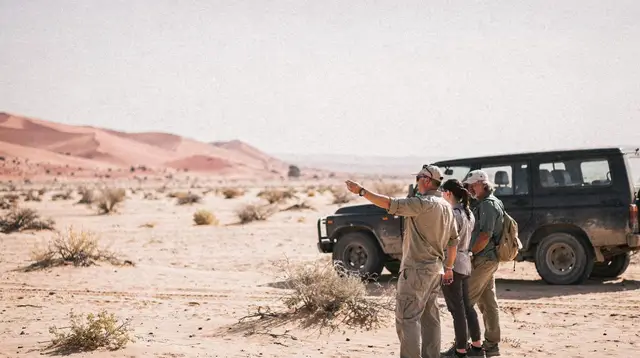
Edge of the World (Jebel Fihrayn) is 90-100 km northwest of the city, which works out to roughly 2 to 2h30 of driving each way, including a rough final stretch across open desert that needs a 4x4. That distance and drive time do not shrink because it is summer. What changes is when you should be standing at the escarpment itself: sunrise or the hour before sunset, when temperatures are tolerable and the light is better anyway.
A midday visit in June or July means arriving at an exposed cliff edge with no barriers and very little shade at the hottest point of the day, which is a poor trade for the same view you would get at a cooler hour. If a day trip from Riyadh is on your list, ask the operator directly what time their programme runs before booking, and treat access rules and seasonal closures as something to check close to your travel dates through the seasonal closures guide, since routes and opening windows do change.
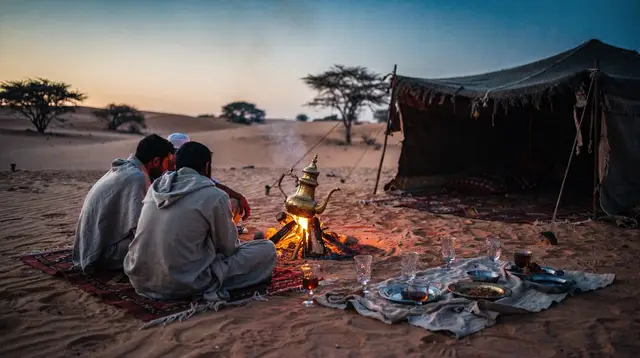
The Red Sand Dunes, about an hour west of Riyadh along the Mecca road, are closer and therefore more forgiving, but the same logic applies to quad biking, sandboarding or dune bashing: these are activities that ask you to be physically active outdoors, and doing them in full midday sun in August is a different experience from doing them at golden hour. A desert safari built around a sunset arrival, dinner, and stargazing is a genuinely good summer format, because it puts the outdoor portion at the point in the day when the desert is at its most comfortable rather than its most punishing.
A sunset dinner and evening programme in the desert outside RiyadhIf you want a broader camel and horse-riding option timed the same way, that exists too, but the rule stays constant across all of these: book for the edges of the day, and be wary of any desert programme that does not specify a start time or that defaults to midday departure.
The other side of the day: staying indoors on purpose
The flip side of a sunrise-or-sunset desert trip is a genuinely comfortable midday, and Riyadh has more indoor options than its outdoor reputation suggests.
Malls and KAFD. Riyadh’s shopping centres are large, fully air-conditioned, and often built with the same design ambition as the city’s newer towers. The King Abdullah Financial District (KAFD) in particular combines covered walkways, cafes, and modern architecture that is worth seeing on its own terms, not just as a place to escape the heat. A midday stretch here is not a compromise; it is a legitimate part of a Riyadh itinerary.
Museums. The National Museum of Saudi Arabia, part of the King Abdulaziz Historical Center in Al Murabba, is a full, well air-conditioned museum experience that pairs naturally with the adjoining Murabba Palace. It is one of the better ways to spend two or three hours in the middle of a hot day while still learning something concrete about the country rather than simply waiting out the heat.
A guided visit to the National Museum of Saudi ArabiaCity tours built around indoor stops. A half-day city tour that moves between the historic centre, a museum stop, and a covered market gives you sightseeing without long stretches of open-air exposure. Compare that to a self-guided walk between the same points at 2pm in July, where the walking itself becomes the hard part.
A half-day city tour covering Riyadh’s historic and modern sidesCafes and Riyadh’s indoor culture. Riyadh has a strong, fast-growing cafe scene, and treating a long midday coffee stop as part of the itinerary rather than downtime is a reasonable way to pace a summer day.
If you would rather build a full day around comfort rather than juggling in and out of the heat, an indoor-leaning museum tour or a day centred on modern Riyadh architecture both work well as complete summer plans, with only a short outdoor transfer between stops.
Sand and the rare rain
Rain is rare in Riyadh in any season, and summer is no exception; when it does fall, it is usually brief. What is more relevant in the hot months is the chance of a sandstorm. These are more common in spring and through summer than in the cooler months, and they can reduce visibility and air quality for a few hours to a day. They are not a reason to avoid summer travel, but they are a reason to build slack into any desert plan rather than committing to a single fixed afternoon at Edge of the World or the dunes. If conditions look poor on a given day, most operators will move a desert excursion rather than run it, which is one more reason to book through an established tour rather than arranging your own transport for a first visit.
If your trip lands during ramadan
Ramadan dates move earlier by about eleven days every year, so the holy month can fall in different parts of the summer window depending on the year you travel; it is worth checking the dates for your specific trip rather than assuming. During ramadan, eating, drinking, and smoking in public during daylight hours is not permitted for residents or visitors, and the rhythm of the city shifts: many shops and restaurants adjust their hours, and life moves toward the evening and night, when Riyadh is often at its most lively. Combined with summer heat, this actually reinforces the same schedule already recommended above — quiet, low-key midday hours, an active evening — so a ramadan summer trip is less disruptive than it might sound, provided you plan meals and daytime activity around it. The ramadan guide covers this in more detail if your dates overlap.
Booking with the season in mind
A few adjustments make summer bookings noticeably better:
| Activity type | Winter approach | Summer approach |
|---|---|---|
| Edge of the World | Any time of day works | Sunrise or 1-2 hours before sunset only |
| Red Sand Dunes | Flexible timing | Late afternoon into evening preferred |
| City and museum tours | Full-day walking tours common | Front-load outdoor stops, save museums for midday |
| Desert dining/stargazing | Pleasant most evenings | Genuinely one of the best summer formats |
| Multi-day desert programmes | Straightforward | Confirm daytime schedule before booking |
If you are weighing a longer trip that mixes Riyadh with a further excursion, a multi-day tour or an Al-Dahna day trip is worth checking specifically for how the operator times outdoor segments in the hot months, since a programme built for cooler weather does not automatically adapt itself.
A full-day trip out to al-Dahna from RiyadhIs summer actually a bad time to go?
Not necessarily. It is a lower-demand season, which often means better flight and hotel rates, and the city itself runs at full pace regardless of the temperature outside. What summer removes is the ability to treat every hour of the day the same way. Build the day around two outdoor windows — early morning and late afternoon into evening — and let indoor Riyadh, from KAFD to the National Museum to the mall culture the city is genuinely known for, absorb the middle of the day. Approached that way, a summer trip to Riyadh covers most of the same ground as a winter one; it simply moves at a different hour.
For a wider view of how the seasons compare before you commit to travel dates, the best time to visit guide sets summer against the cooler months and against the Riyadh Season festival period, which runs roughly October through March and brings its own crowds and programming on top of the cooler weather.
Frequently asked questions about visiting Riyadh in summer
How hot does Riyadh actually get in summer?
From May to September, afternoon temperatures often go above 40°C, sometimes well above it in July and August. There is little relief overnight either, since nights stay warm. This is a different climate to the mild, comfortable winter season.
Should I still visit Edge of the World in summer?
You can, but timing matters more than in winter. The drive is still 90-100 km from Riyadh and takes roughly 2 to 2h30 each way, with a rough final stretch that needs a 4x4, so a midday visit in summer heat is genuinely unpleasant and can be risky. Go for a sunrise or late-afternoon slot instead.
Is it safe to do desert excursions at all in the hottest months?
It is done routinely, but only outside the midday window. Reputable tour operators time desert programmes for early morning or the hour or two before sunset, when temperatures drop from extreme to merely hot. A tour with no shade, water plan or fixed timing in July is a reasonable thing to skip.
What can I do in Riyadh during the hottest part of the day?
Riyadh has an extensive indoor world built for exactly this: shopping malls, the National Museum and King Abdulaziz Historical Center, KAFD’s covered walkways, cafes, and indoor entertainment venues. Most visitors structure a summer day around an early outdoor activity, a long indoor midday, and an evening outing.
Do sandstorms happen in summer?
They can. Rain is rare year-round in Riyadh, but sandstorms are more likely in spring and summer than in winter. They usually pass through rather than settle in for days, but they can reduce visibility and are a reason to keep desert plans flexible rather than fixed to one afternoon slot.
What if my trip overlaps with ramadan?
Ramadan dates move earlier by about eleven days each year, so they land in different summer months from one year to the next. During ramadan, eating, drinking and smoking in public during daylight hours is not allowed for anyone, and many places shift their hours toward the evening and night, when the city genuinely comes alive.
Is summer a bad time to visit Riyadh overall?
It is a different kind of trip rather than a bad one. Flights and hotel rates are often lower, the city itself runs normally, and indoor sights are excellent. The main adjustment is accepting that outdoor time is limited to early morning and late afternoon rather than spread across the day.
Seasonal guides for visiting Riyadh on GetYourGuide
Verified deep-linked GetYourGuide tours. Book through these links and we earn a small commission at no cost to you.
GetYourGuide does not provide a product photo for this activity — the image shows the meeting point, photographed by us.