Riyadh museum and heritage tours
What are the best museum and heritage sites in Riyadh itself?
Masmak Fortress and Deera Square in the old town, Souq Al Zal next door, and the King Abdulaziz Historical Center, which holds the National Museum of Saudi Arabia and Murabba Palace. All four sit inside Riyadh proper and can be combined into one half-day, unlike the modern skyline sights or Diriyah, which is a separate town.
Where Riyadh keeps its own history
Most first-time visitors to Riyadh see the skyline first: Kingdom Centre, the towers of Olaya, the glass blocks of KAFD. That is a fair introduction to what the city has become, but it says nothing about where it came from. The history lives a few kilometres south, in the old town of Al Dirah, and a short drive further out at the King Abdulaziz Historical Center. This page covers that older layer: Masmak Fortress, Deera Square, Souq Al Zal, the National Museum of Saudi Arabia and Murabba Palace. If you want the modern towers instead, that is a separate guide to modern Riyadh architecture, and the two don’t overlap much on the ground.
The short version: this is a half-day to a full day inside Riyadh itself, on foot and by short taxi hops, with one clear historical hinge point to get right before you go. Two dates get mixed up constantly in casual retellings, and getting them straight makes the rest of the story make sense.
1902 and 1932 are two different events
In January 1902, a young Abdulaziz Ibn Saud led a small raiding party into Riyadh at night and took Masmak Fortress from the rival Al Rashid garrison holding the town. That single raid is usually treated as the opening move of the modern Saudi state: from that point Ibn Saud controlled Riyadh and spent the next three decades extending his territory across the peninsula, through alliance, negotiation and war.
The kingdom itself, in its current form, was not declared until 1932, when the territories Ibn Saud had assembled were unified and named the Kingdom of Saudi Arabia. So 1902 is a local, specific event — one fortress, one night, one town — and 1932 is the political founding of the country three decades later. Guides in Riyadh sometimes compress the two into one story, which is understandable given how directly one led to the other, but they are not interchangeable, and a good museum visit is a chance to actually separate them rather than blur them further.
Masmak Fortress and the old town
Masmak Fortress sits in Al Dirah, Riyadh’s old town, and is now a small museum inside the same mud-brick and clay walls that stood in 1902. The main gate still shows the mark left by a spear thrown during the raid — a detail every guide points out, and one of the few physical traces of that specific night that survives anywhere in the city. Inside, the rooms are simple: a mosque, a majlis, a well, and a few displays on the fortress and the raid itself. It does not take long to see — most visits run under an hour — and the appeal is the building and its atmosphere more than the exhibits inside it.
Right outside is Deera Square, a plain open plaza that most Riyadh residents know for a different, more sober reason: it hosts public punishments and is nicknamed accordingly in some guidebooks. During the day it is simply a square, flanked by Masmak on one side and Qasr Al Hukm — the old law courts building, rebuilt in a traditional style — on another. Neither building requires much time, but together with Masmak they give a sense of scale for how small central Riyadh actually was a century ago, compared to the sprawl the city has become.
Souq Al Zal, right next door
Souq Al Zal is a short walk from Deera Square, and it is one of the last traditional markets in central Riyadh that has not been rebuilt into a modern mall format. Vendors sell rugs, old daggers and khanjars, incense, silver, and a wide range of antiques and reproductions, with genuine trade mixed in with pieces clearly aimed at tourists. It rewards a slow walk-through more than a shopping list: bargaining is expected, quality varies stall to stall, and the honest advice is to treat anything described as a valuable antique with some scepticism unless you know the market. Combined with Masmak and Deera Square, this cluster forms a natural loop that covers most of old Riyadh in under two hours.
The King Abdulaziz Historical Center
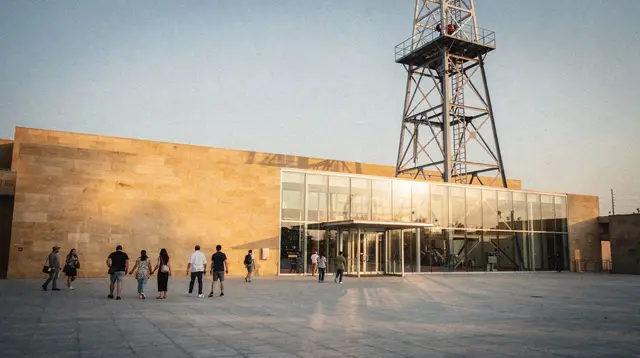
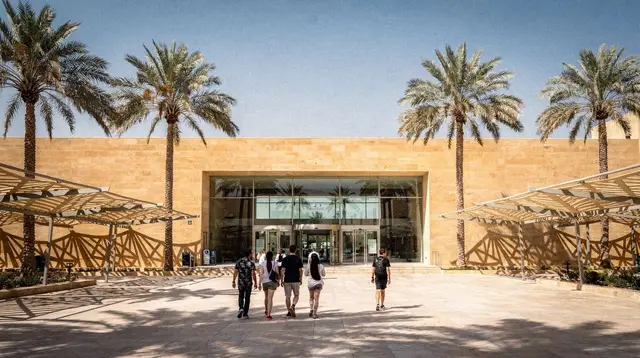
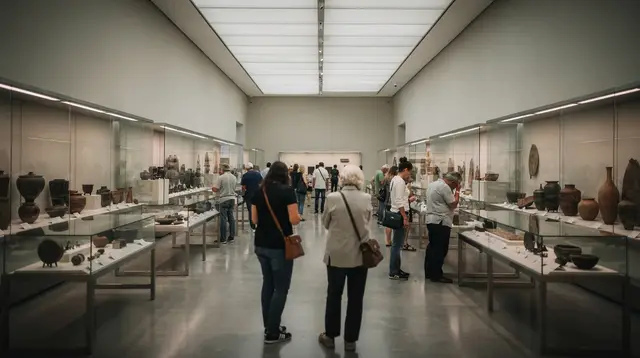
A short taxi ride from the old town, in the Al Murabba area, the King Abdulaziz Historical Center groups several sites that don’t fit neatly at Masmak. It was built to mark a century since Ibn Saud’s return to Riyadh, and its centrepiece is the National Museum of Saudi Arabia, which opened in 1999. The museum’s galleries move chronologically from the geology and pre-Islamic archaeology of the Arabian Peninsula through the rise of Islam and on to the unification of the kingdom under Ibn Saud, ending close to the present day. It is one of the better-organised museums in the Gulf for a visitor with no prior background in the region’s history, and it is fully air-conditioned, which is a genuine advantage over an outdoor walk in Riyadh’s heat for much of the year.
Next to the museum stands Murabba Palace, a restored mud-brick residence that Ibn Saud used after Riyadh’s old city walls had been outgrown. It is smaller and plainer than the museum, closer in feel to Masmak, and worth pairing with the museum visit rather than treating as a separate trip. Together, the National Museum and Murabba Palace form a second historical stop distinct from the Masmak cluster — similar period, different buildings, a short drive apart.
If military and industrial history interests you specifically, the Black Gold Museum, which covers the discovery and development of Saudi Arabia’s oil industry, is a further stop in the same general theme of national history, though it sits apart from the Masmak-to-Murabba route geographically.
A Riyadh National Museum visit that covers the full chronological route in one entry is the simplest way to see the collection without working out tickets on the day. For a version with a guide talking through the unification period gallery by gallery, a guided National Museum tour with tickets and commentary included fills in context that the labels alone don’t always give.
Where Diriyah fits — and where it doesn’t
Diriyah comes up constantly in the same breath as Masmak, and for good reason: it is where the story actually starts, a century before 1902. Diriyah was the capital of the first Saudi state, founded in the eighteenth century, and its old quarter — At-Turaif, a fortified district of mud-brick palaces and mosques on a bend of the Wadi Hanifa — was inscribed as a UNESCO World Heritage Site in 2010. Across the wadi from At-Turaif, Bujairi Terrace is the restaurant and café strip that has grown up to serve visitors to the ruins.
The important point for planning: Diriyah is not a district of Riyadh. It is a separate town, northwest of the city on the Wadi Hanifa, and getting there needs its own trip — roughly thirty to forty-five minutes each way depending on traffic, not a stop you fold into a walk through the old town. It is a logical extension of a Riyadh heritage day thematically, since it covers the earlier chapter of the same national story, but treat it as a second outing rather than an add-on to Masmak. For planning that trip on its own, see how to get to Diriyah and the dedicated Diriyah tours guide, or compare the two directly in Diriyah versus old Riyadh and Masmak.
Planning a heritage day in Riyadh
| Stop | Where | Rough time needed | Note |
|---|---|---|---|
| Masmak Fortress | Al Dirah (old town) | 45–60 min | Site of the 1902 raid; small museum inside |
| Deera Square and Qasr Al Hukm | Al Dirah, next to Masmak | 15–20 min | Walk-through, not a ticketed site |
| Souq Al Zal | Al Dirah, next to Deera Square | 30–45 min | Traditional market; bargaining expected |
| National Museum of Saudi Arabia | Al Murabba | 90–120 min | Opened 1999; air-conditioned |
| Murabba Palace | Al Murabba, beside the museum | 30–45 min | Ibn Saud’s residence after Masmak era |
| Diriyah (At-Turaif, Bujairi Terrace) | Separate town, northwest of Riyadh | Half day, own trip | UNESCO since 2010; not a Riyadh district |
For a taxi or rideshare, the old town cluster and the Al Murabba cluster are close enough to combine in one morning; Uber and Careem are the easiest way to move between the two without arranging a driver in advance. If you would rather have someone handle the route and the context together, a half-day Riyadh city tour built around the old town and its historic sites covers most of this in one booking, and pairs naturally with a separate Diriyah trip the next day.
None of these sites require the multi-hour commitment that a desert excursion does — no 4x4, no early start for the heat. They fit inside a normal morning or afternoon, which makes them a reasonable choice for a layover day or the arrival day of a longer trip, once you’ve slept off the flight. For a fuller sense of how this fits into a longer stay, see things to do in Riyadh or the broader Riyadh city and heritage tours guide, and for day-by-day planning, one day in Riyadh or two days in Riyadh both slot a heritage morning into a wider schedule. The museums and culture category lists further options in the same vein if you want to go deeper than this single route.
Riyadh museum and heritage FAQ
What is the difference between the fall of Masmak Fortress and the founding of Saudi Arabia?
Masmak Fortress was taken by Abdulaziz Ibn Saud in 1902, a raid that let him retake Riyadh and begin building his territory. The modern Kingdom of Saudi Arabia was formally founded thirty years later, in 1932. Riyadh guides sometimes blur the two dates; they mark different events.
Is the National Museum of Saudi Arabia worth visiting?
Yes, for anyone who wants context before seeing Masmak or Diriyah. It covers geology, pre-Islamic Arabia and the unification of the kingdom in one route, and it is air-conditioned, which matters for a midday plan in Riyadh’s heat.
Can I visit Masmak Fortress, Souq Al Zal and the National Museum in one day?
Yes. Masmak, Deera Square and Souq Al Zal sit next to each other in the old town, and the King Abdulaziz Historical Center is a short drive away. A half-day covers the old town cluster; add the museum and Murabba Palace for a fuller day.
Is Diriyah part of this museum route?
Not physically. Diriyah is a separate town on the Wadi Hanifa, northwest of Riyadh, not a district of the city. It pairs well with a heritage day because it covers the same period, but it needs its own trip and its own booking.
How old is the Saudi National Museum?
It opened in 1999 as part of the King Abdulaziz Historical Center, built to mark a century since the retaking of Riyadh. It is a purpose-built museum, not a converted historic building like Masmak.
Is Souq Al Zal a real market or a tourist set-piece?
It is a working traditional market next to Deera Square, selling rugs, daggers, incense and antiques, with a mix of genuine trade and pieces aimed at visitors. It is worth a walk-through rather than a long shopping stop for most travellers.
Should I book a guided tour or visit these sites independently?
Masmak and the National Museum can both be visited independently at low cost. A guided city tour adds value mainly through context and transport, since the old town, the museum and Murabba Palace are spread across a few kilometres.
Museum and culture tours on GetYourGuide
Verified deep-linked GetYourGuide tours. Book through these links and we earn a small commission at no cost to you.
GetYourGuide does not provide a product photo for this activity — the image shows the meeting point, photographed by us.