Modern Riyadh architecture tours
What do modern Riyadh architecture tours actually show you?
They cover the city's skyline and business districts rather than its heritage sites: Kingdom Centre and its 302-metre Sky Bridge, Al Faisaliah Tower's sphere, the King Abdullah Financial District (KAFD), and Boulevard City. Most run by private vehicle, since the sites sit kilometres apart across a car-oriented city.
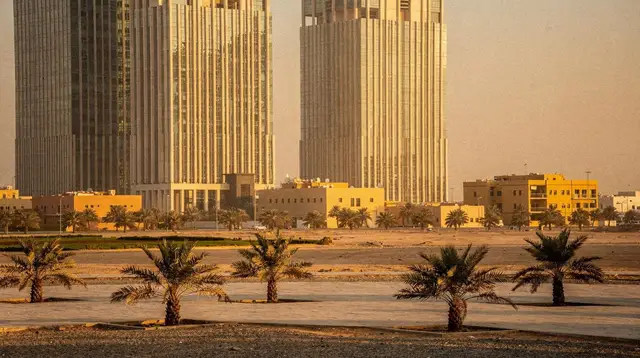
Most visitors who fly into Riyadh have already seen a photo of the city: a glass tower with a bridge slung near its top, glowing gold at dusk. That building is Kingdom Centre, and it’s the anchor of a different Riyadh from the one covered in heritage and museum guides — a 21st-century skyline built mostly in the last three decades, expanding fast right now. This page is about that skyline: the towers, the business district, and the newer boulevards built to show it off, and about why the practical way to see it is from a car, not on foot.
A skyline built on wide roads, not narrow streets
Riyadh doesn’t have a compact old-town core where landmarks sit a five-minute walk apart. It’s a car city, laid out on a grid of wide arterial roads, and its skyline reflects that: towers rise individually along boulevards like Olaya Street and King Fahd Road, separated by roads six or eight lanes wide, service roads, and parking structures rather than pedestrian plazas. There’s shade in the evening and inside the towers themselves, but almost none crossing the distances between them at midday.
That’s the practical reason most modern-architecture tours run by private vehicle. A driver can move a group from Kingdom Centre to Al Faisaliah Tower to KAFD in under an hour outside peak traffic; on foot, the same route would mean walking along fast roads with irregular pavements for a couple of hours in desert heat, in a city where jaywalking a wide boulevard is genuinely inadvisable rather than merely discouraged. If you’re renting a car yourself rather than joining a tour, the same logic applies — see the notes on renting a car in Riyadh and on getting around by Uber and Careem before deciding which way to go.
Kingdom Centre and the Sky Bridge, 302 metres
Kingdom Centre is the building most people mean when they say “the Riyadh skyscraper.” It stands 302 metres tall, and the top is an open-ended arch holding the Sky Bridge, an enclosed observation deck that is the highest publicly accessible point in the tower. From the bridge, on a clear day, you can trace the grid of Olaya below, pick out Al Faisaliah Tower a short distance away, and get a genuine sense of how far the city now spreads compared to the compact settlement it was a century ago.
The base of the tower functions as a shopping mall, with the observation deck accessed separately near the top. Queues and exact access details shift, so it’s worth checking the current setup on the GetYourGuide listing or with your tour rather than assuming a fixed price or opening time — this guide won’t quote one, since it changes and a stale number is worse than none. What doesn’t change is the height: 302 metres, and no tour script should tell you otherwise.
A half-day tour pairing Kingdom Centre’s Sky Bridge with Al Faisaliah Tower and a walk along Tahlia Street covers this stretch of skyline in one sitting, with transport included between stops — useful if you don’t want to work out taxis between three separate towers yourself.
Al Faisaliah Tower and the sphere
A short drive from Kingdom Centre, Al Faisaliah Tower is the other instantly recognisable shape on the Riyadh skyline: a tapered pyramid topped with a large glass sphere, lit at night in colours that change with the season. It predates Kingdom Centre slightly and reads as its architectural counterpart — where Kingdom Centre is an arch, Al Faisaliah is a spike, and photographers in Riyadh tend to frame the two against each other from a distance rather than shooting either in isolation.
The base holds a hotel and retail space; the sphere itself has, at various points, held a restaurant with the obvious view over the city. As with Kingdom Centre, treat any specific booking or opening detail as something to confirm at the time rather than something fixed in a guide written months earlier.
Tahlia Street, running near both towers, is where a lot of this district’s street-level character sits: cafés, boutique storefronts and pedestrian-friendly stretches that feel closer to a normal city street than the wider boulevards elsewhere in Riyadh. It’s a good place to slow down on foot for twenty minutes between stops, even if the rest of the route is done by car.
KAFD: Riyadh’s financial district as an architecture stop
The King Abdullah Financial District, usually shortened to KAFD, is a purpose-built business quarter on the north side of the city — a cluster of contemporary towers designed as a coherent set rather than added one at a time along an existing street. Its skyline is more angular and more deliberately futuristic than Olaya’s, and its metro station, part of the Riyadh Metro network, is itself worth a look for its design.
KAFD doesn’t have a single headline attraction the way Kingdom Centre has its Sky Bridge; the point of going is the district as a whole — the massing of the towers, the public spaces between them, and the contrast with the older, denser parts of the city. It photographs well from a distance and from within, and it’s usually where a “modern Riyadh” tour spends the middle of its route, since it sits a reasonable drive from both Olaya and the newer boulevards further west.
A tour built specifically around KAFD’s architecture, a ride on the metro, and a stop for street food is the most direct way to see this district without trying to work out access and parking yourself.
Boulevard City and Boulevard World: the newest layer
Boulevard City and its companion development Boulevard World are newer additions to Riyadh’s skyline, built mainly to host Riyadh Season, the city’s annual entertainment festival that runs roughly from October to March. Their architecture leans decorative and thematic rather than corporate — Boulevard World in particular groups its zones around loose references to different world cities — and neither is trying to be a serious rival to Kingdom Centre or Al Faisaliah Tower in height or engineering.
They’re worth including on a modern-architecture route as a contrast: after two towers built for finance and one district built for banking, Boulevard City shows what Riyadh builds when the goal is spectacle rather than office space. If you’re mainly interested in evening entertainment rather than architecture, the entertainment and theme park guides cover that angle in more depth than this page does.
A tour that walks Boulevard World’s themed zones and includes a Saudi meal is a reasonable way to see this newer layer of the skyline in an evening, when the lighting is at its best anyway.
What this page leaves out, on purpose
Riyadh’s skyline is only one layer of the city, and this guide keeps to that layer deliberately. If you want the older Riyadh — Masmak Fortress, the historic centre around Deera Square, and the mud-brick heritage of Diriyah and At-Turaif — those belong on a separate itinerary built around history rather than skyline. Diriyah in particular is not a Riyadh neighbourhood; it’s a separate town northwest of the city, and mixing it into a “modern architecture” afternoon tends to produce a rushed version of both.
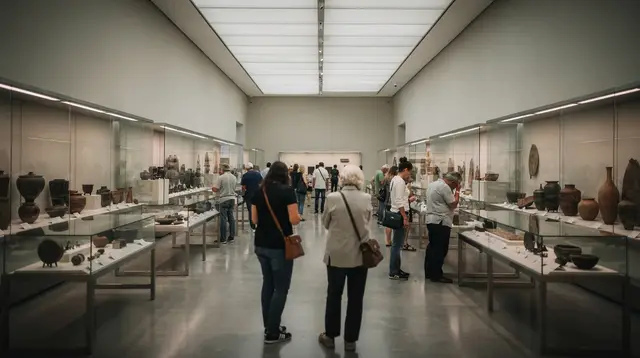
Museums are covered in their own guide rather than here, since the National Museum of Saudi Arabia and the King Abdulaziz Historical Center are about collections and curation, not about form and skyline. And nightlife or evening entertainment — Riyadh Season attractions, theme parks, late-night dining districts — has its own coverage too; this page touches Boulevard World only for its architecture, not its rides.
Getting between the sites
None of the sites on this page sit within easy walking distance of each other, and Riyadh’s traffic gets genuinely dense during morning and evening rush hours, so it’s worth building in extra time rather than assuming a fixed transfer duration. Three practical options:
| Option | Best for | Notes |
|---|---|---|
| Private tour vehicle | Groups, families, anyone short on time | Driver handles parking and routing between stops; usually the most efficient for a half-day or full-day loop |
| Uber / Careem | Solo travellers, flexible pacing | Widely used and generally reliable; expect longer waits and fares during peak traffic |
| Riyadh Metro | KAFD specifically, budget travel | Six-line automated network opened in stages from December 2024 into early 2025; useful for KAFD’s own station, less practical for hopping between towers along Olaya |
| Self-drive rental | Independent travellers comfortable with local roads | Saudi Arabia drives on the right; see the car rental guide before booking |
A general Riyadh city tour is worth considering if you’d rather combine a first look at the skyline with a broader orientation to the city, and a full-day private VIP tour gives the most flexibility if you want to set your own pace between towers, districts and any heritage stops you add on top.
When to go
Riyadh’s climate shapes this more than the buildings do. Between November and March, daytime temperatures sit in a comfortable range, roughly the 20s Celsius through the cooler months, which makes walking any of the outdoor stretches — Tahlia Street, the plazas around KAFD, Boulevard World’s outdoor zones — genuinely pleasant.
From May through September, daytime heat regularly climbs past 40°C, and any outdoor walking is better done early morning or after sunset; the observation decks and interior spaces stay comfortable year-round, but the connecting walks don’t. If you’re timing a trip specifically for the skyline, evenings work particularly well regardless of season, since Kingdom Centre, Al Faisaliah Tower and Boulevard World are all lit at night, and the heat has usually dropped by early evening even in summer. See the best time to visit Riyadh guide for a fuller seasonal breakdown, and the Riyadh in summer guide if you’re travelling during the hottest months regardless.
Planning a route
A first-time visitor with half a day can reasonably cover Kingdom Centre, Al Faisaliah Tower and a stretch of Tahlia Street, then add KAFD if there’s time and daylight left. A full day allows Boulevard City or Boulevard World as an evening finish, timed for when the lighting turns the skyline into its best version of itself. Either way, this fits naturally into a broader Riyadh stay — see one day in Riyadh or two days in Riyadh for how a skyline afternoon slots in alongside heritage and desert time, and the first-time visitor guide for the wider orientation. If you’re specifically deciding between a heritage-first day and a skyline-first day, it’s also worth weighing this page against Diriyah versus old Riyadh and Masmak, which covers the older side of the city this guide deliberately skips.
Modern Riyadh architecture: frequently asked questions
How tall is Kingdom Centre exactly?
302 metres, with the Sky Bridge observation deck near the top. No tour or brochure should quote a different figure for the tower itself.
Can you walk between Kingdom Centre, Al Faisaliah Tower and KAFD?
Not comfortably. They sit several kilometres apart along Riyadh’s main boulevards, with wide roads, limited shade and fast traffic between them. Tours and most independent visitors move by car, taxi or ride-hailing app rather than on foot.
Is the Sky Bridge the same thing as the Kingdom Centre tower?
The Sky Bridge is the enclosed skywalk near the top of Kingdom Centre, not a separate structure. It’s the part most tours and photos are built around, since it’s the highest publicly accessible point in the tower.
What is KAFD and why would a visitor go there?
The King Abdullah Financial District is Riyadh’s purpose-built business quarter, known for its cluster of contemporary towers and a distinctive metro station. It’s worth a look for the architecture and skyline photos rather than for any single attraction inside it.
Is Boulevard City part of these architecture tours?
Sometimes, as a stop rather than the focus. Boulevard City and Boulevard World are newer developments built mainly for entertainment and dining, but their design and lighting make them a natural add-on to a skyline-focused itinerary.
Do these tours include Masmak Fortress or Diriyah?
No. Masmak, the historic centre and Diriyah are heritage sites from earlier centuries and belong on a separate itinerary. Architecture tours focus on the 21st-century skyline and business districts instead.
Why do modern Riyadh tours use a private vehicle instead of walking?
Riyadh is built for cars, with wide multi-lane roads, long blocks and little continuous shade. A private vehicle lets a tour move between Olaya, KAFD and Boulevard City in the time it would take to walk a fraction of that distance, and avoids crossing roads that weren’t designed with pedestrians in mind.
Modern Riyadh architecture tours on GetYourGuide
Verified deep-linked GetYourGuide tours. Book through these links and we earn a small commission at no cost to you.
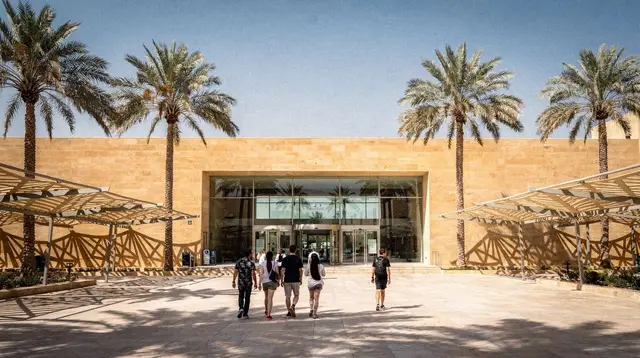
GetYourGuide does not provide a product photo for this activity — the image shows the meeting point, photographed by us.