National Museum of Saudi Arabia: the honest guide
Is the National Museum of Saudi Arabia worth visiting?
Yes, and it should be the first indoor cultural stop in Riyadh if you only make time for one. It opened in 1999 inside the King Abdulaziz Historical Center in Al Murabba and covers the country's history from prehistory to the founding of the modern kingdom in a single air-conditioned building, which also makes it a practical option during the hottest months.
Riyadh has plenty of things to do outdoors, and most of them are better in the cooler months. The National Museum of Saudi Arabia is the exception that works whatever the season, and it is worth understanding on its own terms before you decide where it fits in your trip.
Why this is the museum to see first
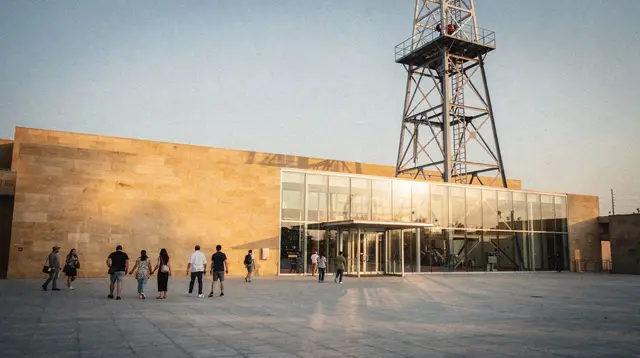
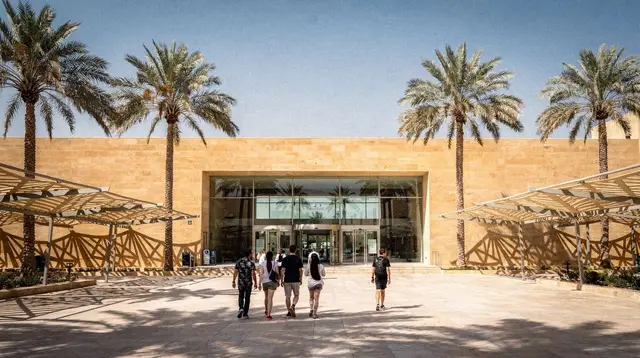
Riyadh has more than one museum worth a stop, but if you can only fit in a single indoor cultural visit, the National Museum of Saudi Arabia is the one to choose. It opened in 1999 as the centrepiece of the King Abdulaziz Historical Center in the Al Murabba district, and it was built specifically to cover the country’s history end to end, from the early archaeology of the Arabian Peninsula through to the founding of the modern kingdom in 1932.
That breadth is the point. Compare it with the Black Gold Museum, a smaller and more specialised museum focused on oil and energy, and the difference in scope becomes clear. The Black Gold Museum rewards someone who already has a specific interest in that one subject. The National Museum is built for a first-time visitor who wants the full picture in one place, which is exactly why it belongs higher on most itineraries.
It is also, deliberately or not, one of the more comfortable things to do in Riyadh when the weather is against you outdoors.
What is actually inside
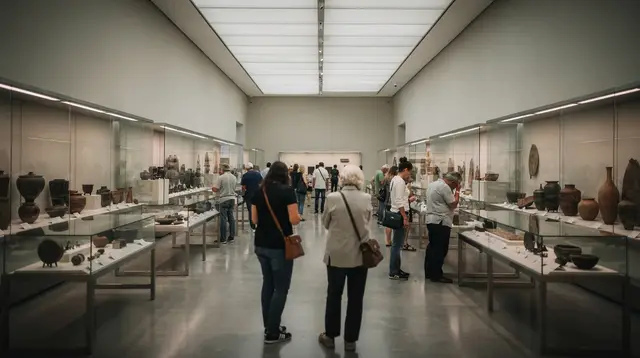
The museum’s exhibition halls are organised roughly chronologically, moving from the natural history and early human presence in the Arabian Peninsula through pre-Islamic civilisations, the arrival of Islam, and the political history that eventually produced the modern Saudi state. The galleries use a mix of artefacts, models, and staged displays rather than dense rows of glass cases, which makes it easier to follow the story even without deep prior knowledge of the region.
This is where the museum earns its place as the generalist option. A visitor who wants to understand how Riyadh, Diriyah, and the wider country connect historically will get more out of a couple of hours here than from any single-topic museum. It does not replace an on-the-ground visit to a heritage site like At-Turaif in Diriyah, but it gives useful context before or after seeing it.
Plan for roughly two hours to move through the main halls at a comfortable pace. That is a general estimate rather than a fixed schedule, and it is easy to spend longer if a particular period interests you, or shorter if you are moving briskly between stops on a fuller day in the city.
Murabba Palace, right next door
The National Museum shares its site with Murabba Palace, the former residence of the kingdom’s founder. The two buildings are separate, and it is worth being clear about that distinction: the museum is a purpose-built exhibition space opened in 1999, while the palace is the older residential building it now sits alongside within the same historical center grounds.
Visiting both takes little extra effort since they are a short walk apart, and together they make for a fuller half-day than the museum alone. If you are choosing what else to see nearby, Al Murabba and the King Abdulaziz Historical Center covers the palace in more depth.
One mix-up worth avoiding: this is not the same complex as Masmak Fortress. Masmak sits in the historic Al Dirah district, further south in central Riyadh, and is tied to a specific and well-documented event, its capture in 1902 by Abdulaziz Ibn Saud, which set in motion the process that led to the kingdom’s founding in 1932. The National Museum, by contrast, tells that same broader story from a distance, as part of a much longer historical arc, rather than being the physical site where it happened. Treating the two as interchangeable is an easy but avoidable error when planning a day around Riyadh’s history.
How it compares to Riyadh’s other museums
| Site | Focus | Best for |
|---|---|---|
| National Museum of Saudi Arabia | Full national history, prehistory to 1932 | A first, general introduction to the country |
| Black Gold Museum | Oil and energy history | Visitors with a specific interest in that topic |
| Masmak Fortress | The 1902 event and the historic Al Dirah quarter | Seeing the actual site tied to the kingdom’s founding |
| Murabba Palace | The founder’s former residence | Pairing with the National Museum on the same grounds |
None of these replace each other, but if travel time is limited, the National Museum is the one that covers the most ground for the least effort, which is why it is the natural anchor for a museum-focused morning or afternoon in Riyadh.
Why this matters in the heat
Riyadh’s climate shapes how a day should be planned more than most other factors. Between November and March, days are generally mild, often somewhere around 20 to 25 degrees Celsius through December and February, and that is when most visitors are comfortable spending long stretches outdoors at places like Edge of the World or the Red Sand Dunes.
From May to September, conditions change substantially. Daytime temperatures regularly climb past 40 degrees Celsius, and desert excursions in that window are usually built around dawn or late-afternoon departures rather than the middle of the day. That leaves a gap in the schedule for anyone travelling in Riyadh’s summer, and an air-conditioned museum with two hours of content is a genuinely useful way to fill it, rather than an afterthought squeezed in on a rainy-day basis the way it might be elsewhere. Check Riyadh’s weather by month before you commit to an outdoor-heavy schedule.
This is not a claim that the museum is only worth visiting when it is hot. It is a genuinely strong option year-round. But it is worth naming directly: on a 42-degree afternoon in July, the National Museum is one of the more comfortable and substantive ways to spend a few hours in Riyadh, and that combination is harder to find than it sounds.
Getting there and fitting it into your day
The King Abdulaziz Historical Center sits in Al Murabba, north of the older Al Dirah district and south of the modern Olaya and King Abdullah Financial District (KAFD) areas. Riyadh is a car-oriented city with real distances between districts, so allow more time than a straight-line distance would suggest, particularly during peak traffic hours. Uber, Careem, and licensed taxis are the practical way to get there for most visitors, and the Riyadh Metro, which opened in stages between December 2024 and early 2025, has also made central Riyadh more connected than it used to be. See getting around with Uber and Careem in Riyadh or the Riyadh Metro guide for specifics.
A practical way to build the day: pair the museum and Murabba Palace with a wider look at Riyadh’s city and heritage sites, and leave the desert half of your trip for cooler hours or cooler months. If you are only in the city briefly, it also fits comfortably into a one-day or two-day itinerary as the indoor anchor of the schedule. For a longer stay, how many days in Riyadh is worth reading before you fix the rest of your plan around it.
Where you base yourself in the city affects how easy this stop is to slot in. Al Murabba sits between the older Al Dirah district and the newer Olaya and KAFD areas, so a hotel anywhere along that general corridor keeps the drive short. Where to stay in Riyadh breaks down the practical differences between those areas if you have not booked yet.
What to wear, and how to pay
Dress for the National Museum follows the same general rule that applies across Riyadh: modest clothing that covers shoulders and knees is expected of everyone, and that is true whether you are indoors in an air-conditioned gallery or outside at a heritage site. There is no specific dress requirement beyond that for a museum visit, and no headscarf is expected here, unlike inside a mosque. If you are unsure what to pack for the rest of the trip, what to wear in Riyadh covers it in more detail.
On payment, Riyadh is a strongly card-based city, and contactless payment is accepted almost everywhere, including museum ticket counters and the small cafés dotted around the King Abdulaziz Historical Center grounds. It is still worth keeping a little cash for smaller, informal stops elsewhere in the city. See money, cards, and payments in Riyadh for the wider picture.
For visiting the museum itself, a guided option removes some of the guesswork around orientation and context:
A guided visit to the National Museum of Saudi Arabia with tickets includedIf you would rather see the museum as part of a broader look at central Riyadh, including the historic Al Dirah area and Masmak Fortress, a half-day option covers more ground in one outing:
A half-day private tour covering Masmak Fortress, the National Museum, and Kingdom CentreFor a simpler self-paced visit without the extras, there is also a straightforward ticketed option:
A standalone visit to the National MuseumAnd for travellers who want the museum folded into a fuller day of Riyadh’s landmarks with transport handled, a guided full-day city tour is worth considering:
A full-day guided city tour of Riyadh with transport includedVisiting with kids, solo, or with accessibility needs
The museum’s format works well for families. The mix of models, staged scenes, and artefacts rather than dense cases of small labelled objects tends to hold children’s attention better than a purely academic exhibition would, and the air-conditioned halls are a welcome break from the heat during a family day out. If the rest of your itinerary is built around younger travellers, Riyadh with kids has broader planning notes beyond this one stop.
It is also a comfortable option for solo travellers, including solo women, since it sits inside a well-signposted, actively visited cultural site rather than an isolated location. Riyadh for solo female travellers covers the wider context if this is your first trip to the city alone.
For visitors with mobility considerations, a purpose-built museum inside a modern historical center is generally easier to navigate than an open-air heritage site with uneven ground, though it is worth checking current facilities directly if specific accommodations matter for your trip. Accessible Riyadh is the fuller reference for planning around that across the city.
Setting expectations honestly
None of this is meant to oversell the museum. It is a solid, well-organised general history museum, not a spectacle, and visitors expecting something dramatic on the scale of a major international national museum should adjust expectations accordingly. What it does well is give structure to everything else you will see in Riyadh and Diriyah: once you have walked through the historical timeline here, sites like At-Turaif in Diriyah or Masmak Fortress in Al Dirah make more sense as pieces of a connected story rather than isolated stops.
It is also worth being straightforward about what it is not. It is not a substitute for visiting the actual heritage sites, and it is not the place to go if your specific interest is oil and energy history, that is what the Black Gold Museum is for. And it is not Murabba Palace, even though the two sit on the same grounds, nor is it Masmak Fortress, even though both museums touch on the same 1902-to-1932 period of history from different angles.
The National Museum and Saudi Arabia’s history, in context
For a museum built around the story of a country, understanding the broader arc matters more than any single exhibit. The kingdom’s modern history is often summarised around two dates that are easy to confuse: the 1902 capture of Masmak Fortress by Abdulaziz Ibn Saud, and the formal founding of the modern Saudi state in 1932. The National Museum walks through the decades between those two points along with the centuries before them, going back to the founding of the first Saudi state in Diriyah in the eighteenth century, which is covered in more depth at At-Turaif.
If your trip includes both Diriyah and central Riyadh, visiting the National Museum before either site gives useful grounding. Seeing the historical arc laid out in one place first makes it easier to place At-Turaif’s mud-brick architecture and Diriyah’s role as the birthplace of the first Saudi state in context, rather than absorbing that history for the first time while standing in the site itself. If your time is limited and you can only manage one indoor stop, this is the one that pulls the most threads together, which is the honest case for putting it near the top of a Riyadh itinerary rather than treating it as an optional extra.
That same logic applies in reverse for anyone building their trip backwards from the desert side of it. A day spent at Edge of the World or among the Red Sand Dunes tells you plenty about the landscape around Riyadh, but very little about how the country got from a walled town in the Najd to its present form. The National Museum is where that gap gets filled in, and it does so in an afternoon rather than requiring several separate stops around the city.
Museum and culture tours on GetYourGuide
Verified deep-linked GetYourGuide tours. Book through these links and we earn a small commission at no cost to you.
GetYourGuide does not provide a product photo for this activity — the image shows the meeting point, photographed by us.