Riyadh city and heritage tours
What do Riyadh city and heritage tours actually cover?
They cover Riyadh itself: the Al Dirah/Deera old town with Masmak Fortress, Deera Square, Qasr Al Hukm and Souq Al Zal, the King Abdulaziz Historical Center, and the modern skyline around Kingdom Centre and KAFD. Diriyah, camel and horse rides, and desert safaris are separate day trips with their own tours.
Old Riyadh and the modern skyline, kept apart from Diriyah
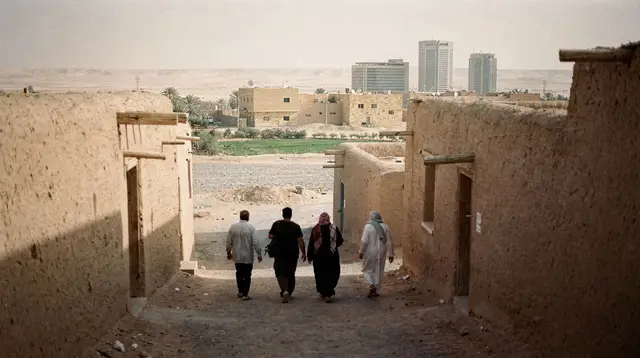
Riyadh’s city and heritage sights split cleanly into two clusters that sit only a short drive apart but tell different stories. The first is Al Dirah, also called Deera, the historic core around Masmak Fortress, Deera Square, Qasr Al Hukm and Souq Al Zal. The second is the modern skyline strung between Olaya and the King Abdullah Financial District, with Kingdom Centre and Al Faisaliah Tower as its landmarks. In between the two, the King Abdulaziz Historical Center adds the National Museum and the Murabba Palace, the fullest telling of how the two eras connect.
None of this is Diriyah. That’s an easy mix-up because Diriyah sits so close to Riyadh’s northwestern edge that some marketing treats it as another neighbourhood. It isn’t. Diriyah is its own town on the Wadi Hanifa, with its own UNESCO-listed At-Turaif district and its own restaurant strip at Al Bujairi Terrace, and it has its own guide and its own page. This page stays inside Riyadh proper: the old city, the museums and the skyline. It also leaves out camel and horse rides and desert safaris, which run as their own half-day and full-day products with different transport and timing — see the camel and horse ride guide and the desert safari guide if that’s what you’re after.
Masmak Fortress and the date that gets confused
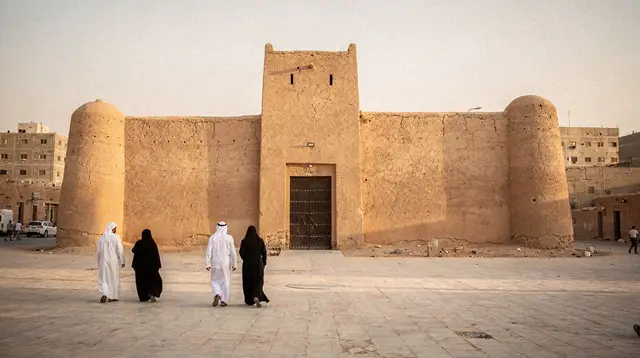
Masmak Fortress is the single most retold story in Riyadh, and it’s also the one visitors get wrong most often, because two dates get flattened into one. In 1902, Abdulaziz Ibn Saud led a small raiding party that scaled the walls of this mud-brick fort at night and retook it from the rival Al Rashid garrison holding the city. That single raid is why Masmak is treated as a starting point: it gave Ibn Saud a base to rebuild Al Saud control over Riyadh and, over the following three decades, over the rest of the peninsula.
The Kingdom of Saudi Arabia itself wasn’t proclaimed until 1932. Thirty years separate the two events, and treating 1902 as “the founding of the country” is the most common factual slip in Riyadh tourism writing. Guides at the fort are usually precise about the distinction; it’s worth listening for it, since it’s genuinely the most interesting part of the visit rather than a technicality.
The fort itself is compact: four corner towers, thick clay walls, a single wooden gate with the spearhead-through-the-door mark still visible from the 1902 raid. Inside, a modest museum sets out weapons, old photographs and the layout of Al Dirah before the modern city grew around it. Visits run short, typically under an hour including the museum rooms, which is why most city tours pair it with the square outside rather than treating it as a half-day stop on its own. The full Masmak Fortress guide goes into the raid and the layout in more depth than a tour itinerary has room for.
Deera Square, Qasr Al Hukm and Souq Al Zal
Deera Square sits directly in front of Masmak Fortress and functions as Riyadh’s old civic heart, ringed by government buildings including Qasr Al Hukm, the modernised courthouse and administrative complex that replaced the historic emirate palace on the same site. None of these buildings invite long stops individually; the value is in walking the cluster together and getting a sense of how compact and defensible the old town was before the city expanded north.
Souq Al Zal, tucked just off the square, is Riyadh’s traditional market for rugs, antique daggers, incense, brassware and the kind of secondhand curiosities that don’t survive in the shopping malls further north. It rewards a slow half hour of browsing more than a checklist visit — bargaining is expected, and the stallholders are used to tourists who aren’t buying anything. It isn’t large, and treating it as a standalone destination oversells it; it earns its place as the last stop on an Al Dirah walk, not the reason to make the trip. The Souq Al Zal guide has more on what’s actually worth buying there.
Together, Masmak, Deera Square, Qasr Al Hukm and Souq Al Zal form a walkable half-day loop. Most guided city tours, including the full-day option with transport, route through this cluster early, before the midday heat, and save the skyline stops for late afternoon or evening when the light and temperature both work better.
King Abdulaziz Historical Center
A short drive from the old city, the King Abdulaziz Historical Center in the Al Murabba district groups several sites into one compound: the National Museum of Saudi Arabia, the Murabba Palace, a public park and a small mosque. The National Museum, open since 1999, is the most complete single stop in Riyadh for context — its galleries move from pre-Islamic Arabia through the Prophet’s life to the unification of the Kingdom under Abdulaziz Ibn Saud, which is where the Masmak story lands in its fuller sequence. Give it more than a quick pass-through; the exhibits are dense and reward slowing down, especially in the rooms covering the early twentieth century.
Murabba Palace, next door, was Abdulaziz’s residence and seat of government after Masmak, built in the same mud-brick tradition but at a much larger scale, with wide courtyards designed for tribal audiences. Seeing the palace right after the museum’s unification galleries is what makes the King Abdulaziz Historical Center more useful than visiting Masmak alone: it’s the fuller arc from the 1902 raid to the built reality of the Kingdom that followed. The dedicated guide to the museum and palace breaks down opening patterns and what each wing covers, and the National Museum guide goes deeper on the exhibits themselves.
The modern skyline: Kingdom Centre, Al Faisaliah and KAFD
Riyadh’s other half is entirely modern. Kingdom Centre, in Olaya, is the city’s best-known building at 302 metres, its inverted-arch top holding the Sky Bridge observation deck — a separate ticket from the shopping centre below, and the single best vantage point over the city, especially close to sunset when the desert haze softens. Al Faisaliah Tower, a few minutes away, is the older of Riyadh’s two skyline icons, recognisable by the gold sphere near its summit, with its own observation level and a rotating restaurant.
Further out, the King Abdullah Financial District, usually shortened to KAFD, is Riyadh’s newer business quarter: a cluster of angular towers, elevated walkways and a design that reads as ambitious even next to Kingdom Centre. It’s less about a single sight than about the overall effect of the district at night, when the towers are lit. Boulevard City and Boulevard World, north of KAFD, host Riyadh Season, the city’s annual entertainment festival that runs roughly from October to March with concerts, fairground rides and pop-up experiences — worth checking the current dates before a trip, since it changes the evening feel of that whole part of the city. The modern Riyadh architecture guide and the KAFD guide cover the skyline stops in more detail, including which towers currently allow public access.
How the day actually fits together
Old Riyadh and the modern skyline sit roughly 20 to 30 minutes apart by car outside peak traffic, which stretches considerably during the evening rush. Most full-day city tours front-load the old city in the morning — cooler temperatures, better light for the fortress’s clay walls — then use the King Abdulaziz Historical Center as a midday stop with air conditioning, and finish at Kingdom Centre or KAFD as the sun sets, since both look better lit up than in flat daylight.
| Stop cluster | Typical time needed | Best time of day |
|---|---|---|
| Masmak Fortress, Deera Square, Qasr Al Hukm | 1–1.5 hours combined | Morning |
| Souq Al Zal | 30–45 minutes | Late morning |
| King Abdulaziz Historical Center | 1.5–2 hours | Midday |
| Kingdom Centre Sky Bridge | 45 minutes | Late afternoon / sunset |
| KAFD or Boulevard City | 1 hour+ | Evening |
Getting between the two clusters doesn’t require a private driver, though it’s the easiest option. The Riyadh Metro’s six lines pass near Olaya and KAFD, but Al Dirah’s old-city stops still leave a walk to Masmak, so most visitors default to Uber or Careem for the door-to-door legs — see the Uber and Careem in Riyadh guide for how that compares with a metered taxi. Either way, budget more time for the Kingdom Centre to KAFD leg during the evening rush than the map distance suggests, since that stretch of Riyadh’s road network backs up hardest right when most tours are trying to reach the skyline for sunset.
A private car and driver makes stitching these together far less painful than relying on rideshares between every stop, since waiting for a car in Riyadh’s midday heat isn’t pleasant. For a driver who stays with you across the whole loop, a private city tour with a chauffeur, including lunch between the old town and the skyline covers exactly this pattern without the gaps of booking separate transfers. If you’d rather join a set itinerary with a guide narrating the Masmak story properly, a full-day guided city tour with transport included hits the same clusters on a fixed schedule. For a shorter first look at just the highlights, a half-day city tour covering the old town and skyline is the lighter version of the same route.
Where this fits against Riyadh’s other tours
City and heritage tours are the baseline for a first visit to Riyadh, but they aren’t the whole picture, and it’s worth being clear about what they don’t include. They don’t cover Diriyah’s At-Turaif district or Al Bujairi Terrace — that’s a separate half day, detailed in the comparison of Diriyah versus Old Riyadh and Masmak if you’re trying to decide how to split two days between them. They don’t include camel or horse rides, which run as their own bookable activity. They don’t include desert safaris to the Tuwaiq escarpment or the Red Sand Dunes, which need a different vehicle, a full afternoon and a separate driver comfortable on unpaved tracks.
For travellers building a first Riyadh itinerary from scratch, the one-day in Riyadh itinerary slots city and heritage sights against the clock realistically, and the two-day itinerary is usually where Diriyah gets its own separate day rather than being squeezed into the same afternoon as Masmak. The wider things to do in Riyadh guide is the better starting point if city and heritage tours turn out not to be the angle you need.
Dress, etiquette and safety at these sites
None of the stops on this loop require an abaya or a headscarf for foreign women — Saudi Arabia dropped that requirement outside mosques some years ago — but modest dress, shoulders and knees covered, is still expected at Masmak, Qasr Al Hukm and the King Abdulaziz Historical Center, since these remain working civic and cultural sites rather than tourist-only attractions. The what to wear in Riyadh guide covers this in more practical detail than a packing list alone can, and the Saudi laws and etiquette for visitors guide is worth reading before the trip rather than at the fortress gate.
Riyadh’s city sights are generally straightforward for solo and first-time travellers to move through; see the is Riyadh safe for tourists guide if that’s a specific concern rather than a general one. Anyone who’d rather not manage the logistics of stitching Masmak, the museum and the skyline together alone can also look at hiring a private guide in Riyadh, which sets out what a guide adds over a self-driven loop with just a driver.
Timing this loop against the rest of a trip
How much of this loop fits into a single day depends on how many days the wider trip has. The how many days in Riyadh guide breaks this down properly, but as a rule of thumb, a first-time visitor with only one full day in the city should expect to choose between the old-city cluster and the skyline rather than trying to do both at a relaxed pace. Families travelling with children usually do better splitting the two halves across two mornings instead of one long day; the Riyadh with kids guide has more on which of these stops hold a child’s attention and which don’t.
Summer heat changes the calculus too. Between May and September, when temperatures regularly climb past 40°C, the outdoor walk between Masmak, Deera Square and Souq Al Zal is far less comfortable in the middle of the day, so shifting that segment to the morning and saving the air-conditioned museum halls for midday matters more than it does in winter. The best time to visit Riyadh guide sets out how the cooler November-to-March window, with daytime temperatures closer to 20-25°C, changes what’s comfortable across a full day like this one.
Booking notes
Tour operators sell the same handful of routes under different names — “city tour,” “highlights tour,” “heritage tour” — with the real differences coming down to group size, whether lunch is included and whether transport is private or shared. A highlights city tour that pairs the main sights with a local food stop is worth it mainly for travellers who’d rather have a meal built into the itinerary than hunt for lunch between stops. None of these tours currently include Kingdom Centre’s Sky Bridge ticket by default, so check the inclusions before assuming it’s covered, and confirm current pricing and start times on the operator’s own listing rather than relying on a fixed figure here, since both change through the year — particularly around Riyadh Season, when city-tour demand and traffic both increase.
If you’re short on time and only want the old city plus one skyline stop rather than the full loop, most operators offer a scaled-down half-day version; ask directly, since it isn’t always listed as a separate product. For groups combining a city day with a desert day, the multi-day Riyadh tours guide covers how operators bundle both into a single package with a private guide across several days.
Riyadh city and heritage tours on GetYourGuide
Verified deep-linked GetYourGuide tours. Book through these links and we earn a small commission at no cost to you.
GetYourGuide does not provide a product photo for this activity — the image shows the meeting point, photographed by us.