What to wear in Riyadh
Do women have to wear an abaya in Riyadh?
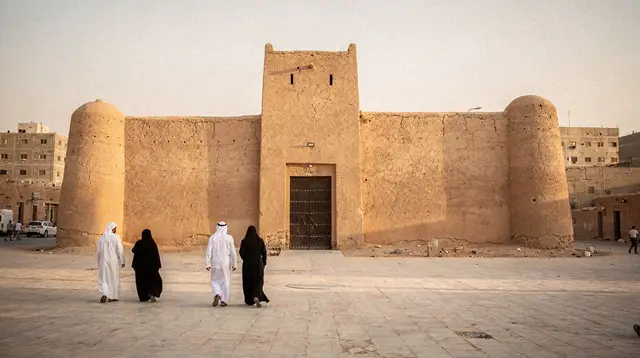
No. Foreign women are not required to wear an abaya in Riyadh. Modest dress covering shoulders and knees, in loose, non-transparent fabric, is enough almost everywhere. A headscarf is only required inside mosques, not in hotels, malls, or the street. The same modesty standard applies to men, who should avoid short shorts and sleeveless tops in public.
The one rule that actually matters
Riyadh’s dress code gets talked about online as if it were a strict, unified set of laws with a checklist attached. It isn’t. What’s actually expected, for every visitor regardless of gender, is modest dress in public: shoulders and knees covered, nothing tight-fitting or see-through. That’s the whole rule. Everything else — the abaya, the headscarf, the idea that men are exempt — is either optional, context-specific, or simply wrong.
This page covers only the dress code itself. For what to pack for the trip more broadly (adapters, sun protection, desert layers), see what to pack for Riyadh. For the wider set of laws and etiquette around alcohol, public affection, and photography, see Saudi laws and etiquette for visitors.
The abaya myth, corrected
The single most repeated piece of bad advice about Riyadh is that foreign women must wear an abaya, the loose black robe worn by most Saudi women. It is not required. It hasn’t been required for visiting women for some years now, and since Saudi Arabia opened to international tourism in September 2019 and introduced the e-Visa, the practical experience on the ground has only relaxed further. You will see women, both Saudi and foreign, in Riyadh wearing anything from a full abaya to a long dress, wide trousers with a tunic, or a maxi skirt with a loose top. Nobody at passport control, a hotel, or a mall checks for one.
What’s still expected is modest coverage: shoulders in, knees in, and loose rather than clingy. A long-sleeve top with ankle-length trousers or a maxi dress does the job without needing an abaya at all. If you’d rather wear one for comfort, convenience, or personal preference, that’s a fine choice too — some visitors like that it doubles as a single layer over anything underneath, especially useful for a quick change between a hotel and an evening out. But packing one is optional, not a requirement, and you shouldn’t feel you need to buy one before you land.
The headscarf: mosques only
The second most common misunderstanding is about headscarves. A headscarf is not required on the street, in a hotel lobby, at a restaurant, in Boulevard World or any mall, or at heritage sites like At-Turaif in Diriyah. It’s required in exactly one place: inside a mosque, if you’re entering the prayer hall.
If your itinerary includes a mosque that welcomes visitors, carry a light scarf you can drape over your hair before going in. Some larger mosques keep spare scarves or abayas near the entrance for visitors who arrive without one, but it’s not guaranteed, and it’s simpler to have your own folded into a day bag. Outside that specific setting, a headscarf is a personal choice, not an expectation — you won’t be asked to put one on at a hotel breakfast or in Souq Al Zal.
It applies to men too
A lot of dress-code advice online is written only for women, which leaves the impression that men can wear whatever they like. That’s not accurate. The same modesty principle — shoulders and knees covered — applies to men in public. In practice that means:
- No sleeveless tops or vests outside a gym or pool
- Shorts that sit above the knee are best avoided in mosques, government buildings, and more traditional settings like Masmak Fortress or a souq
- Knee-length shorts with a t-shirt are generally fine in malls, modern cafes, and hotel areas
Men aren’t held to the same visual expectations as women — there’s no male equivalent of the abaya conversation — but “anything goes” isn’t accurate either. A pair of tailored knee-length shorts and a t-shirt covers most daytime situations in Riyadh without issue.
Reading the setting: Olaya versus a souq versus Diriyah
Riyadh isn’t dress-code uniform across the city, and knowing the difference saves you overthinking every outfit choice.
Olaya, Al Malqa, and KAFD are the most visually international parts of the city — glass towers, international chains, malls anchored around brands you’d recognise from anywhere. Modest but casual clothing blends in without a second look here: jeans, a loose top, trainers. Even a fairly relaxed Western outfit that covers shoulders and knees draws no attention around the Kingdom Centre or in KAFD.
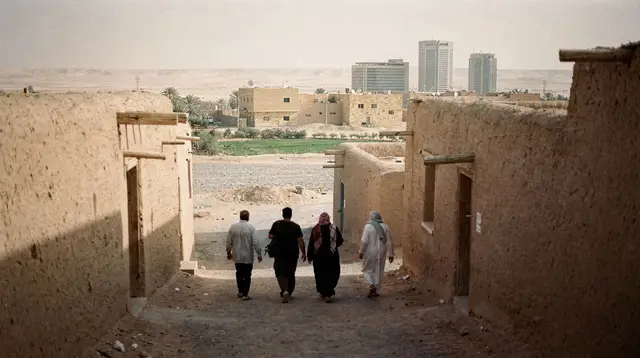
Souq Al Zal and the historic Al Dirah district feel different in character even if no different rule is enforced. Dressing a notch more conservatively — longer sleeves, less exposed skin — fits the setting and, frankly, reads as more respectful to the traders and older visitors around you. It’s not a legal requirement; it’s a judgment call about a traditional space.
Diriyah, home to At-Turaif and Bujairi Terrace, sits somewhere in between. It’s a UNESCO heritage district with a strong sense of place, and it’s also increasingly full of restaurants and evening crowds that dress more like a smart night out than a heritage tour. Modest daywear works for the historic walk; something a little dressier is normal for a Bujairi Terrace dinner in the evening.
None of these are enforced dress checks. They’re about reading a room the same way you would in any city with distinct old and new quarters.
What actually works, practically
For most of a Riyadh trip, the easiest approach is loose, breathable fabric that covers shoulders and knees without being heavy. Linen and looser cotton blends handle the desert heat better than anything tight-fitting, which also matters more for comfort than for any rule. A few practical notes:
| Setting | What works | What to avoid |
|---|---|---|
| Malls, modern cafes, Olaya/KAFD | Loose top or dress, trousers or midi skirt, knee-length shorts for men | Very short shorts, sleeveless tops |
| Souq Al Zal, Al Dirah heritage area | Longer sleeves, ankle-length bottoms | Tank tops, very short hemlines |
| Diriyah / At-Turaif / Bujairi Terrace | Modest daywear for the walk; smart-casual for dinner | Beachwear |
| Inside a mosque | Full coverage, headscarf for women | Any exposed shoulders or legs |
| Hotel pool or beach club | Standard swimwear, cover-up to walk through the hotel | Walking corridors in swimwear alone |
| Desert day trips (Edge of the World, Red Sand Dunes) | Long sleeves, long trousers, closed shoes, hat, scarf | Sandals, shorts, sun-exposed skin |
If you’re joining an organised day out — a Riyadh city tour that includes the old town, a heritage walk through Diriyah, or a desert excursion — the same modest-and-practical approach covers every stop on the itinerary without needing to change outfits.
A half-day Riyadh city tour covering the old town and modern skyline is a good way to see how locals and other visitors actually dress across both settings in a single afternoon, rather than guessing from photos online.
Hotels, malls, and evenings out
Riyadh’s hotel and restaurant scene has grown fast, and dress expectations in that world track closer to any major international city than to a conservative stereotype. Smart-casual is normal for dinner in Olaya or at Bujairi Terrace; there’s no requirement for women to cover hair or wear an abaya to eat at a restaurant, and men don’t need anything more formal than trousers and a collared shirt at most places. Riyadh Season, the city’s annual festival running roughly October to March at venues like Boulevard City, draws a mixed, fairly relaxed crowd in everyday clothes; it isn’t an occasion for anything more conservative than a regular evening out.
Pools and beach clubs are their own zone with their own norms — standard swimwear is fine within the pool area itself. The one habit worth keeping is not walking through hotel lobbies or lift corridors in just a swimsuit; a light cover-up or robe between the pool and your room is a small courtesy, not a legal necessity.
If your Riyadh stay includes a dinner in the desert, an evening sunset dinner out in the desert tends to run cooler after dark, so a light layer over daytime clothing is more about comfort than any dress expectation.
Desert excursions: dressing for sun, sand, and distance
Desert day trips are a different practical problem from the city dress code, and worth planning for separately. The Edge of the World, roughly 90 to 100 km northwest of Riyadh with the final stretch on unpaved track, and the Red Sand Dunes to the west both mean sun exposure, wind-blown sand, and uneven ground with no shade. Long sleeves and long trousers in a breathable fabric protect against sunburn and windburn better than shorts and a t-shirt, closed shoes beat sandals on rocky or sandy terrain, and a scarf that can be pulled up over the mouth and nose helps if the wind picks up dust. None of this is a dress-code requirement; it’s what actually makes a multi-hour desert outing comfortable.
The same applies to a longer outing like a full-day private tour combining Riyadh’s sights with a desert stop or a stop at the camel market east of the city — practical, covering clothing works better in both the heritage-site sense and the sun-protection sense at once.
A guided visit to the Riyadh camel market is one of the settings where modest, practical dress does double duty: it reads as respectful in a working, traditional space, and it’s genuinely more comfortable in the dust and midday sun than anything more exposed.
What this doesn’t cover
This page is only about the dress code — what’s required, what’s optional, and where the line actually sits by setting. It doesn’t cover the wider legal and etiquette picture: alcohol rules, public displays of affection, photographing people, or prayer-time pauses at shops. That’s all in Saudi laws and etiquette for visitors. It also doesn’t cover the packing list itself — adapters, sun protection, footwear for the desert versus the city — which lives in what to pack for Riyadh. If you’re travelling during Ramadan, when daytime eating and drinking in public isn’t permitted and site hours shift, see visiting Riyadh during Ramadan for what changes beyond dress. Solo women travellers with more specific questions about how comfortable Riyadh feels day to day should see Riyadh for solo female travellers.
Frequently asked questions about Riyadh’s dress code
Do women have to wear an abaya in Riyadh?
No. The abaya became optional for foreign women some years ago, and enforcement of any dress code eased further after Saudi Arabia opened to tourism in September 2019. Modest, loose clothing covering shoulders and knees is what’s actually expected.
Do I need to cover my hair in Riyadh?
Only inside a mosque. A headscarf is not required in hotels, restaurants, malls, on the street, or at any of the desert or heritage sites around Riyadh. Carry a scarf for mosque visits and you won’t need it elsewhere.
Does the dress code apply to men too?
Yes. Men are expected to cover from shoulder to knee in public, meaning no sleeveless tops and no very short shorts. It’s less strictly policed for men than the idea of an abaya requirement for women, but the same modesty principle applies to everyone.
Can I wear shorts and a t-shirt in Riyadh?
Knee-length shorts and a t-shirt are fine in most modern settings, including malls and hotel lobbies in areas like Olaya or KAFD. Traditional souqs and Diriyah call for a bit more coverage out of respect for the setting, not because of an enforced rule.
What should I wear to visit a mosque in Riyadh?
Cover shoulders, arms, and legs, and bring a headscarf if you’re a woman planning to enter the prayer hall. Many mosques that welcome visitors have a scarf or abaya available to borrow at the entrance, but it’s simpler to carry your own.
Is swimwear allowed at hotel pools in Riyadh?
Standard swimwear is fine at hotel pools and private beach clubs, which operate under different norms than the street. Leave the pool area in a cover-up rather than walking through hotel corridors in just a swimsuit.
What should I wear on a desert day trip from Riyadh?
Loose, breathable long sleeves and long trousers work better than shorts for sun and sand protection at places like the Edge of the World or the Red Sand Dunes, plus closed shoes, a hat, and a scarf that doubles as sun cover and a windbreak against dust.
Planning tips for visiting Riyadh on GetYourGuide
Verified deep-linked GetYourGuide tours. Book through these links and we earn a small commission at no cost to you.
GetYourGuide does not provide a product photo for this activity — the image shows the meeting point, photographed by us.