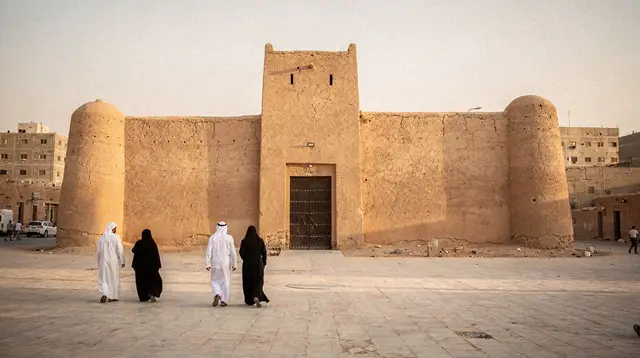
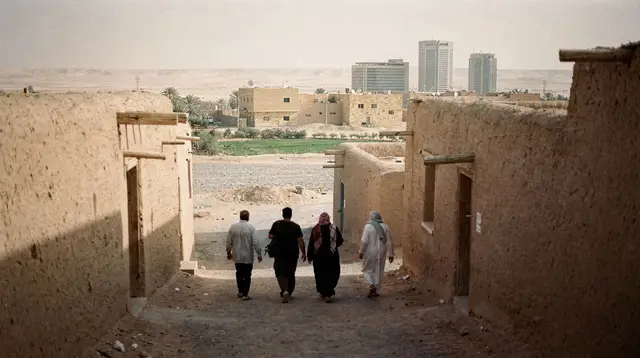
Souq Al Zal: Riyadh's old market for carpets, daggers and antiques
What is Souq Al Zal and is it worth visiting?
Souq Al Zal is a traditional covered market in Riyadh's historic Al Dirah district, a short walk from Masmak Fortress, selling carpets, daggers, incense and antiques. It's worth 30-60 minutes if you're already in the old town, though much of the stock aimed at visitors is mass-produced rather than handmade.
What Souq Al Zal actually is
Souq Al Zal is a covered market in Al Dirah, the historic core of Riyadh also known as Deera. It sits a few minutes’ walk from Masmak Fortress and Deera Square, in the same pocket of old-town streets that once made up the whole city before Riyadh grew outward into Olaya, Al Malqa and the King Abdullah Financial District (KAFD). The name is tied to carpets and secondhand goods trading, and that’s still the backbone of what’s sold: rugs, ceremonial daggers, incense, silver and a broad category of “antiques” whose age is not always what it’s presented as.
It isn’t a single building so much as a network of narrow lanes and small shopfronts, some open-fronted, some in low arcades, with awnings cutting the midday sun. Unlike Souq Al Zal’s counterparts in some Gulf cities, there’s no grand gate or single obvious entrance to aim for; you find it by walking the Al Dirah streets between Masmak Fortress and Qasr Al Hukm, the government/justice complex nearby, and letting the stalls appear.
This guide covers Souq Al Zal on its own terms: what to expect, what’s worth buying, what’s aimed purely at visitors, and how it fits into a morning or afternoon in the old town. It doesn’t cover the history of Masmak Fortress itself, which has its own dedicated guide, or the national museum and founder’s palace at the King Abdulaziz Historical Center, which is a separate site across town in Al Murabba.
Carpets, daggers, incense: what’s actually sold
Carpets and rugs. This is the market’s strongest category. Dealers carry Persian, Afghan and Central Asian pieces alongside rugs traded regionally, ranging from small mats to room-sized carpets. Quality spans genuinely old, hand-knotted pieces down to machine-made rugs sold as if they were something more. If you know carpets, this is a place to look; if you don’t, treat any claim about age or origin with some scepticism and buy for the look and feel you want rather than as an investment.
Daggers (khanjar-style). Curved ceremonial daggers with ornate hilts and sheaths are a signature item, sold in a wide range of qualities from decorative tourist pieces to more traditionally made examples. Silver and metalwork quality varies a lot between stalls, and so does the asking price for what looks like a similar object.
Incense: frankincense and oud. Small shops sell frankincense resin, oud chips and oud oil, along with the burners (mishkhan) used to smoke clothing and rooms with incense, a genuinely everyday Saudi practice rather than a purely touristic one. This is one of the more reliably “real” purchases here, since incense is something Saudis actually buy for home use, not only for visitors.
Silver, coins and household antiques. Old coins, silver jewellery, brass coffee pots, and a wide scatter of household objects presented as antiques. Some are genuinely old; a fair amount is reproduction or simply used rather than antique. Buy because you like the object, not because of an age claim you can’t verify on the spot.
What’s mostly tourist souvenir. Small keychains, printed textiles, mass-produced “traditional” ornaments and a layer of generic Gulf-souvenir stock have crept in alongside the older trades, aimed squarely at day visitors coming from Masmak Fortress. None of this is dishonest exactly, it’s just not the craft market some visitors expect from the name.
How to browse it well
Walk the lanes once before buying anything. Souq Al Zal rewards a first pass to see the range of what’s on offer and roughly where prices sit, then a second pass to actually negotiate. Prices aren’t marked, so an opening figure from a stallholder is a starting point, not a fixed price; this guide won’t give you a number to expect, because it shifts by item, by dealer, and by how the conversation goes, but a sizeable gap between opening ask and eventual sale is normal for carpets, daggers and anything called an antique.
Cash is useful here even though cards are accepted almost everywhere else in Riyadh; smaller stalls and final-price negotiations move more easily with cash in hand. Bring small notes rather than large ones.
Don’t expect fixed opening hours. Like much of the old town, stalls keep individual schedules and things quiet down around Friday midday prayers, part of the wider Friday-Saturday weekend rhythm across the city. If you’re set on a particular purchase, a late morning or afternoon visit on a weekday gives you the best chance of finding shops open and dealers unhurried.
Souq Al Zal in a half-day of old-town Riyadh
The market sits inside a compact cluster of sites that works well on foot:
| Site | Distance from Souq Al Zal | What it adds |
|---|---|---|
| Masmak Fortress | A few minutes’ walk | The 1902 mud-brick fort and small museum tied to the kingdom’s founding |
| Deera Square | Adjacent | Open square next to Masmak, quiet outside events |
| Qasr Al Hukm | Adjacent | The modern justice building anchoring the old-town cluster |
| King Abdulaziz Historical Center | A short taxi or rideshare ride | National museum and the founder’s Murabba Palace, a separate half-day in itself |
A reasonable half-day sequence is Masmak Fortress first, since it opens the story the rest of the old town builds on, then Deera Square, then Souq Al Zal for the last hour before the midday heat or before Friday prayers close things down. Trying to add the King Abdulaziz Historical Center the same morning is possible but tight; most visitors are better off splitting it into a second outing rather than rushing the museum.
If you’d rather not string the stops together yourself, a guided old-town tour covers this exact cluster with transport and context included.
A guided day covering Masmak Fortress, Souq Al Zal and Murabba Palace with transport between sitesFor a broader look at Riyadh’s historic quarter beyond just this one market, a cultural city tour built around the old attractions gives more context on what you’re seeing between stalls.
A cultural guided tour through Riyadh’s historic old-town attractionsWhere Souq Al Zal fits against Riyadh’s other heritage sites
It’s easy to blur Souq Al Zal together with nearby sites that cover very different ground. Masmak Fortress is about a specific historical event, the 1902 capture of the fort by Abdulaziz Ibn Saud that set in motion the founding of the modern kingdom in 1932; there’s no shopping there, just the fort and its small exhibits. The King Abdulaziz Historical Center, across town in Al Murabba, houses the National Museum of Saudi Arabia and the founder’s former residence, Murabba Palace, a much larger, air-conditioned museum experience with no market attached. Souq Al Zal is neither of those: it’s a working (if increasingly tourist-aware) market, and the closest thing here to “sightseeing” is watching how the carpet and dagger trade actually operates.
Diriyah, with its UNESCO-listed At-Turaif district and Al Bujairi Terrace, is a separate outing entirely, a distinct town on the Wadi Hanifa northwest of central Riyadh rather than part of the Al Dirah old-town cluster. Don’t try to combine Souq Al Zal with Diriyah in the same half-day; the driving time and the different character of each site make that rushed rather than efficient. See the guide on Diriyah versus old Riyadh and Masmak if you’re deciding which to prioritise on a short trip.
If your time in Riyadh is genuinely limited to a day or two, it’s worth deciding upfront whether Souq Al Zal earns a slot at all. It’s a pleasant, low-key hour, not a must-see in the way Masmak Fortress or Diriyah are; visitors tight on time can skip it without missing the city’s headline sights.
For visitors who want more of the old town
Beyond the market itself, the Al Dirah cluster rewards a slower look if you have a full morning or afternoon rather than an hour. The lanes around Souq Al Zal give a sense of pre-oil-boom Riyadh that the glass towers of Olaya and KAFD don’t, and pairing it with a private guide adds context most solo visitors miss, particularly on what’s genuinely old versus reproduction among the antiques on sale.
A private full-day city tour with transport, tailored to the old-town sites you actually want to seeFor a wider first look at the city before narrowing down to Al Dirah specifically, the things to do in Riyadh overview and the one-day Riyadh itinerary both place Souq Al Zal within a fuller day, alongside modern Riyadh sights like the Kingdom Centre Sky Bridge. If you’re building out two days rather than one, the two-day Riyadh itinerary gives Al Dirah and Diriyah separate half-days, which is the pacing this guide recommends over trying to compress both into one.
Souq Al Zal also connects to Riyadh’s wider shopping and craft scene in smaller ways: incense and oud bought here show up in daily Saudi life well beyond the market itself, something covered in more depth in the broader city guide to Riyadh’s heritage tours. Visitors curious about a different kind of traditional trading, livestock rather than carpets, may also want to look at the Riyadh Camel Market on the city’s eastern edge, a genuinely working market rather than one shaped around visitors.
Souq Al Zal: what to buy, what to skip
| Buy if you want it | Skip unless you really want a souvenir |
|---|---|
| A carpet or rug you like the look of, priced on feel not investment | Printed textiles marketed as “traditional” |
| Frankincense, oud or a burner for home use | Generic keychains and trinkets |
| A dagger as a decorative object | Anything sold hard as a guaranteed antique with no proof |
| Silver jewellery you’d wear regardless of age claims | Mass-produced “coins” with no verifiable origin |
None of this rules out a good find. It simply means Souq Al Zal is closer to a flea market with genuine specialists mixed in than a curated craft showcase, and enjoying it means browsing with that expectation rather than hunting for guaranteed authenticity.
Getting there and getting around
Souq Al Zal sits in central Al Dirah, reachable by taxi, Uber or Careem from anywhere in Riyadh; see the guide on Uber and Careem in Riyadh if this is your first time using rideshare apps in the city. It’s walkable from Masmak Fortress and Deera Square, so most visitors arrive by car or rideshare to the old-town cluster generally, then cover Souq Al Zal, Masmak and Deera Square on foot from there. Riyadh’s traffic is heaviest at peak commuting hours, so a late-morning or mid-afternoon visit avoids the worst of it in both directions.
Riyadh: full-day and VIP options if you’re combining more sites
If Souq Al Zal is one stop among several on a bigger day, either of Riyadh’s full-day tour options bundle the old town with additional modern or heritage sites and take the transport logistics off your hands.
A full-day guided city tour with transport covering Riyadh’s key sightsFrequently asked questions about visiting Souq Al Zal
Is Souq Al Zal a tourist trap?
Partly. A genuine core of carpet, dagger and antique dealers still trades here, but a growing share of stalls sell mass-produced souvenirs aimed squarely at visitors. Treat it as browsing, not a guaranteed source of authentic craft.
What can you actually buy at Souq Al Zal?
Carpets and rugs (Persian, Afghan and locally traded), ceremonial daggers, frankincense and oud incense, silver jewellery, old coins and household antiques. Quality and authenticity vary enormously stall to stall.
How much time do you need for Souq Al Zal?
Thirty to sixty minutes is enough to walk the lanes and browse. It pairs naturally with Masmak Fortress and Deera Square, both a short walk away, as part of a half-day in the old town.
Is bargaining expected at Souq Al Zal?
Yes, for carpets, daggers and antiques, an opening asking price is rarely the final one. Prices aren’t quoted here since they shift by item and dealer; agree a figure before you commit to buying.
Is Souq Al Zal open every day?
It operates most days but hours shift around and stalls close individually around Friday midday prayers. Check current hours locally rather than relying on a fixed schedule.
Can you visit Souq Al Zal without a guide?
Yes. It’s a walkable, low-pressure market and most stallholders speak enough English for a transaction. A guided old-town tour adds context on what you’re looking at, which matters more here than at most markets.
Is Souq Al Zal near Masmak Fortress?
Yes, it sits in the same Al Dirah/Deera cluster, a few minutes’ walk from Masmak Fortress and Deera Square, making the old town easy to cover on foot in one visit.
Riyadh city and heritage tours on GetYourGuide
Verified deep-linked GetYourGuide tours. Book through these links and we earn a small commission at no cost to you.
GetYourGuide does not provide a product photo for this activity — the image shows the meeting point, photographed by us.