Edge of the World: seasons, access rules and closures
Is Edge of the World always open, and when is the best time to go?
No. Access rules and opening periods near Jebel Fihrayn change, including closures during the hottest months, so there is no fixed year-round schedule. Sunset is generally the best time to visit, and a booked, licensed tour is the safest way to confirm current access before you commit to the 90-100 km drive from Riyadh.
Why there is no fixed schedule for this trip
Every guide to Edge of the World eventually runs into the same problem: there is no single, reliable answer for “what time does it open” or “is it open this month.” The escarpment known locally as Jebel Fihrayn, part of the Tuwaiq mountain range roughly 90-100 km northwest of Riyadh, is not a ticketed attraction with posted hours. It is a stretch of open desert cliff, and access to it depends on road conditions, temporary closures, and rules that have changed more than once in recent years, including closures during the hottest months. Anyone telling you a fixed day or hour to show up is guessing, or working from information that may already be out of date.
This page does not try to give you that fixed answer. Instead it explains why the variability exists, what actually changes from season to season, and what to do about it: book with a licensed tour operator who tracks current conditions, and confirm access before you commit a full day to the drive. If you want the day-trip logistics — what to pack, what a typical itinerary looks like — that lives on a separate page; this one is specifically about timing, seasons and access rules.
The drive is longer than it looks on a map
Distance on a map is misleading here. Edge of the World sits about 90-100 km northwest of Riyadh, which sounds like a short hop by highway standards. In practice, plan on 2 to 2.5 hours of driving each way, not 30 minutes or an hour. Two things stretch the trip out.
First, the paved road only gets you partway. The final stretch to the escarpment runs on unpaved desert track, rutted and uneven in places, and it requires a 4x4 with a driver who knows the route. A standard sedan will not make it, and a driver unfamiliar with the track will move slowly and cautiously, which adds time. Second, Riyadh’s own traffic on the way out of the city, especially during weekday peak hours, can add 20-30 minutes before you even reach open desert.
None of this makes the trip impractical — it’s a manageable day excursion — but it does mean you should budget a half-day minimum, ideally treat it as a full afternoon-to-evening outing if you’re timing it for sunset, and never book it as a quick add-on between two other Riyadh activities. If your schedule only has a couple of free hours, this is not the excursion to fit into them; look instead at something closer to the city, like the Riyadh Camel Market or a shorter cultural stop.
Why access rules and opening periods change
Saudi Arabia’s tourism infrastructure around natural sites like Jebel Fihrayn has developed quickly and unevenly since the country opened to tourism in September 2019. Edge of the World was, for years, a word-of-mouth destination reached mostly by off-road enthusiasts and expatriate hiking groups. As visitor numbers grew, so did attention to safety, road maintenance, and — at times — restricted access during periods judged too hot or otherwise unsuitable for visitors.
The practical result is that closures have already happened during the hottest months of the year, when daytime desert temperatures on the exposed escarpment can be genuinely dangerous, particularly given the total absence of shade, shelter or services on site. Whether a closure applies in any given week is not something you can predict from a general climate pattern alone — the specific dates and thresholds have varied. Rather than publish a fixed closure calendar that risks being wrong by the time you read this, the honest guidance is: check current access with a licensed tour operator, or through the booking platform’s live availability, before you commit to a date. A tour that shows availability for your chosen day is a far more reliable signal than any generic “best months” list, including the one below.
Seasonal patterns worth knowing anyway
Even though exact closure windows shift, the broader climate pattern in the Riyadh region is consistent enough to plan around in general terms.
| Period | Typical daytime feel | What it means for this trip |
|---|---|---|
| November-March | Mild and sunny, roughly 20-25°C in December-February | The most comfortable window for a desert excursion, and the period when access is least likely to be restricted |
| April, October | Warming or cooling transition months | Usually workable, but afternoon heat can build; sunset timing matters more |
| May-September | Often above 40°C in the afternoon | Highest risk of restricted access or closure; if the trip runs at all, it should be scheduled for early morning or the hour before sunset, never midday |
Outside of temperature, rain is rare in this part of the Najd plateau, but sandstorms are a real possibility in spring and, less often, in summer. A sandstorm can cut visibility on the unpaved final stretch to near zero, which is another reason a professional driver with local knowledge is worth having, rather than navigating the track yourself in unfamiliar conditions.
Sunset over sunrise, and why the timing matters more than the season
Independent of what month you go, most repeat visitors and tour operators favor sunset over any other time of day, for two practical reasons rather than a marketing one. The light angle at sunset picks out the layered rock of the escarpment in a way that flat midday sun does not, and the temperature drop as the sun goes down makes standing around at altitude noticeably more comfortable after a hot drive out. Some operators run early-morning departures timed for sunrise instead, which avoids the day’s heat build-up entirely and can be a reasonable alternative if a sunset slot isn’t available.
What you should avoid, in any season, is a midday visit during the warmer half of the year. There is no natural shade at the escarpment, no structure, and no water source. Heat exposure on an exposed cliff edge with no facilities is a real risk, not a theoretical one, and it’s part of why the access rules exist in the first place.
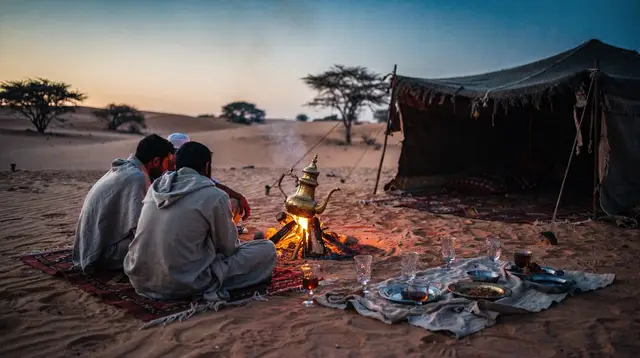
A sunset dinner out in the desert is one way to combine the timing advantage with an evening that doesn’t feel rushed — you get the golden-hour light at the escarpment and a relaxed meal afterward rather than a same-day round trip squeezed into daylight hours alone.
No guardrails, and what that actually means on site
One detail that surprises first-time visitors: there is no fencing, railing or barrier of any kind along the cliff edge at Jebel Fihrayn. The drop is sheer in multiple spots, and the ground near the rim isn’t always stable underfoot. This isn’t an oversight to be fixed later — it’s the nature of an undeveloped natural site, and it’s unlikely to change soon.
Practically, that means keeping a clear, deliberate distance from any edge, watching children and anyone unsteady on their feet closely, and treating photography near the rim with caution — the best photo angle is rarely the one taken standing right at the drop. Wind gusts are also stronger at the escarpment than at ground level inland, which is worth factoring in if you’re carrying a camera, a scarf, or anything else that could blow toward the edge. None of this should discourage a visit; it should just shape how you behave once you’re there.
Booking with a licensed operator instead of guessing
Given the moving pieces — access rules that change, a technical final approach that needs the right vehicle, and a site with real safety considerations, the strongest practical advice for this trip is straightforward: book through a licensed tour rather than attempting an independent visit, unless you already have serious 4x4 desert driving experience and current, confirmed knowledge of access conditions.
A full-day private tour that covers desert sites around Riyadh typically builds in the drive time, the right vehicle for the unpaved stretch, and a driver who checks conditions before departure rather than after you’re already on the road. If your interest in the desert extends beyond the escarpment itself, a broader day trip into the wider desert region around Riyadh covers more ground in a single booking, and a falconry and camel experience nearer the city is a reasonable alternative on days when conditions rule out the longer drive.
None of these bookings guarantee a specific access window months in advance — nobody can — but a live booking with confirmed availability for your target date is a meaningfully better signal than any generic seasonal guide, including this one.
What this page deliberately leaves out
This guide focuses on timing, seasons and access variability, and stops there on purpose. It doesn’t rank tour operators or compare prices, since those change too often to be useful in writing and belong on the booking platform’s own listing pages. It also doesn’t cover Riyadh’s city sights, Diriyah, or the historic center — those have their own dedicated pages, since Edge of the World is a separate desert excursion, not part of a city itinerary. If you’re building out a fuller desert day, the Riyadh desert safaris guide and the Edge of the World hiking trail guide go into the on-site experience in more detail than fits here.
For the full day-trip logistics — what to pack, what a typical itinerary looks like once you’re on site — see the Edge of the World day trip guide. If you’re weighing sunrise against sunset specifically, the sunrise versus sunset comparison covers that decision on its own. Deciding between a private vehicle and a shared group tour is covered separately in the private versus shared tours guide, and if you’re torn between this excursion and a different desert landscape, the Red Sand Dunes versus Edge of the World comparison lays out the practical differences.
Broader seasonal planning for Riyadh as a whole, beyond this one excursion, is covered in the Riyadh weather by month guide, with dedicated pages for visiting in summer and visiting in winter if you want the fuller picture before you build an itinerary. Sandstorm risk specifically is covered in more depth on the blog post about sandstorms in Riyadh. If you’re set on the desert but want a second opinion on hiring a driver rather than a packaged tour, hiring a private guide in Riyadh walks through that option, and a wider four-day Riyadh and desert itinerary shows how this excursion fits into a longer trip. For a first-hand account of what the light and the drop actually look like at the right hour, see the sunset at Edge of the World blog post, and for the independent-access question in more depth, can you visit Edge of the World without a tour covers what that would actually involve.
Edge of the World access and timing questions
Is Edge of the World open all year?
Not reliably. Access to the escarpment near Jebel Fihrayn has been restricted or closed during the hottest stretches of the year in the past, and rules can change with little public notice. Check with a licensed tour operator for the current status before you plan a specific date.
How long does it take to get to Edge of the World from Riyadh?
Plan on 2 to 2.5 hours each way. The route covers roughly 90-100 km northwest of Riyadh, and the final stretch runs on unpaved desert track that needs a 4x4, which is slower than the paved distance suggests.
Can I drive to Edge of the World myself?
Only if you have a capable 4x4 and desert driving experience, since the last section is unpaved track with no signage and no phone signal in places. Most visitors go with a licensed tour that supplies the vehicle, the driver and up-to-date knowledge of the access rules.
What is the best time of day to visit?
Sunset is the time most tours and repeat visitors recommend, both for lower temperatures and for the light on the escarpment. A sunrise visit works too if a tour offers it, but afternoon heat in the warmer months makes midday visits uncomfortable and sometimes unsafe.
Are there safety barriers at the edge of the cliffs?
No. There are no guardrails or fencing along the escarpment, and the drop is sheer in places. Keep a clear distance from the edge, watch children closely, and avoid the area entirely in high wind or poor light.
Is Edge of the World the same as a Red Sea viewpoint?
No. Edge of the World is an inland escarpment in the Tuwaiq mountains west of Riyadh, roughly 400 km from the nearest Red Sea coast. The view is over the desert plain below the cliffs, not over any sea.
Why do tour operators recommend booking instead of visiting independently?
A licensed operator tracks the current access situation, carries the right vehicle for the final unpaved stretch, and knows the safer viewing points along the escarpment. Independent visitors have been turned back at checkpoints when local access rules tightened without notice.
Seasonal guides for visiting Riyadh on GetYourGuide
Verified deep-linked GetYourGuide tours. Book through these links and we earn a small commission at no cost to you.
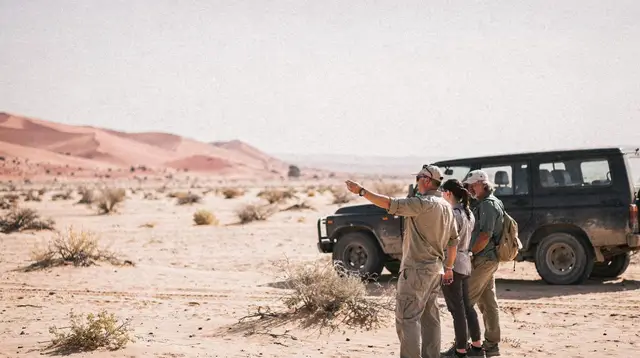
GetYourGuide does not provide a product photo for this activity — the image shows the meeting point, photographed by us.