Riyadh heat survival tips: how I plan my days from May to September
The first summer I spent a full week in Riyadh, I made the mistake most first-timers make: I planned my days the way I would in a mild climate, with a late breakfast and a late-morning outing. By ten in the morning the pavement outside my hotel in Olaya was already uncomfortable to walk on, and by early afternoon I gave up and retreated indoors for good. It took me a few more trips to understand that the problem was never the heat itself. It was my schedule.
The two seasons that matter
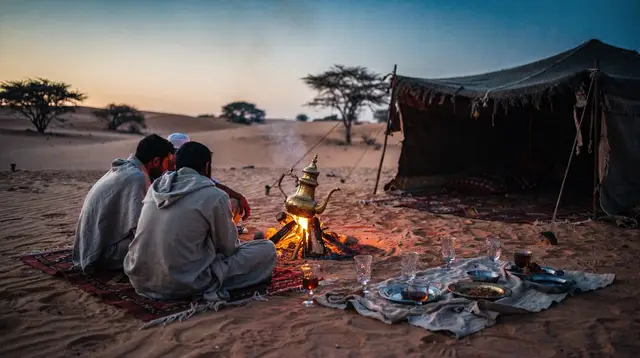
Riyadh has, in practical terms, two travel seasons, and I go into more detail on both in my month-by-month weather breakdown. From November to March, the city is genuinely pleasant: daytime highs sit around 20 to 25 degrees Celsius in December, January and February, the light is soft, and desert nights turn properly cold, which is part of the appeal of an evening camp under the stars. If comfort is your priority and you have flexibility, this is the window to book around, and it lines up closely with what I generally recommend as the best time to visit Riyadh.
From May to September, it is a different city. Daytime temperatures routinely climb past 40 degrees Celsius, and the heat is dry, not humid, which changes how it hits you. It is not dangerous if you plan around it, but it does mean the day cannot run on the same clock as a European or North American summer. I have never found the heat itself a reason to cancel a trip. I have found a poorly timed itinerary a reason to cut a trip short.
The rule I now follow: outdoors early or outdoors late, never in between
The single change that made summer trips to Riyadh workable for me was accepting that the middle of the day, roughly from ten in the morning to four in the afternoon, is not outdoor time. That applies equally to the desert and to the historic centre of the city. It is not a rule specific to Edge of the World or the dunes; walking around Masmak Fortress or Deera Square at noon in August is just as punishing as standing on an escarpment.
So I split the day in two:
- Dawn to mid-morning. This is when I now book anything outdoors, including a desert excursion. Leaving Riyadh before or around sunrise means arriving at somewhere like Edge of the World while the air is still bearable; I go into the sunrise-versus-sunset trade-off in more detail in my dedicated guide. A morning camel or horse ride, a walk through Diriyah’s At-Turaif district, or a stroll along Wadi Hanifa all work far better at this hour than at any other point in the day.
- Late afternoon into evening. The second window opens a couple of hours before sunset and runs into the night. This is when Al Bujairi Terrace comes alive, when a desert camp dinner makes sense, and when walking through Boulevard World or along Wadi Namar is genuinely comfortable again. An evening bike tour along Wadi Hanifah is one of the few active outings I would actually book for this window, since the valley cools down fast once the sun drops.
In between, I go indoors on purpose rather than by accident. The National Museum of Saudi Arabia, the malls around KAFD and Olaya, and the hotel itself all become the default for the hottest hours. I stopped treating this as downtime and started treating it as part of the plan, and it is the same logic I use when planning around Riyadh with kids or with anyone in the group who has limited mobility in the heat: fewer hours outdoors, chosen more deliberately, rather than fewer activities overall.
Does this mean skipping the desert in summer?
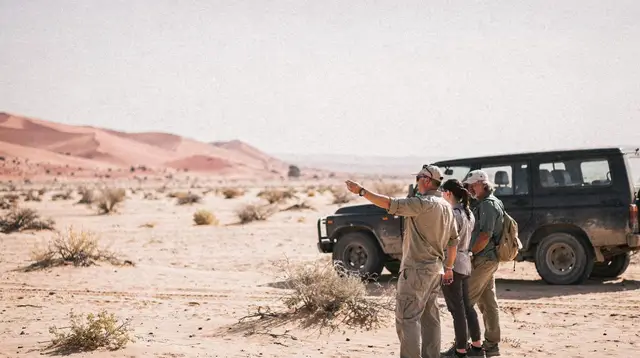
No, and I want to be honest about that, because some guides make it sound like desert excursions are off the table between May and September. They are not. What changes is the timing and the tour format. A desert safari or a trip to the Red Sand Dunes booked as an early-morning departure, or as a sunset-into-evening camp, still works well in July. What I would not do in summer is book a midday desert tour, and reputable operators rarely offer one anyway for exactly this reason. If you are booking directly, check the departure time before anything else, not the itinerary description.
The same applies to Edge of the World specifically: it does not close in summer, but I would look at how the seasons affect access and closures before locking in a date, since the escarpment itself offers little shade at any time of day.
An early city excursion built around Riyadh’s older quarters is a useful example: it runs at a time of day designed to avoid the worst heat, rather than around it.
What summer heat actually feels like, hour by hour
To put numbers on this rather than vague warnings: expect the low 30s by mid-morning, the low-to-mid 40s by early afternoon, and a slow drop back into the 30s after sunset. It is dry heat, so shade and moving air both help more than they would in a humid climate, and hydration matters more than sunscreen alone. I carry water constantly and treat air conditioning breaks as normal, not as giving up.
| Time of day | Summer (May–Sep) | Winter (Dec–Feb) | What I do |
|---|---|---|---|
| Early morning (6–9am) | Warm, tolerable | Cool, sometimes chilly | Best window for desert or historic-centre visits, either season |
| Midday (10am–4pm) | Often above 40°C | Mild, around 20–25°C | Indoors in summer; flexible in winter |
| Late afternoon/evening | Cooling, comfortable outdoors | Pleasant, cooling further | Second outdoor window, both seasons |
| Desert nights | Warm | Cold | Bring a layer even in summer for after-dark camps |
What I pack differently for a summer trip
Nothing exotic, but a few habits changed after that first uncomfortable week: light, loose, breathable clothing that still covers shoulders and knees, since what to wear in Riyadh applies regardless of temperature; a refillable water bottle rather than relying on finding shops mid-desert, since bottled water is the safer default and tap water in Riyadh is not what I would rely on for a full desert day; and sunglasses and a hat for the two outdoor windows, since the sun is intense even at 7am. My fuller packing list for Riyadh covers the rest. I also stopped scheduling anything demanding, like a longer hike or family desert trip, for a summer afternoon. It is simply the wrong tool for that hour.
Sandstorms and Riyadh Season are separate topics
Two things I deliberately leave out of this page, because they get lumped in with heat advice when they should not be: sandstorms, which are a spring-and-summer possibility but a different phenomenon from heat and worth its own planning, and Riyadh Season, the city’s autumn-to-spring festival, which runs at a time of year that has nothing to do with the summer heat window discussed here. If either of those is what brought you here, it is worth checking what to expect at Riyadh Season on its own terms rather than folding it into a heat-management plan.
Riyadh heat survival tips: frequently asked questions
Is it actually worth visiting Riyadh in summer, or should I wait?
It depends on what you want. If comfort matters more than your dates, November to March is the easier trip, with daytime temperatures around 20 to 25 degrees Celsius. If you can only travel in summer, Riyadh is still workable, it just requires shifting outdoor activities to early morning or late afternoon and using the midday hours for museums, malls, or rest.
Can I still do a desert excursion like Edge of the World in July or August?
Yes, as long as it is scheduled for early morning or the hours around sunset rather than midday. Most reputable operators already build their desert tours this way in summer, so check the departure time when booking rather than assuming the tour itself is unsafe.
How hot does Riyadh actually get in summer?
Daytime highs regularly pass 40 degrees Celsius from May to September. It is dry heat, not humid, which makes it more manageable than the number alone suggests, provided you avoid being outdoors for long stretches in the middle of the day.
What’s the coolest time of year to visit Riyadh?
December through February, when daytime temperatures typically sit around 20 to 25 degrees Celsius and desert nights turn cold, which is also when evening desert camps feel most atmospheric.
Do I need to change my daily schedule in winter too?
Less so. Winter days are mild enough that midday outings, including a walk through Diriyah or the historic centre, are comfortable at almost any hour. The dawn-or-dusk rule is mainly a summer adaptation.
Are sandstorms and heat the same issue?
No. Heat is a matter of scheduling around temperature, while sandstorms are a separate weather event possible in spring and summer. They sometimes overlap in timing but call for different precautions.
Does the heat affect indoor attractions too?
Not really. Museums, malls, and most heritage sites with indoor sections stay comfortable year-round thanks to air conditioning, which is exactly why they make sense as a midday fallback in summer.
Is summer a good time for Riyadh Season?
Riyadh Season itself runs outside the hottest months, so it is not something to weigh against summer heat planning. If you are asking about the festival specifically, it is worth checking its own dates separately.
Seasonal guides for visiting Riyadh on GetYourGuide
Verified deep-linked GetYourGuide tours. Book through these links and we earn a small commission at no cost to you.
GetYourGuide does not provide a product photo for this activity — the image shows the meeting point, photographed by us.