Riyadh desert safari: what to expect
What does a typical desert safari from Riyadh actually involve?
Most Riyadh desert safaris combine a 4x4 dune-bashing drive with a private driver, plus some mix of sandboarding, quad biking and a desert camp stop, usually run as a half-day or sunset trip toward areas like the Red Sand Dunes west of the city. Nobody drives themselves; a trained local driver handles the dunes, and departure times shift toward early morning or late afternoon in the hot months.
What “desert safari” actually means near Riyadh
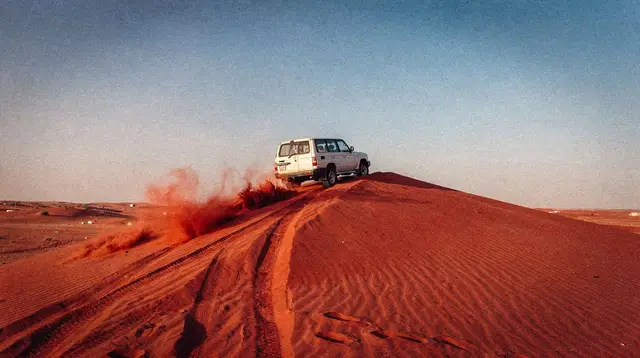
“Desert safari” gets used loosely in things to do in Riyadh listings, and it covers a genuinely wide range of trips. At the core, almost every version involves a 4x4 driven by someone other than you, taken out onto sand dunes for a period of deliberately bumpy, sliding, engine-revving driving generally called dune bashing. From there, operators bolt on different add-ons: sandboarding down a dune face, a short quad bike loop, a camel or horse ride, a desert camp stop with food, or some combination of all of it.
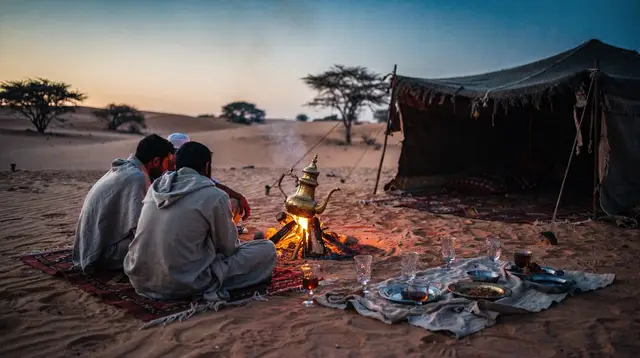
What it is not, in almost every case sold to visitors, is a slow nature walk or a quiet picnic. It’s an activity trip built around motion, dust and a fair amount of adrenaline, run for a few hours rather than a full day. If what you actually want is a calmer evening under the stars with dinner and no dune bashing, that’s a different product — see the dedicated page on desert dinner and kashta near Riyadh — and it’s worth checking a tour’s description carefully before booking, since operators don’t always use the terms consistently.
This page is a general orientation to the format: what happens, how long it takes, who drives, and when it runs. For the specific activity on the ground — the Red Sand Dunes tours from Riyadh and the quad options at quad biking near Riyadh — those pages go into the detail this one deliberately skips.
The three components, and how they usually get combined
Dune bashing in a 4x4
This is the anchor activity on nearly every desert safari. A driver takes a 4x4, often with the roof open or windows down, up and over dune ridges, along steep drops and sideways slides on loose sand. It’s loud, physical, and genuinely disorienting for a few minutes if you’re not used to it. Vehicles typically carry four to six passengers plus the driver, so a “private” tour usually means a private vehicle for your group rather than a solo experience.
Riding it well is mostly about not fighting the movement — sit back, let your body absorb the swing rather than bracing rigid against it, and say something if you start to feel unwell. Some operators build in a short pause partway through for photos or to let anyone queasy step out; it’s fine to ask for one.
Sandboarding
Where offered, sandboarding is usually a short add-on rather than a standalone activity: the vehicle stops at a suitable dune face, boards come out of the back, and everyone takes turns sliding down before getting picked up again lower down or walking back up. It’s closer to snowboarding on sand than surfing — expect sand in your shoes, your collar and probably your teeth. Standing runs take a bit of practice; most people end up sitting or lying down for at least their first few attempts, which is completely normal and not a sign you’re doing it wrong.
Quad biking
Quad bikes are usually run as a separate, briefer segment: a loop of a few kilometres on a marked track rather than open dune driving, with a guide leading or following. Basic handling instructions are given before you set off, and speeds are generally kept moderate for visitors who haven’t ridden one before. If quad biking is the part you actually care about, it’s worth booking a tour that names it explicitly and gives it real time, rather than assuming every “desert safari” includes a meaningful quad segment — some give it ten minutes, others build a whole loop around it.
Where these trips actually go
Most desert safaris departing Riyadh head toward dune areas to the west of the city, in the direction of the Red Sand Dunes, chosen for a mix of accessible sand and reasonable driving time from the hotels around Olaya and Al Malqa. A smaller number of operators run toward other patches of desert closer to the city, such as areas near Thumamah to the north, mainly for shorter evening trips.
None of these locations are named consistently across every listing, and the same general stretch of desert can appear under different marketing names depending on the operator. What matters more for planning than the exact dune field is the drive: Riyadh’s traffic, not raw distance, is what decides how long the round trip actually takes. A stretch that covers perhaps 60–70 km can still eat close to two hours each way if you leave during a busy period, so a half-day activity slot can easily become a three- to four-hour commitment once transfers are added on both ends.
If your hotel is in central Olaya, expect the operator’s vehicle to collect you there rather than you making your own way out; self-drive to a dune-bashing meeting point isn’t something most tours expect or recommend, and renting a car specifically to attempt this yourself is a separate risk covered on the renting a car in Riyadh page.
A private driver is standard, not an upgrade
It’s worth being direct about this: driving on sand dunes is a skill, and it is not one a visitor should assume they can pick up in an afternoon. Every legitimate desert safari sold to tourists comes with a trained driver at the wheel of the 4x4 — this isn’t a premium add-on you’re paying extra for, it’s the baseline of how the activity is run. Self-driving on dunes, even in a rented 4x4, risks getting stuck, rolling a vehicle on a steep face, or getting lost once you’re off any marked track, and it voids most rental insurance in the process.
The same logic extends to quad bikes: guided, on a track, at a pace the operator controls, not handed over unsupervised. If a listing suggests you’ll be doing your own dune driving with no guide alongside, that’s worth treating as a red flag rather than a bonus.
Timing: why nobody runs these at midday in summer
Riyadh’s desert safari schedules track the climate closely, and this is one of the more genuinely useful things to understand before picking a slot. Roughly from November through March, daytime temperatures sit in a comfortable range — often somewhere around 20–25°C through December and February — and operators can reasonably run trips across a wider part of the day, including mid-morning departures.
From May through September, that changes. Daytime temperatures regularly climb past 40°C, and standing on open sand with no shade at midday in that heat is genuinely dangerous, not just uncomfortable. Through these months, essentially every operator shifts departures to early morning, before the heat builds, or to late afternoon running into sunset, when temperatures start to drop and the light turns better for photos anyway. A tour offering a midday summer departure is unusual enough to be worth double-checking rather than assuming it’s a good deal.
Sunset slots tend to be the most heavily booked option across the whole activity, for reasons that go beyond comfort — the light on red sand at low sun angles is genuinely better, dune-face shadows show up more clearly, and the temperature drop makes the camp-stop portion, where included, more pleasant to sit through.
| Season | Typical departure window | Daytime temperature | What to expect |
|---|---|---|---|
| November–March | Morning or afternoon, wider choice | Around 20–25°C daytime | More flexible scheduling, cooler evenings |
| May–September | Early morning or late afternoon/sunset only | Often above 40°C | Midday departures avoided; shorter comfortable window |
What tends to disappoint people, honestly
A few patterns are worth flagging before you book, rather than after.
Dust is constant and not optional. Even a short dune-bashing segment throws up enough fine sand to get into clothing, cameras and phones if they’re not protected. A scarf or buff for your face, and a case or bag for anything electronic, solves most of this.
Group sizes on shared tours can be larger than photos suggest, and a “sunset” slot booked in peak season can mean sharing a dune field with several other vehicles running the same route at the same time — this is normal, not a sign of a bad operator, but it’s a different experience from what solitary marketing shots imply. A private tour, paying more for a dedicated vehicle and driver, is the direct way to reduce that.
Motion sickness catches some visitors off guard. Dune bashing involves sustained side-to-side and up-down movement that’s more intense than most car travel, and it’s common enough that most operators expect at least one passenger per group to feel queasy. If you’re prone to it, sitting toward the front, keeping your eyes on the horizon rather than a phone screen, and eating lightly beforehand all help somewhat.
And finally: the meal, where included, is usually a straightforward barbecue-style spread rather than a fine-dining experience, served at a semi-permanent camp setup with rugs and low seating. It’s a reasonable and often enjoyable part of the trip, but it’s not the culinary centrepiece some marketing implies — treat it as a practical stop after an active afternoon rather than the main event.
Booking: what to check before you commit
A few concrete questions clear up most of the ambiguity that trips people up:
- Does the price include hotel pickup and drop-off in Riyadh, or do you need your own transport to a meeting point?
- Is the vehicle private to your group, or shared with other bookings?
- Which specific activities are included — dune bashing alone, or dune bashing plus sandboarding, quad biking, or a camel ride?
- Is a meal included, and roughly what kind?
- What’s the departure time, and does that match the season you’re visiting in?
For a look at the format that’s built specifically around the dinner-and-calm-evening version rather than the driving-and-adrenaline version, the desert dinner and kashta near Riyadh page covers that separately. For the dune field most of these safaris actually visit, Red Sand Dunes tours from Riyadh has the specifics this overview leaves out.
A private evening version with dinner built in is a reasonable starting point for a first-time visitor who wants the full format in one outing: Riyadh: Private Desert Safari with Dinner. For visitors who want the driving and sandboarding without the dinner stop, a shorter sunset-focused option covers that: Riyadh: Private 4x4 Desert Safari Sandboarding Sunset. Groups who want games and a livelier camp atmosphere alongside the dune driving tend to look at Riyadh: Golden Dunes Desert Safari with Dinner Games. And if a camel ride and a shorter ATV loop matter more to you than a long dune-bashing session, that combination is sold separately as Riyadh: Desert Camel Ride ATV Tour and Snacks.
Getting to and from the desert
None of these trips start in the desert — they start at your hotel. Most operators run pickups from central Riyadh, so where you’re staying affects your total transit time more than it might seem. If you’re weighing which part of the city to base yourself in with desert trips in mind, where to stay in Riyadh covers the trade-offs, and Uber and Careem in Riyadh is useful if you need to get to a meeting point independently rather than relying on hotel pickup.
If you’re building a broader desert day around this — pairing a safari with a stop at Edge of the World or a night that includes stargazing — the family desert trips from Riyadh and Riyadh desert safaris pages sketch out how these different desert activities tend to get combined, and the Riyadh and the desert in four days itinerary shows one way to sequence them across a longer stay. For visitors weighing this against a calmer alternative, private vs shared Edge of the World tours and camel vs quad vs 4x4 in the Riyadh desert both help narrow down which version of “desert trip” actually fits what you want.
Desert safaris and the Riyadh heat, beyond just timing
Even outside the hottest months, dehydration is a real risk on any active outdoor trip in this climate — bring more water than feels necessary, and treat any dizziness or headache as a reason to sit in shade rather than push through. For visitors managing health conditions, limited mobility, or travelling with young children, Riyadh in the heat with limited mobility and family desert trips from Riyadh go into more detail on adapting or skipping the more physical segments while still getting a version of the desert experience.
Desert safari FAQ
Can I drive myself on a desert safari near Riyadh?
No reputable operator lets visitors drive on the dunes themselves. Dune driving takes local knowledge of sand conditions and vehicle handling that most visitors don’t have, so every desert safari booked through GetYourGuide or Viator comes with a trained driver. You ride; you don’t drive.
How far is a desert safari from central Riyadh?
Most operators head toward the desert areas west of the city, such as the Red Sand Dunes, which run roughly an hour’s drive from central Riyadh. The real variable is traffic getting out of the city, not the raw distance, so a half-day trip can run three to four hours door to door.
Is a desert safari safe?
Dune bashing and quad biking carry genuine physical risk — sudden drops, sharp turns, dust in low visibility. Booking a tour with a licensed operator, wearing any seatbelt or padding provided, and following the driver’s instructions on quad bikes is what keeps the risk manageable rather than eliminating it.
What should I wear on a desert safari?
Loose, modest clothing that covers shoulders and knees, closed shoes rather than sandals, and something to cover your head and face against dust. A light jacket helps if the trip runs into the cooler evening air, and sunglasses cut the glare off the sand.
When do desert safaris run in summer?
From roughly May to September, when daytime temperatures regularly pass 40°C, almost every operator schedules desert safaris for early morning or late afternoon into sunset. A midday departure in high summer is unusual and not something a well-run tour would offer.
Do desert safaris include dinner?
Many do, built around a desert camp stop with a barbecue-style meal, sometimes with music or games, timed for sunset or after dark. Others are shorter activity-only trips without a meal, so it’s worth checking what’s included before booking.
Is a desert safari the same as a night in the desert?
No. A desert safari is usually a half-day or evening activity trip built around driving, sandboarding or quad biking. An overnight desert camp with a slower dinner, shisha and stargazing, without the dune bashing, is a separate and calmer style of evening sometimes called a kashta.
Desert safaris and dune bashing on GetYourGuide
Verified deep-linked GetYourGuide tours. Book through these links and we earn a small commission at no cost to you.
GetYourGuide does not provide a product photo for this activity — the image shows the meeting point, photographed by us.