King Khalid Royal Reserve: hiking and nature near Riyadh
What is the King Khalid Royal Reserve and is it worth visiting from Riyadh?
It is a protected desert and wadi landscape within driving distance of Riyadh, used for hiking, biking and horse riding rather than motorised desert thrills. It suits travellers who want quiet nature time; check the current GetYourGuide or Viator listing for exact distance, duration and access details before booking.
A protected desert landscape, not a theme-park thrill
Most people who search for desert excursions from Riyadh are picturing quad bikes tearing across Red Sand Dunes, or a 4x4 grinding along the track to Edge of the World. The King Khalid Royal Reserve is a different kind of day out. It is a protected area of desert and wadi terrain where the point is walking, cycling or riding at a slower pace, not speed or adrenaline. If you want nature and quiet rather than noise and dust, this is the more honest match.
We are going to be upfront about a limit of this guide. The brief we have confirmed facts against does not give a stated size, exact distance from Riyadh, opening hours or entry fee for this specific reserve, and we would rather leave a gap than invent a number that turns out wrong once you are standing at the gate. Everywhere in this guide where a precise figure would normally sit, we describe it in honest, order-of-magnitude terms — “a drive from the city,” “several hours,” “check on booking” — and point you to the GetYourGuide or Viator listing you book through, or an official source, for the number that actually matters on the day: current access rules, meeting point and duration.
What sets it apart from other desert days near Riyadh
Riyadh’s desert excursion options tend to sort into three buckets, and it is worth knowing which one you are booking before you commit a day of your trip.
| Type of outing | What it actually is | Where to look |
|---|---|---|
| Motorised desert thrills | Quad biking, dune bashing, sandboarding | Red Sand Dunes, quad biking near Riyadh |
| Dramatic escarpment views | Cliff-edge views, sunset, some walking | Edge of the World |
| Nature and hiking | Trails, wildlife habitat, biking, horse riding | King Khalid Royal Reserve (this guide) |
| Working livestock market | Camel trading, early-morning atmosphere | Riyadh Camel Market |
The reserve is a protected natural area, which in practice means the terrain and habitat are being managed rather than left to visitors and off-road vehicles to reshape as they please. That is exactly why the activities on offer here — hiking, biking, horse riding — are calmer than what you will find in the dune fields further out. If you came to Riyadh hoping for a genuine nature reserve rather than a photo-op in the sand, this is closer to what you are after. For a broader look at how the reserve sits alongside other hiking and nature spots around the city, see our Riyadh hiking and nature reserves guide.
What the visit is actually like
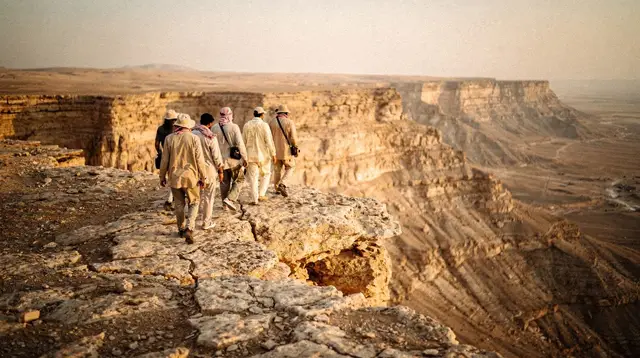
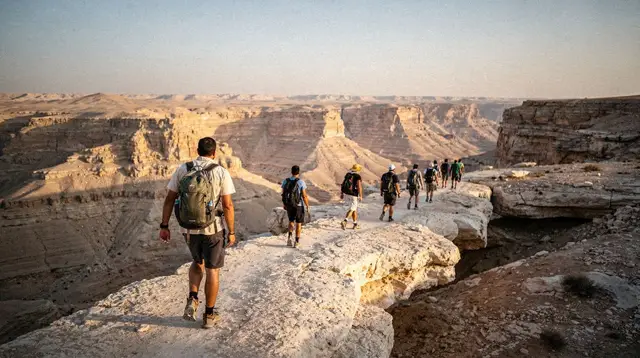
Expect a landscape of open desert plain cut by wadi terrain — the dry watercourses that thread through much of the Najd region around Riyadh — with rock outcrops, scrub vegetation and, depending on the season and recent rainfall, patches of green that most visitors do not associate with Saudi Arabia. Trails are used on foot, by bike or on horseback, and the pace is set by the group rather than by an operator racing between stops.
Because we cannot confirm an exact trail length, elevation gain or difficulty rating for this specific reserve from anything in our brief, we will not print one here. What we can say honestly is that walking on natural desert terrain — sand, gravel, loose rock — is more demanding than a paved path of the same apparent distance, and that heat, not distance, is usually the limiting factor for visitors. Bring more water than you think you need, and check the fitness level implied by the specific tour you book rather than assuming all “hiking” listings mean the same thing.
Riyadh’s protected reserves are also known, in general terms, for supporting wildlife that has become scarce elsewhere in the region as urban Riyadh has expanded — a reminder that this land is being actively conserved rather than simply left empty. Do not expect a safari-style guarantee of sightings; treat any wildlife as a bonus, not the reason to book.
A guided hiking route through the reserve’s terrain, including a stop at a known cave featureHiking, biking or horse riding — which to choose
The reserve supports more than one way of covering ground, and the right one depends on your fitness, your time and what you actually want out of the day.
Walking tours suit visitors who want to move at their own pace, stop for photos, and take in the landscape rather than cover distance. A guided walk also means someone on hand who knows current trail conditions, which matters more in desert terrain than it would on a marked national park path back home.
A night hike through the reserve with snacks and drinks included, for the cooler evening air and a different view of the desert skyCycling covers more ground for less physical strain than walking on soft or uneven terrain, and it is a genuinely different way to experience the reserve if you have ridden off-road before.
A guided biking route through the reserve for those who would rather cover ground on two wheels than on footHorse riding is the slowest and, for many visitors, the most memorable option — moving through wadi terrain at a horse’s pace rather than a hiker’s or a cyclist’s. It typically needs less physical fitness than a full hiking route but does ask for basic comfort around animals.
A horse riding experience through the reserve for a slower, quieter way to see the terrainNone of these are the quad-biking, engine-noise version of desert Riyadh. If that is what you are after instead, our guide to camel versus quad versus 4x4 in the Riyadh desert sorts the louder options from the quieter ones, and Riyadh desert safaris covers the safari-style days out.
Getting there and getting around
Riyadh is a car city, and a protected reserve outside the urban area is not reachable by Riyadh Metro or by casual walk-up ride-hailing in the way a city-centre attraction would be. The practical pattern that works for almost every desert excursion out of Riyadh applies here too: book a tour that includes transport, or arrange a private driver for the day. Uber and Careem in Riyadh are reliable within the city but are not the standard way to reach an outlying reserve, and self-drive on unfamiliar desert access roads is not something we would recommend to a first-time visitor — see renting a car in Riyadh if you still want to weigh that option, and hiring a private guide in Riyadh if you would rather have local knowledge in the vehicle with you.
If you are arriving in the city the same day, budget realistic time from King Khalid International Airport before adding a half-day or full-day excursion on top — Riyadh traffic at peak times can turn a straightforward transfer into a long one, and a reserve visit is not the outing to rush.
When to go
Riyadh’s climate splits sharply by season, and it matters more for an outdoor hiking day than for almost any other kind of excursion in the region.
November through March brings mild daytime temperatures that make walking genuinely comfortable, with cool desert nights. This is the season most visitors should aim for if a hiking or riding day is a priority rather than an afterthought. See best time to visit Riyadh for the fuller seasonal picture.
May through September brings serious heat, regularly well above what is safe for exertion in direct sun in the middle of the day. For a reserve visit in this window, sunrise or late-afternoon departures are the sensible choice, and a midday hike in high summer is not something we would recommend regardless of what a tour operator’s schedule allows. Our Riyadh in summer and Riyadh weather by month guides go into more detail on what to expect and how to plan around it.
What to wear and bring
Modest dress applies across Saudi Arabia in public spaces, and for a hiking or riding day it also happens to be the practical choice: closed shoes with grip, breathable long sleeves and trousers rather than shorts, a wide-brim hat, and sun protection. There is no requirement for women visitors to wear an abaya — plain modest clothing that covers shoulders and knees is enough outside religious sites — but exposed skin is a genuine liability against sun and scrub, not just an etiquette question. Our what to wear in Riyadh guide covers the general rules if this is your first stop in the country.
Bring more water than feels necessary, particularly outside the cooler months. A reserve visit is not the place to discover you underpacked water an hour from the nearest shop.
Booking practicalities
Because we cannot confirm this reserve’s exact size, distance from Riyadh, entry conditions or seasonal closures from anything in our brief, treat the listing you book through as the source of truth for those details rather than this guide or any other general travel page. GetYourGuide and Viator listings for the reserve should state pickup point, drive time, activity duration and any fitness or age guidance — read that section before booking, not just the photos. If a listing is vague on those points, that is itself useful information about how well organised the operator is.
If your interest is in nature and desert scenery generally rather than this reserve specifically, it is worth reading across a few related pages before deciding where to spend a day: things to do in Riyadh for the full picture, family desert trips from Riyadh if you are travelling with kids, and accessible Riyadh guide if mobility is a consideration for anyone in your group, since reserve terrain is generally less accommodating than paved city attractions.
For visa and entry basics before any of this becomes relevant, see Saudi Arabia e-Visa and entry rules — most Western visitors need an e-Visa or visa on arrival, arranged through the official visa.visitsaudi.com portal, with only GCC citizens exempt.
The honest verdict
The King Khalid Royal Reserve earns a place on your Riyadh itinerary if what you actually want is quiet desert nature — walking, cycling or riding through protected terrain — rather than a sanitised city stop or an adrenaline-driven dune session. It is not a substitute for the scale and drama of Edge of the World, and it has nothing to do with the trading floor atmosphere of the Camel Market; comparing them is comparing three different kinds of day out. What we would ask you not to do is arrive expecting a specific trail length, entry fee or opening hour we have not been able to confirm — read the current listing, plan around the heat, and treat this as one honest option among several rather than the single unmissable stop some blanket “top things to do” lists make it out to be.
Frequently asked questions about the King Khalid Royal Reserve
How far is the King Khalid Royal Reserve from Riyadh?
It is a drive from the city rather than a quick city-limits stop. Treat any specific kilometre figure with caution and check the pickup and drive time stated on the tour listing you book, since operators vary in the exact access point they use.
Is the reserve the same as the Edge of the World or the Red Sand Dunes?
No. Edge of the World is a dramatic escarpment further out, and the Red Sand Dunes are for quad biking and dune bashing. The reserve is a protected natural area centred on walking trails, cycling and horse riding, with a calmer, slower pace.
Do I need a guide or can I hike independently?
Most visitors go with a booked tour that includes transport, since Riyadh is a car city and the reserve is not served by public transport. A guided hike or ride also means someone who knows the current trail conditions and access rules.
What should I wear for hiking here?
Closed walking shoes, breathable long sleeves and trousers, a hat and sun protection. Modest dress applies in public across Saudi Arabia, and it also happens to be the most practical choice for scrambling over rock and scrub.
When is the best time to hike at the reserve?
November to March gives mild daytime temperatures suited to walking. From May to September the heat is severe, so hikes and rides are best done at sunrise or in the late afternoon rather than the middle of the day.
Is this a family-friendly outing?
It can be, depending on the specific walk or ride chosen and the fitness of the group, since terrain and trail length vary by activity. Check the listing for any age or fitness guidance before booking with children.
How does this compare to the Riyadh Camel Market?
They are unrelated. The Camel Market is a working livestock market on the edge of the city, useful for atmosphere and photos in the early morning. The reserve is a protected natural area for walking, cycling and riding, with no market or trading activity.
Hiking and nature reserve tours on GetYourGuide
Verified deep-linked GetYourGuide tours. Book through these links and we earn a small commission at no cost to you.
GetYourGuide does not provide a product photo for this activity — the image shows the meeting point, photographed by us.