Do women have to wear an abaya in Saudi Arabia?
Before I landed at King Khalid International Airport, I had packed a black abaya I’d bought specifically for this trip, convinced I’d be handed a fine or a lecture the moment I stepped out without one. Three days into Riyadh, it was still folded at the bottom of my suitcase. I wore loose trousers, long-sleeve tops, and a couple of maxi dresses, and nobody at the mall in Olaya, the check-in desk, or the ticket counter at At-Turaif so much as glanced twice.
That gap between what I expected and what actually happened is the whole point of this page.
What the dress code actually is
There’s no religious police enforcing hemlines anymore, and there hasn’t been one doing that to foreign visitors for years. The real, current rule is simpler than the reputation: dress modestly, like you would visiting a conservative country anywhere in the world. That means shoulders and knees covered, and nothing tight, sheer, or cut low. It applies to men and women alike — I saw plenty of male tourists get quietly redirected back to their hotel room for shorts that were a bit too short at a museum entrance.
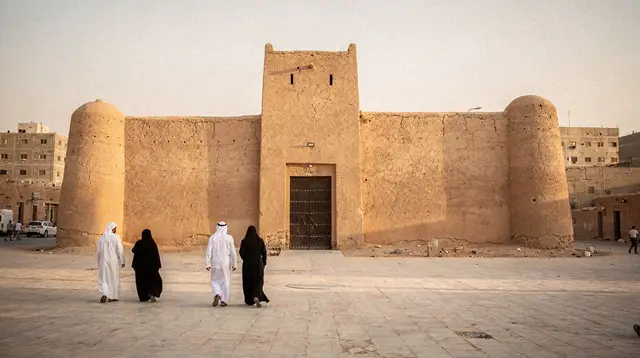
An abaya, the loose black robe you picture when you think of Gulf dress codes, is not required for foreign women. It never came up as a condition of entry at any site I visited, including Masmak Fortress and Bujairi Terrace. Saudi women themselves increasingly wear it as a personal or cultural choice rather than a legal obligation, and that choice extends to visitors: wear one if you want to blend in a little more, skip it if you’d rather travel in what you already own.
Where a headscarf actually matters
This is the detail that trips people up most. A headscarf is expected inside mosques — that’s it. If you plan to step inside a working mosque anywhere in the country, bring a scarf and use it there. Outside that specific context, in the street, in a taxi, at Riyadh Season events, in a shopping centre, or checking into your hotel, nobody is expecting hair to be covered. I carried a light scarf in my day bag the whole trip and used it exactly twice, both times inside a mosque courtyard I wandered into out of curiosity.
What I actually wore, day to day
Nothing that needed a special shopping trip. My rotation for a week in Riyadh was:
- Loose linen trousers or a maxi skirt
- Short-sleeve or three-quarter-sleeve tops, sometimes with a light cardigan for museums and restaurants (many run the air conditioning cold)
- A long, breathable dress for evenings at Boulevard World or dinner in Diriyah
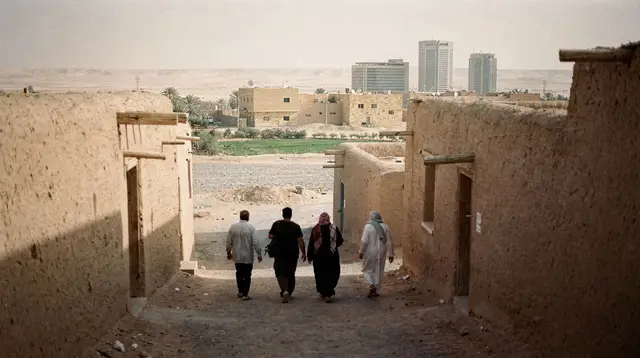
- Comfortable closed shoes for walking around Wadi Hanifah and the older streets near Souq Al Zal
Nothing form-fitting, nothing sheer, shoulders and knees covered as a baseline. That was enough everywhere, from the National Museum to a private tour out to Diriyah’s heritage district. If you’re heading out into the desert for the day — say, toward the Edge of the World — the same modest baseline applies, plus a scarf or hat for sun and wind rather than for custom.
I’m not going to pretend there’s a specific brand or price point that “works” here; there isn’t one, and anyone telling you otherwise is guessing. What matters is coverage and comfort, not the label.
Why the reputation lags the reality
Saudi Arabia only opened to leisure tourism in September 2019, and a lot of what people think they know about visiting predates that by decades, or was never true to begin with. Before 2019, there was effectively no tourist visa route, so almost nobody’s personal experience of the country is more than a few years old — the country most travellers picture, with mandatory covering enforced on foreign women, describes a version of Saudi Arabia that isn’t the one you land in today.
I noticed the same gap play out with other assumptions. Alcohol genuinely is not served anywhere, including in international hotel chains — that part of the reputation is accurate, and worth planning around before your trip rather than after. But dress code, weekend days (Friday–Saturday, not the pattern some guidebooks still print), and how visible tourism infrastructure has become since 2019 are all areas where the on-the-ground reality has moved faster than most people’s mental picture of it.
If you want the fuller etiquette picture beyond clothing — photography rules, public behaviour, Ramadan timing — that’s covered on its own page, and it’s worth reading before you go rather than figuring it out on your first afternoon.
Practical packing takeaway
Pack for comfort in a hot, air-conditioned, walking-heavy city, with a modest baseline you’d probably choose anyway for temple or church visits elsewhere: covered shoulders, covered knees, breathable fabric, one scarf for mosque interiors. Layer for indoor cold and outdoor heat, especially if you’re combining city sightseeing with a desert day trip. That’s genuinely the whole checklist — no abaya required, no headscarf required outside mosques.
If a city overview with a guide who can answer these questions in person appeals to you, an orientation tour through Riyadh’s old and new districts is a reasonable way to get your bearings on day one, dress code included. For the heritage side specifically, a guided walk through Diriyah’s mud-brick old town and the restaurant terrace facing it covers the site where dress norms come up most often for first-time visitors. A more general half-day loop around Riyadh’s landmarks works if you’d rather see the modern skyline and historic core together, and if your schedule allows a side trip, an excursion out to Al Qasab is worth checking on GetYourGuide for current availability.
FAQ — abaya and dress rules for women in Saudi Arabia
Do women have to wear an abaya in Saudi Arabia?
No. It is not required for foreign women, in Riyadh or elsewhere in the country. The standing rule is modest dress for everyone: shoulders and knees covered, nothing tight or see-through.
Do I need to cover my hair in Riyadh?
Only inside mosques. A headscarf is not expected on the street, in hotels, in malls, or at heritage and museum sites in Riyadh or Diriyah.
What should I actually pack for a trip to Riyadh?
Loose, breathable trousers or long skirts, tops that cover the shoulders, a light layer for cold air conditioning, and one scarf for mosque visits. Closed shoes help for walking around older districts and desert stops.
Will I be turned away from a site for what I’m wearing?
Possibly, if clothing is very short, tight, or sheer — this has applied to men in shorts as much as to women. A modest baseline avoids the issue entirely.
Is the dress code different in Diriyah or at desert sites compared with Riyadh city?
No. The same modest-dress baseline applies across the city, At-Turaif, and desert excursions toward the Edge of the World or the Red Sand Dunes. Out in the desert, extra coverage is more about sun and wind than any rule.
Has the dress code changed since Saudi Arabia opened to tourism?
Yes. Since the tourist visa launched in September 2019, enforcement around foreign visitors’ clothing has relaxed considerably, and an abaya has moved from an unwritten expectation to a personal choice.
Are the rules different for men?
The same modesty principle applies — cover up, avoid very short shorts or sleeveless tops at religious and heritage sites — though men have more flexibility day to day than the reputation suggests too.
tours.Practical
Verified deep-linked GetYourGuide tours. Book through these links and we earn a small commission at no cost to you.
GetYourGuide does not provide a product photo for this activity — the image shows the meeting point, photographed by us.