Is the Riyadh Metro worth using for tourists?
I landed in Riyadh half convinced there was no metro at all. That was the story I had in my head from a few years back, and it is wrong now. There is a metro, it is new, it is automatic, and I used it more than once during my stay. The question worth answering honestly is not whether it exists, but whether a visitor should bother with it instead of just calling an Uber or a Careem every time.
Short version: sometimes yes, sometimes no. The Riyadh Metro is a six-line automatic network, opened in stages between December 2024 and early 2025, and it connects through to King Khalid International Airport (RUH). That is a real achievement for a city built almost entirely around the car. But it does not go everywhere, and for a lot of what a first-time visitor actually wants to see, it is the wrong tool.
Where the metro actually helps
The honest case for the metro is limited to modern Riyadh: Olaya, KAFD (King Abdullah Financial District) and Al Malqa in the north. These are the districts with the towers, the malls, the business hotels and a fair amount of what locals call “new Riyadh.” Distances between them are long by walking standards but short by driving standards, and that is exactly the problem — during peak hours, a 15-minute drive can stretch to 40 minutes without much warning. I hit that more than once trying to get from an Olaya hotel to a dinner near KAFD in the early evening, sitting in traffic that had no obvious cause other than everyone leaving work at once.
On those routes, the metro is faster and it is not close. No traffic, no surge pricing, and stations sit close enough to the towers and malls in Olaya and KAFD that the walk at either end is manageable. If your hotel and your evening plans both sit inside the metro’s reach, use it. It also connects to the airport, so a metro ride can realistically replace an airport transfer for some trips, though I still budgeted the usual 30 to 45 minutes for the road option since that is the more predictable comparison outside peak hours.
Where it does not reach
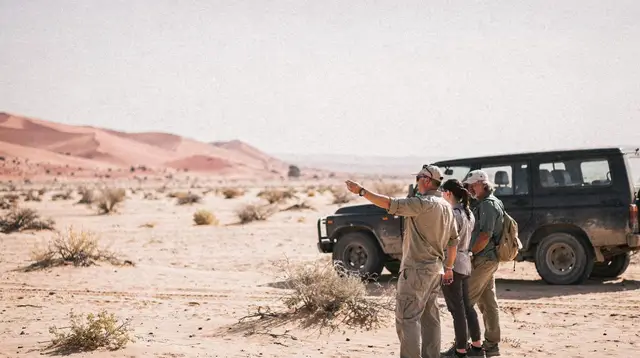
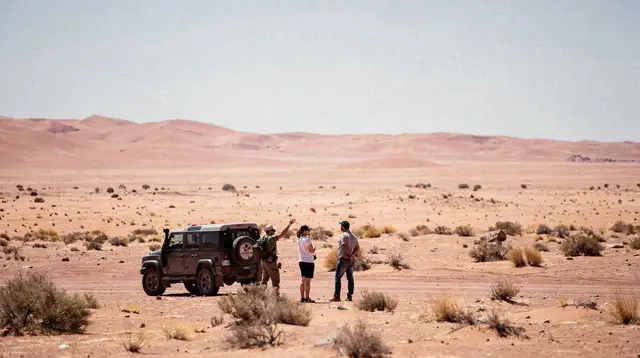
Here is where the picture changes. Diriyah, with At-Turaif and Al Bujairi Terrace, sits northwest of the city along the Wadi Hanifa and is not on the metro map. The historic centre around Masmak Fortress and Souq Al Zal is walkable once you are there but not metro-accessible on a direct line that makes sense for a visitor. And the desert excursions — Edge of the World, the Red Sand Dunes, Shaqra and Ushaiger — are entirely outside the network’s reach by definition. Those are car trips, full stop, usually with a private driver or an organised tour, because the last stretch to somewhere like Edge of the World is unpaved desert track that needs a 4x4, not a train.
So the metro solves one specific problem — getting between modern districts without sitting in traffic — and leaves everything else exactly as car-dependent as it always was. Riyadh is a driving city. The metro is an addition to that reality, not a replacement for it.
Metro vs Uber vs Careem vs a private driver
| Trip type | Best option | Why |
|---|---|---|
| Olaya to KAFD or Al Malqa, peak hours | Metro | Skips traffic entirely |
| Olaya to KAFD or Al Malqa, off-peak | Either works | Traffic is light, both take a similar time |
| Airport to Olaya | Uber, Careem or road transfer | Predictable door-to-door, luggage-friendly |
| Riyadh to Diriyah | Uber, Careem or private driver | No metro line covers this route |
| Old Riyadh (Masmak, Souq Al Zal) | Uber or Careem, then walk | Metro does not serve the historic centre directly |
| Desert excursions | Private driver or organised tour | Unpaved final stretch, 4x4 often required |
I ended up treating Uber and Careem as the default for most of the week, and the metro as a specific tool I reached for twice: once to avoid a bad traffic window between Olaya and KAFD, and once as a curiosity, because riding a brand-new automatic system is its own small bit of sightseeing. Fares on both apps are reasonable and drivers use them constantly, so there is no real downside to defaulting to ride-hailing when in doubt.
A few practical notes
Stations in the useful stretch (Olaya, KAFD, Al Malqa) are modern and clearly signed, and I did not have trouble navigating with basic English, since it is widely spoken in hotels, malls and around any tourist-facing service. I would not rely on the metro for anything time-sensitive if your route involves a transfer between lines you have not tried before — it is efficient once you know it, but a first attempt can eat more time figuring out the right platform than the ride itself saves. If you are only in Riyadh for a day or two and staying in Olaya, you can genuinely skip the metro altogether and not miss much; Uber and Careem will cover the same ground with less friction.
One more thing worth saying plainly: the idea that Riyadh has no metro is out of date. It exists, it works, and dismissing it outright is its own kind of misinformation, just in the opposite direction from overselling it. It is neither useless nor a citywide solution — it is a good option for a narrow, specific set of trips, and a car is still doing the rest of the work.
If you want a guided introduction to the modern city that the metro actually serves, a half-day city tour covering Olaya and the newer districts gives a good sense of the skyline before you decide how much you will lean on the metro versus ride-hailing. For the parts the metro cannot reach, a guided visit to Diriyah’s Turaif district with entry tickets included or a heritage tour pairing the UNESCO site with Al Bujairi Terrace takes the transport question off your hands entirely. If your trip lines up with the city’s festival season, a tour built around Riyadh Season’s best-known attractions is worth checking for dates, since that period draws crowds and traffic that make a driver more useful than ever.
For day-to-day planning beyond transport, the things to do in Riyadh guide and the Riyadh Metro guide go into more station-by-station detail than fits here. If you are still deciding how to split your time, how many days in Riyadh and one day in Riyadh are useful starting points, and the Uber and Careem in Riyadh guide covers the ride-hailing side in full. Anyone renting a car instead should read renting a car in Riyadh first, since city traffic changes the calculation.
For the historic centre itself, Diriyah tours and how to get to Diriyah fill the gap the metro leaves. If the desert is on your list, Riyadh desert safaris and the dedicated Edge of the World day trip from Riyadh guide explain why that trip needs a driver, not a train. Landing at RUH, start with the Riyadh airport arrival guide. And for a direct side-by-side, Metro vs Uber in Riyadh breaks the comparison down further than this page does.
FAQ: getting around Riyadh by metro
Does Riyadh actually have a metro?
Yes. The Riyadh Metro is a six-line automatic network that opened in stages from December 2024 to early 2025, and it connects to King Khalid International Airport. The idea that Riyadh has no metro is outdated.
Is the metro better than Uber or Careem in Riyadh?
Only for specific routes. Between modern districts like Olaya, KAFD and Al Malqa, especially during peak traffic, the metro is faster and more predictable. For most other trips, Uber and Careem remain easier since they cover the whole city door to door.
Can I reach Diriyah by metro?
No. Diriyah, including At-Turaif and Al Bujairi Terrace, is not on the metro network. Reach it by Uber, Careem or a private driver.
Does the metro go to the airport?
Yes, King Khalid International Airport is connected to the network, which makes the metro a workable option for some airport trips, alongside the usual 30 to 45 minute road transfer to Olaya.
Can I use the metro to visit the historic centre or Masmak Fortress?
Not directly in a way that suits most visitors. Old Riyadh, including Masmak Fortress and Souq Al Zal, is better reached by Uber or Careem, then explored on foot.
Do I need the metro for desert excursions like Edge of the World?
No. Desert trips are entirely outside the metro’s reach and require a private driver or an organised tour, partly because the final stretch to sites like Edge of the World is an unpaved track needing a 4x4.
Is the metro easy for a first-time visitor to use?
The stations serving Olaya, KAFD and Al Malqa are modern and well signed, with English widely understood. A first attempt at a line transfer can take longer than expected, so it suits visitors with a bit of time rather than a tight schedule.
Should I skip the metro entirely on a short trip?
If you are only in Riyadh for a day or two and staying in Olaya, skipping the metro and relying on Uber or Careem is a reasonable choice. The metro earns its place mainly on longer stays or when peak traffic makes driving between modern districts genuinely slow.
Getting around Riyadh on GetYourGuide
Verified deep-linked GetYourGuide tours. Book through these links and we earn a small commission at no cost to you.
GetYourGuide does not provide a product photo for this activity — the image shows the meeting point, photographed by us.